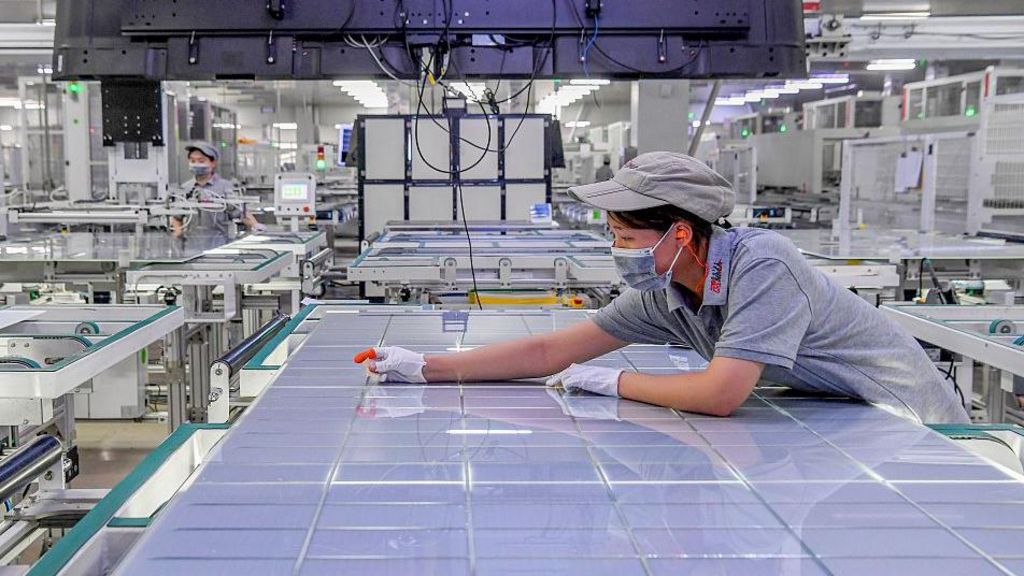
In a sharp new escalation of trade and tech rivalry between the world’s two largest economies, former U.S. President Donald Trump signed an executive order Thursday introducing sweeping new trade restrictions on imported polysilicon — the critical raw material at the heart of both semiconductor manufacturing and solar energy production.
The new measures, which will go into effect this coming December, include a 15% across-the-board tariff on polysilicon and its related downstream products, alongside mandatory minimum import pricing for all incoming shipments of the material. The action was framed as a national security response following a months-long investigation into overseas polysilicon production, and comes as the U.S. continues to ramp up efforts to counter growing Chinese dominance in advanced technology supply chains.
Trump confirmed he approved the recommendations put forward by Commerce Secretary Howard Lutnick, who first proposed the combination of tariff and minimum pricing rules. Alongside the import restrictions, the administration also announced it will roll out new financial incentives designed to stimulate domestic polysilicon production, in a bid to reverse decades of declining U.S. market share in the sector.
In justifying the policy, Trump argued that decades of open trade policies have allowed foreign competitors to erode the position of American polysilicon manufacturers. He noted that U.S. global production share plummeted from 50% in 2005 to less than 2% by 2024, even as the material has grown increasingly critical to both military technology and consumer electronics. Today, China controls nearly the entire global supply of polysilicon, holding a near-monopoly position that the Trump administration argues poses a profound national security and economic risk.
China currently stands as the world’s top polysilicon producer, with the sector serving as a foundational pillar for both its booming chip manufacturing industry and its fast-growing renewable energy sector. The new restrictions are explicitly designed to shield U.S. domestic manufacturers from intensifying competition from Chinese chip and polysilicon firms, a core point of ongoing friction between Washington and Beijing.
The policy is expected to deliver immediate benefits to the two major U.S.-based polysilicon producers: Hemlock Semiconductor and German-headquartered Wacker Chemie, which operates large production facilities within the U.S. As global competition for leadership in artificial intelligence intensifies, control over semiconductor supply chains — starting with core materials like polysilicon — has become a central battleground for both the U.S. and China.
In an official statement following the signing of the order, the Chinese Embassy in Washington condemned the move, accusing the U.S. of abusing state power to target legitimate Chinese businesses. The embassy emphasized that the new restrictions seriously disrupt bilateral trade relations, and warned that Beijing will take all necessary measures to protect the interests of its domestic companies. It also pushed back against the U.S. protectionist approach, noting that trade barriers will do nothing to improve American long-term competitiveness.
Analysts interviewed by China’s *Global Times* framed the new tariff as the latest step in a steady escalation of U.S. efforts to cut China out of global critical technology supply chains. The move comes on the heels of a series of prior U.S. restrictions targeting Chinese tech imports, including bans and limitations on drones, humanoid robots and a wide range of other advanced technology products originating from China.