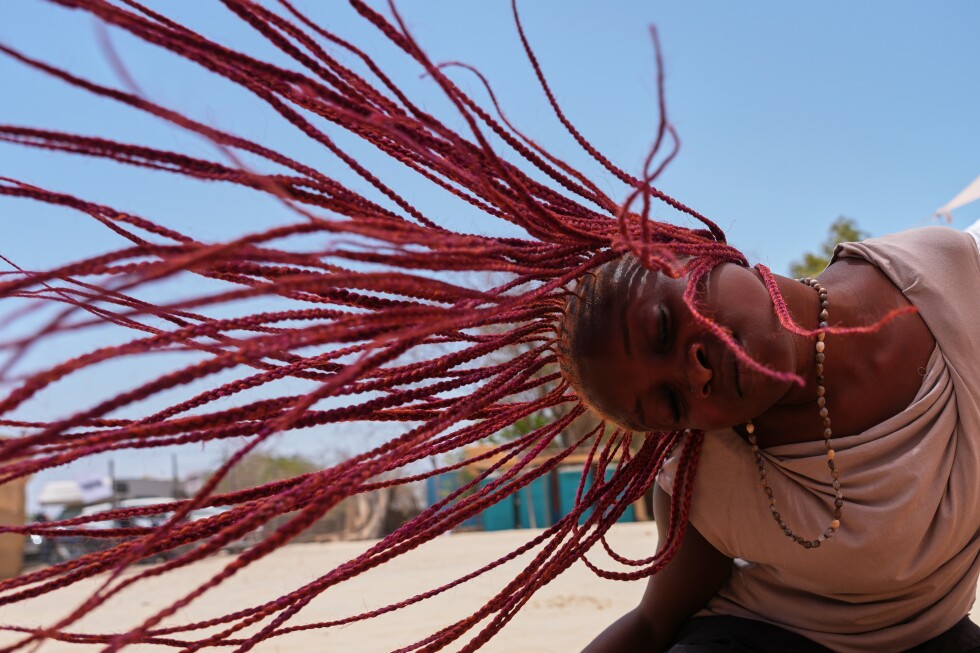
Over the weekend, 25 dynamic dance collectives from across the African continent gathered in the quiet Senegalese fishing community of Toubab Dialao to take part in the African Dance Biennial, the region’s biggest platform dedicated to celebrating contemporary African choreographic art. Against the backdrop of sun-scorched coastal sand, dozens of performers clad in eye-catching hues of tangerine, emerald and sapphire moved through their pieces — stomping, soaring through leaps, and melting into the shoreline, drawing audiences into the emotional core of their work. Just an hour’s drive outside Senegal’s capital city of Dakar, this tiny coastal village played host to three days of cutting-edge dance that wrapped up its programming late Sunday.
Established in 1997, the African Dance Biennial has traveled across the continent for nearly 30 years, bringing world-class choreography to audiences in a rotating roster of African cities. The 2023 edition of the event was most recently held in Maputo, Mozambique, and the festival’s core mission has remained consistent since its founding: to amplify the profile of underrepresented African choreographic talent on the global stage.
This year’s festival was hosted at the iconic École des Sables — the School of Sands — the continent’s leading professional dance training center. Founded in 1998 by Germaine Acogny, a figure universally hailed as the mother of contemporary African dance, the institution has shaped a generation of dance artists from around the world. Its signature open-air sand studio is a direct reflection of Acogny’s philosophy, which roots dance education in connection to the natural world. The school’s signature training programs blend Acogny’s original contemporary dance technique with traditional West African movement vocabularies and Black modern dance traditions, attracting students and professionals from more than 40 countries for intensive annual residencies. In recent years, the École des Sables has risen to global fame as the base for the first all-African production of Pina Bausch’s legendary *The Rite of Spring*, which has toured across 15 countries since 2021 and will continue its global run through 2025.
Despite the success of this year’s biennial and the school’s growing international acclaim, the institution now faces an uncertain future. A $1 billion deep-water port development project, led by global logistics giant Dubai Port World, is currently under construction just south of Toubab Dialao. The project puts the school at risk of forced expropriation of land surrounding its campus that the institution purchased specifically to protect the fragile coastal natural ecosystem that has long been central to its artistic and educational identity. In response, arts organizations across the region have joined forces to form a collective advocacy group, organizing to push back against the proposed development and protect the future of one of Africa’s most important cultural institutions.