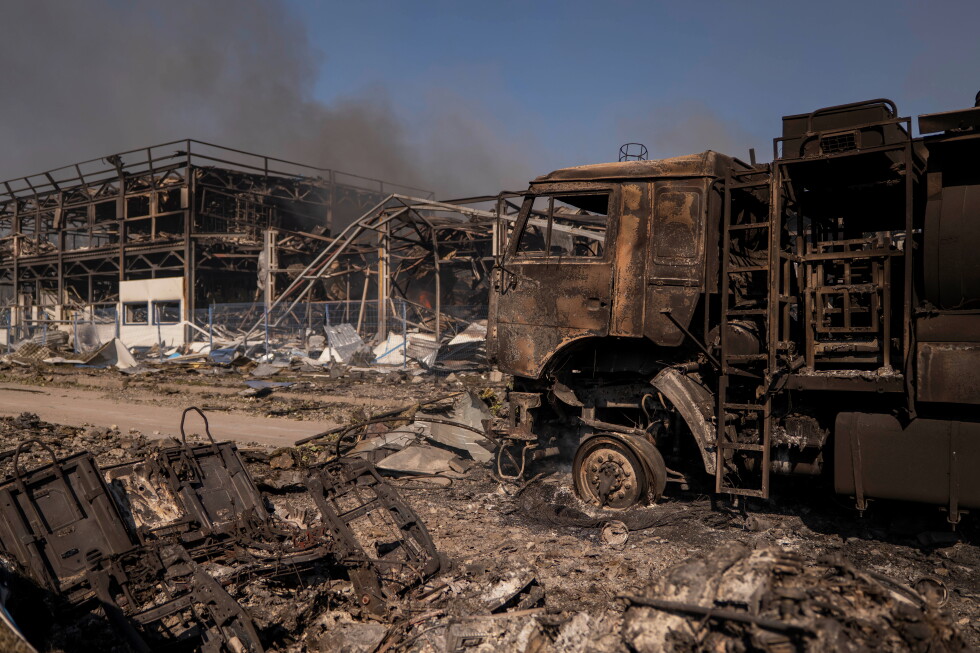
As Russia ramps up the intensity of large-scale offensive operations against Ukraine in a bid to wear down Kyiv’s defensive capabilities, the deadliest attack of the year so far has claimed at least 37 civilian lives in a Ukrainian village west of the capital. The overnight strike on Friday targeted a civilian warehouse in the small settlement of Myla, located in Kyiv’s western suburbs, leaving a devastating trail of death and destruction that has drawn renewed attention to the human cost of Moscow’s full-scale invasion.
Local officials confirmed that 34 of the fatalities from the Myla attack occurred at a residential care facility for elderly and disabled citizens, located adjacent to the targeted warehouse. According to Ukrainian authorities, the warehouse was allegedly being used to illegally store munitions. The initial drone strike triggered a chain of secondary explosions and fast-spreading fires that rapidly spread to neighboring residential structures, including the care home. Ukrainian President Volodymyr Zelenskyy labeled the incident an “absolutely terrible situation”, noting that the scale of loss appeared to stem from “terrible negligence on the part of those who stored explosives right next to ordinary people”.
The Myla attack is not an isolated incident: 2024 has seen a string of lethal Russian strikes on Kyiv and its surrounding regions that have killed dozens of civilians and tested Ukraine’s overstretched air defense networks. Just over a month before the Myla attack, on July 6, a wave of coordinated missile and drone strikes across Kyiv region left 22 people dead. Notably, every ballistic missile launched in that assault successfully hit its intended target, a stark demonstration of the growing gaps in Ukraine’s air defense capabilities that have left Kyiv pleading for additional advanced interceptors, particularly U.S.-manufactured Patriot systems. After that attack, Ukraine’s Emergency Service ordered the evacuation of roughly 600 residents from the Kyiv suburb of Vyshneve over risks posed by unexploded ordnance. In a pattern that mirrored the Myla incident, Zelenskyy later confirmed that munitions had also been illegally stored at the targeted Vyshneve site.
Weeks earlier, on July 2, Russia launched a hours-long combined drone and missile barrage across Kyiv that killed 31 people and wounded more than 100 others. Moscow explicitly framed the attack as retaliation for earlier Ukrainian strikes on Russian oil infrastructure. Air raid sirens sent more than 50,000 Kyiv residents scrambling for shelter in the city’s underground subway stations, as repeated explosions rocked residential neighborhoods across the capital. For a full day, emergency response teams worked through the rubble of collapsed, burned-out apartment blocks to recover victims and search for any survivors.
The first of the year’s deadliest major attacks on Kyiv occurred on May 14, when a Russian cruise missile strike leveled a nine-story apartment building, killing 24 people and wounding dozens more. At the time, Ukraine’s Air Force called the assault the largest single missile barrage launched against the capital since Russia expanded its full-scale invasion in February 2022.
The string of high-casualty strikes comes as Russia continues to increase the frequency of major offensive attacks across Ukraine, with the strategic goal of exhausting Ukraine’s air defense networks and demoralizing civilian populations ahead of a planned push for new territorial gains. International observers note that repeated gaps in Ukrainian air defense have left civilian populations in Kyiv and other major urban centers increasingly vulnerable, even as Western allies continue to debate the pace and volume of additional military aid to Kyiv. Associated Press coverage of the ongoing Russia-Ukraine war is available at https://apnews.com/hub/russia-ukraine.