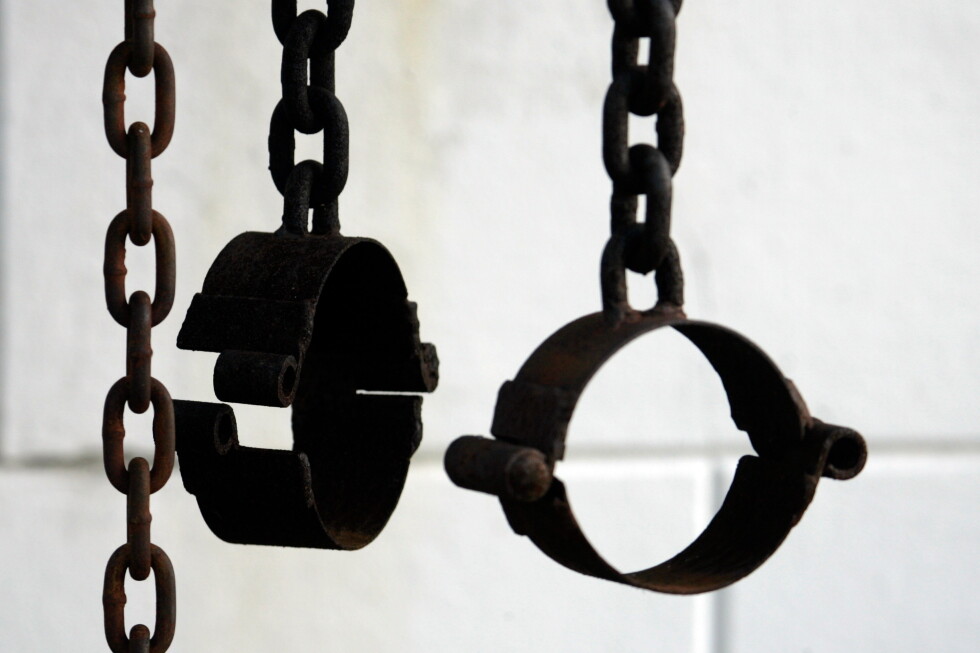
Three centuries of transatlantic chattel slavery inflicted unfathomable brutality on more than 12 million kidnapped Africans, and few artifacts embody that dehumanizing violence as viscerally as the iron restraints used to control enslaved people. Today, one set of these 400-year-old Ghana-crafted shackles holds a new, transformative purpose at the Roots 101 African American Museum in Louisville, Kentucky, helping visitors confront the unvarnished reality of America’s racial history long buried by incomplete or rewritten historical narratives.
Donated to the museum by a collector and activist, the shackles are not merely a static display piece for founder Lamont Collins, who launched the institution in 2020. For Collins, the relic is a living educational tool: he invites willing visitors to place the heavy irons on their own wrists to feel the weight of a history that cannot be denied or revised.
The shackles on display are far more than ordinary metalwork. Designed for every part of the human body — wrists, ankles, waists, and necks — they were even forged in small sizes to restrain enslaved children. For the European and American traders who profited from the transatlantic slave trade, these restraints were nothing more than practical tools to keep the forced migration system running smoothly. Enslaved people were crammed by the hundreds into the holds of transatlantic slave ships during the deadly Middle Passage, chained together at markets across the American Deep South, and marched in chained lines called coffles across vast stretches of land — a sight that was once commonplace across the young United States.
Beyond physical restraint, the shackles served a darker psychological purpose: they reinforced the constant message that freedom was an impossible dream for enslaved people. They were used as punishment for resistance and a deterrent against future uprisings. Special collar shackles were even fitted with bells or sharpened spikes to help slave catchers track and recapture people who dared to escape bondage.
Last year, a viral social media video showing Collins fastening the shackles around the wrists of a white visitor pushed the museum’s unconventional educational approach into the national spotlight. Collins attributes the video’s traction to a growing national hunger for honest conversations about race, even as political and cultural movements across the U.S. push back against teaching full and accurate accounts of American slavery.
Collins has observed that many people approach the history of slavery saying they want to learn, but only on their own comfortable terms. After wearing the shackles, many white visitors have broken down in tears, overwhelmed by the tangible weight of the violence the object represents. Others refuse to go through with the experience, stepping back even as Collins is about to fasten the restraints.
To those who decline, Collins poses a sharp, unflinching question: “Why can’t I put these on you for two seconds, when we had them on for 200 years?” That question, he says, is exactly the point: the exercise is designed to spark the difficult, necessary conversations that many prefer to avoid.
This report is part of *American Objects*, a recurring series marking the 250th anniversary of the founding of the United States, exploring how ordinary and extraordinary objects have shaped the nation’s history and identity.