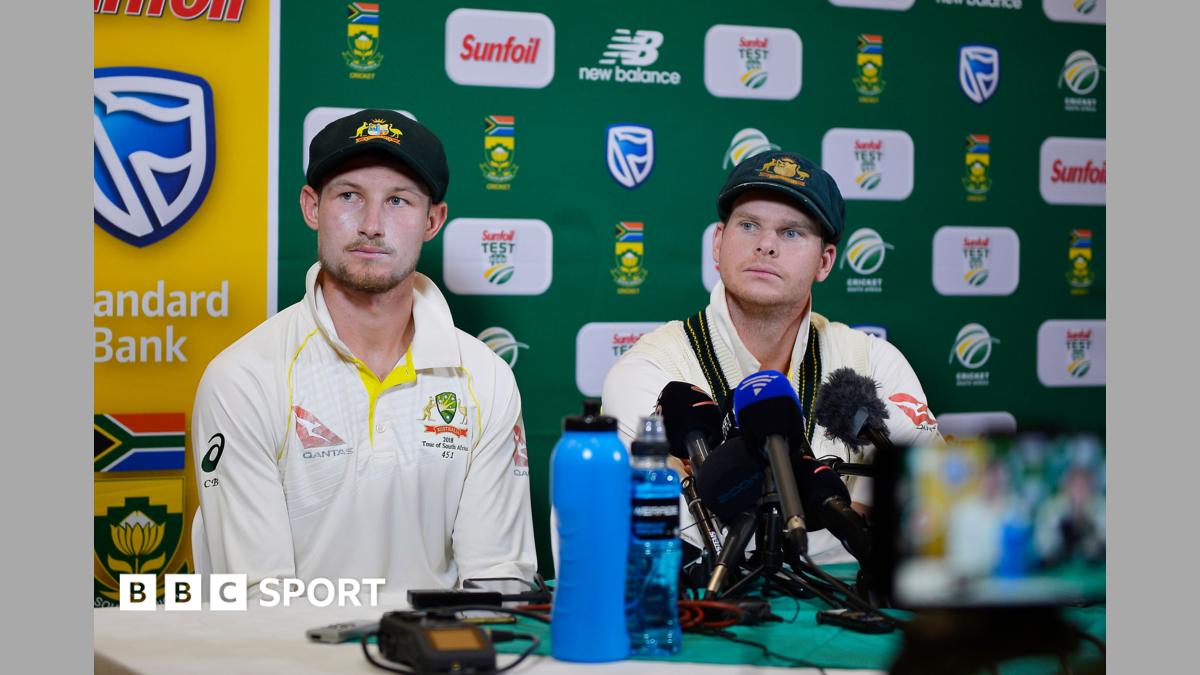
What many cricket fans once assumed was a closed chapter of the sport’s most high-profile modern misconduct scandal has roared back into the public spotlight eight years after it first erupted. Dubbed “Sandpapergate”, the 2018 controversy first unfolded during an Australia men’s Test tour of South Africa, when young batter Cameron Bancroft was caught on camera using a strip of sandpaper to rough up one side of the match ball to generate more favorable swing for his bowling unit. Then-Australian Test captain Steve Smith immediately admitted he had prior awareness of the premeditated plan, triggering a wave of disciplinary action that saw Smith, Bancroft, and senior batter David Warner handed multi-month bans from all professional cricket administered by the national governing body. Long thought settled, the affair was reignited earlier this year with the release of senior Australia batter Usman Khawaja’s autobiography, in which he made the explosive claim that every single member of the 2018 touring squad had full knowledge of the pre-planned ball-tampering scheme. The allegation was swiftly rejected by current Australia Test skipper Pat Cummins, who was a fast bowler on that 2018 tour. In response to the renewed public debate, Cricket Australia first convened an independent expert forum to re-examine the original Sandpapergate incident, before announcing it would significantly expand the review’s scope to cover the entirety of the 2017-18 international season, including the high-stakes home Ashes series against England that preceded the South Africa tour. The governing body has committed to releasing the full unredacted independent report once the investigation concludes, with the saga set to dominate cricket headlines in the lead-up to next summer’s upcoming Ashes tournament. Ball tampering, defined as any intentional alteration of the match ball’s seam or surface texture to manipulate its aerodynamic movement, is a direct violation of Law 41 of the International Cricket Council’s official rulebook, which governs unfair play. The deep cultural stigma attached to the practice is reflected in the iconic British idiom “it’s just not cricket”, a widely used phrase to describe any unsportsmanlike or unfair conduct that draws directly from the sport’s centuries-old identity as a bastion of fair play. Sandpapergate is far from the only high-profile ball-tampering controversy to shake the sport, with a string of landmark incidents over recent decades making global headlines: In 1994, legendary England captain Mike Atherton faced widespread public condemnation after broadcast footage appeared to show him rubbing dirt from the pitch onto the match ball during a Lord’s Test against South Africa. Atherton mounted a rigorous defence, stating he had only placed dry pitch dust in his pocket to keep his hands and the ball free of moisture to preserve its existing condition, rather than alter it illegally. Match referee Peter Burge opted to issue a £2,000 fine rather than a playing ban, following conflicting accounts of Atherton’s post-incident discussion with officials. In 2001, Indian cricket icon Sachin Tendulkar was handed a suspended one-match ban by match referee and former England captain Mike Denness, after footage appeared to show him removing a fragment of grass stuck to the ball. The ICC later ruled the action constituted unauthorized cleaning of the ball rather than deliberate tampering, and overturned the suspension. The controversy escalated dramatically when the Board of Control for Cricket in India refused to recognize Denness as the match referee for the third Test of the series, leading the match to be stripped of official international Test status. The 2006 Oval Test between England and Pakistan produced the first forfeited match in 140 years of Test cricket history, after umpires Darrell Hair and Billy Doctrove ruled Pakistan had illegally altered the ball’s condition, awarding five penalty runs to England and directing teams to use a replacement match ball. When play resumed after a break for bad light, the entire Pakistan squad refused to take the field in protest of the umpires’ decision. While team captain Inzamam-ul-Haq was later fully cleared of the ball-tampering charge by an ICC tribunal, he received a four-match ban for bringing the sport into disrepute by leading the player boycott. The match’s official result was initially recorded as an England win, briefly reclassified as a draw, before being reinstated as an England victory. In 2010, Pakistan skipper Shahid Afridi was caught on live television appearing to bite the surface of the match ball during a one-day international against Australia at Perth’s WACA Ground. Initially claiming he had only been testing the ball’s texture by smell and touch, Afridi later publicly apologized, stating he was “ashamed” of the impulsive, heat-of-the-moment decision. He received a two-match ban from international T20 cricket, and Pakistan went on to lose the five-match series 5-0. Most recently ahead of the 2018 Sandpapergate scandal, South Africa captain Faf du Plessis was found guilty of ball tampering during a Test against Australia, after footage showed him sucking on mint sweets before using his saliva to deliberately shine one side of the ball. It marked his second ball-tampering offence, following a 2013 incident where he was fined half his match fee for scuffing the ball against the zipper of his trousers during a match against Pakistan. In a pointed public comment after du Plessis’ 2017 offence, Australia’s then-vice captain David Warner stated “We hold our heads high and I’d be very disappointed if one of our team members did that. The rules are in place for a reason. If you’re not going to use them why bother having them? If you’re going to overstep the mark, be prepared to get fined and miss Test matches” – a statement that came back to widespread public attention 16 months later, when Warner was exposed as a key architect of the Sandpapergate scheme.
Ball-tampering: Five memorable cricketing controversies from Atherton to Du Plessis