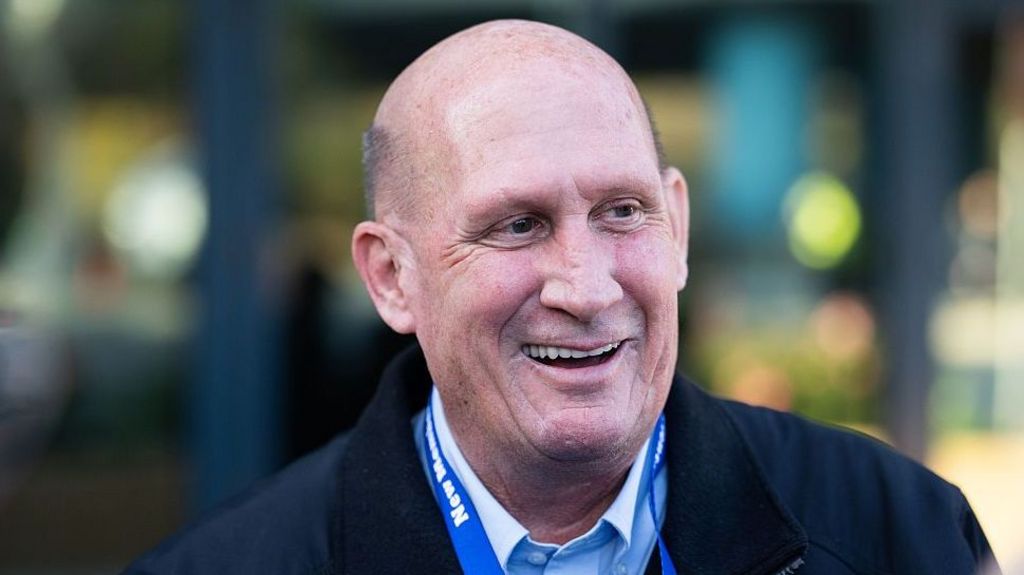
The 2026 U.S. midterm elections have delivered a historic legislative victory for the Democratic Party, which has clinched its biggest majority in the House of Representatives in more than three decades, a milestone last reached in 1992 during former President Bill Clinton’s first election to the Oval Office. The decisive final flip that locked in this landmark win came from North Carolina’s 5th Congressional District, where first-time political candidate and former journalist Chuck Hubbard unseated long-serving Republican incumbent Virginia Foxx after a protracted post-election recount.
Election officials formally called the closely contested race on Sunday, with 99% of all ballots tabulated showing Hubbard leading Foxx by a razor-thin margin of just 330 votes. Per North Carolina state election rules, Foxx, who has represented the 5th District in the House since 2005 and previously served 10 years in the North Carolina state Senate, was eligible to request a full recount due to the victory margin falling below 1%. After the recount confirmed Hubbard’s narrow lead, Foxx formally conceded the race in a public statement, noting she ran a campaign centered on her track record of pragmatic conservative policy solutions and expressing gratitude for the thousands of local voters who cast their ballot in her favor despite the narrow loss.
Hubbard, who previously challenged Foxx in the 2024 midterms and lost by a 9-point margin, took to social platform X to confirm he had spoken directly to Foxx, praising her for her gracious concession and commitment to facilitating a seamless office transition and ongoing support for constituent services. He emphasized that while the two leaders hold divergent policy views, they share a mutual dedication to serving the people of western North Carolina.
This upset in North Carolina is far from an isolated Democratic win: the party not only secured full control of the U.S. Senate in the 2026 midterms, but also flipped a series of deep-red House districts across traditionally Republican strongholds including South Carolina, Texas, Alaska, and Iowa. Like many successful Democratic candidates across the country, Hubbard centered his campaign messaging on the acute national cost-of-living crisis that has been exacerbated by the ongoing U.S. military conflict with Iran, an issue that polling ranked as the top priority for most voters heading into election day. Both former and sitting President Donald Trump and Vice President JD Vance have publicly attributed the Republican Party’s widespread underperformance in the midterms to sky-high inflation linked to the ongoing Iran conflict. Per his official campaign platform, Hubbard has pledged to prioritize policy support for working families, small local businesses, public education funding, and expanded access to affordable healthcare for his constituents.
As of Sunday’s official call, Democrats have locked in a minimum of 258 House seats, compared to the Republican Party’s confirmed 173, leaving just four outstanding races yet to be officially projected. Two of those remaining contests, in Tennessee’s 4th District and Minnesota’s 1st District, currently show Democratic candidates leading by margins of less than 300 and 500 votes respectively, while two additional House races in Louisiana are set to proceed to a December runoff election.
With full control of both the House and Senate chambers, Democrats will hold sweeping legislative leverage over the remainder of President Trump’s term: they will have the authority to launch formal congressional investigations into potential conflicts of interest and controversial actions by the president and his inner circle, exercise full oversight over all cabinet and federal judicial nominations, and pass legislative bills through both chambers with relative ease. Their power remains constrained, however, as President Trump retains the constitutional authority to veto any legislation passed by the Democratic-controlled Congress.
Democrats win largest House majority since 1992 after flipping North Carolina seat