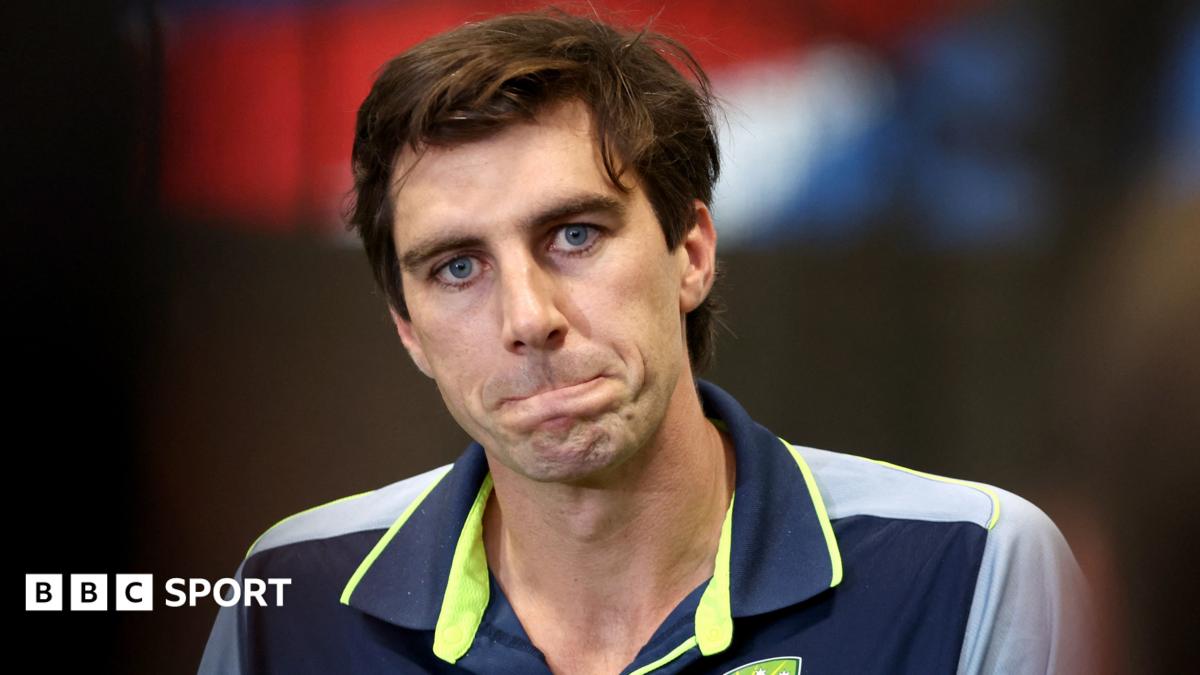
Nearly six years after the 2018 Cape Town ball-tampering scandal that rocked international cricket, the controversy once dubbed “sandpapergate” has exploded back into public view, placing current Australian men’s cricket captain Pat Cummins at the center of a relentless media and public firestorm. Speaking to assembled press on November 12, Cummins forcefully dismissed recent claims from former teammate Usman Khawaja regarding the 2018 incident, labeling the allegations “100% wrong” and “utter nonsense” as he attempts to distance the current national team leadership from the long-buried details of the scandal.
As a former professional bowler and the BBC’s chief cricket commentator Jonathan Agnew lays out in his analysis, the core premise that the team’s most inexperienced batsman at the time, Cameron Bancroft, would have secretly tampered with the match ball using sandpaper without the entire Australian bowling unit’s knowledge has never held up to logical scrutiny. For as long as competitive cricket has been played, minor forms of ball manipulation have been a quiet, unspoken part of the sport: players historically used items like confectionary to polish one side of the ball to enhance swing, and the rise of reverse swing created a clear incentive for teams to deliberately rough up and dry one side of the ball to gain a competitive edge. As Agnew notes, the match ball is unequivocally the domain of the bowling attack, their primary tactical weapon, just as no bowler would ever alter a batsman’s equipment without their explicit consent. It is functionally implausible that a lower-order batsman like Bancroft would undertake such a high-stakes action without the full awareness and implicit approval of the bowlers on the field.
For years, the full scope of who knew what during the 2018 incident remained hidden, a silence Agnew attributes to the very real career risks active players would have faced if they broke ranks to speak out publicly at the time. Only once players step away from the pressure of international selection do they feel secure enough to share unvarnished accounts of what transpired behind closed doors. Recent discourse has floated the idea that Steve Smith, the captain in 2018, David Warner, and Bancroft himself took the full fall for the rest of the team to shield their teammates, but Agnew pushes back on that framing: Smith, as the on-field leader, bore full responsibility for controlling his team’s conduct, Warner was the originator of the sandpaper tampering plan, and Bancroft was the one who carried it out, meaning any penalties they received were fully deserved for their own actions.
Cummins, who was a junior, relatively inexperienced bowler on that 2018 tour, has since risen to the highest profile leadership role in Australian cricket, a position often joked to be the second most powerful public post in the country behind only the Prime Minister. Unlike many of his gruffer, more abrasive predecessors, Cummins has cultivated a reputation as a thoughtful, measured leader who has worked tirelessly to rehabilitate the Australian team’s public image after the win-at-all-costs stigma left by the 2018 scandal — though his credibility on that front took a notable hit following the highly controversial Jonny Bairstow stumping during the 2023 Lord’s Ashes Test that drew widespread global criticism for unsportsmanlike conduct.
At present, there is no public indication that Cricket Australia intends to force Cummins out of his captaincy, but the coming weeks promise an unprecedented media circus ahead of Australia’s first Test match against New Zealand, set to kick off December 9 in Perth — Bancroft’s hometown, and the same city where the former batsman published his explosive 4,000-word firsthand account of the scandal. The reaction of the Perth crowd to Cummins when he leads the team out onto that home ground will serve as the first major public litmus test of his standing with fans. Even if he navigates that high-pressure home fixture, the Australian sports media has shown no signs of backing down from their relentless pursuit of the full unvarnished truth of one of the biggest controversies in the history of Australian sport.
Cummins has already publicly stated he never wants to discuss the sandpapergate scandal again, a position Agnew describes as deeply unrealistic as the team looks ahead to the 2025 Ashes tour of England, where he would face nonstop global media scrutiny and relentless crowd baiting if he takes the field as captain for the Trent Bridge Test on June 18. The most plausible exit path for Cummins, Agnew suggests, would be to step down voluntarily without admitting any personal wrongdoing, framing his resignation as a necessary step to eliminate distracting media pressure from the team and protect his family, who have already been photographed being confronted by reporters outside their private home. A voluntary departure would also take significant public heat off the other surviving members of the 2018 bowling unit: Mitchell Starc, Josh Hazlewood, and Nathan Lyon.
Beyond Cummins’ personal fate, the resurfacing of the scandal has laid bare lingering, unresolved questions about the entire culture of the Australian cricket setup circa 2018, where players operated under the apparent assumption that they were untouchable and could get away with unsportsmanlike conduct without consequences. The revelations have also cast a new spotlight on previously little-discussed figures from that era, including team media manager Kate Hutchison, who Bancroft has confirmed pushed back against the tampering plan and warned the team of the catastrophic fallout if they were caught, as well as senior coaching staff from the 2018 tour including Darren Lehmann and David Saker, who have gone on to hold senior coaching roles with other top-tier teams in global cricket. Agnew argues that Cricket Australia’s previously stated strategy of letting involved parties share their personal versions of events behind closed doors has now completely collapsed, and the governing body has a non-negotiable obligation to release the full, unfiltered truth of the scandal to the public, rather than allowing partial, conflicting accounts to continue to leak out and erode public trust in the sport.
Cummins’ Australia captaincy at a crossroads – Agnew