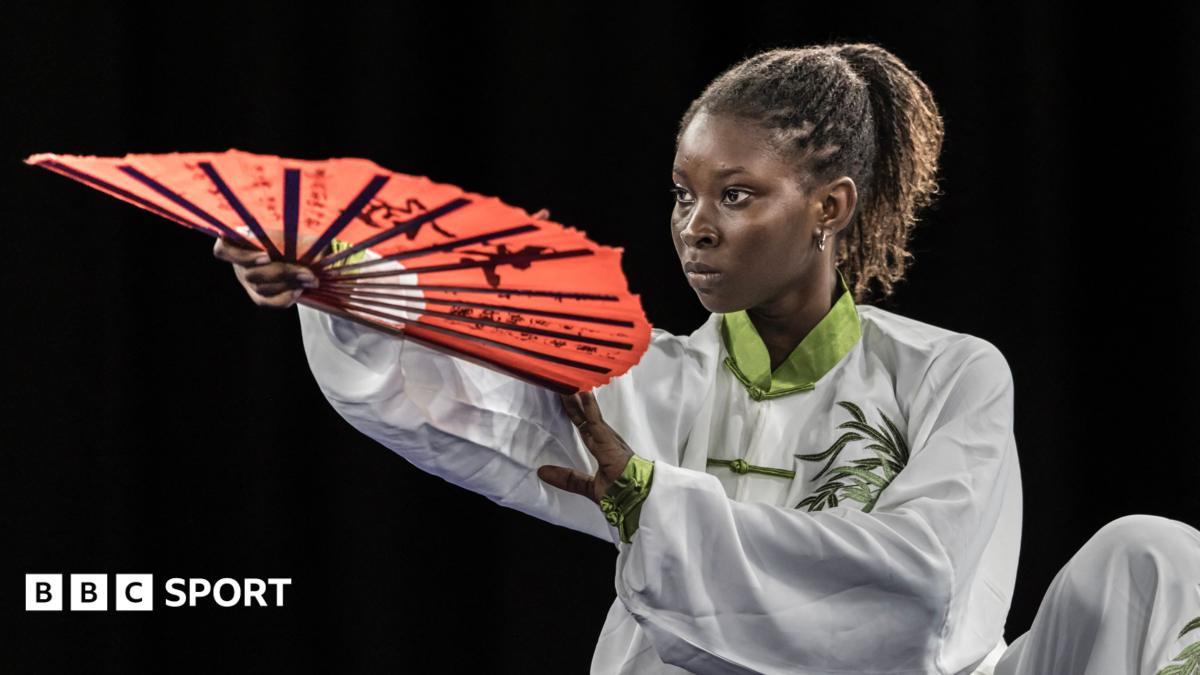
Following a vibrant Saturday opening ceremony that celebrated Senegalese national heritage and diverse pan-African cultural expression, the 2026 Dakar Youth Olympic Games – the very first Olympic ever hosted on the African continent – has surged into full competitive swing. Designed to centre mostly 15 to 17-year-old rising athletes, this landmark event is making history by introducing multiple brand-new disciplines that have never appeared on any official Olympic competition schedule before, giving a generation of young sportspeople their first shot at etching their names into Olympic record books. Over the event’s action-packed opening week, spectators across Senegal and global viewers have been captivated by the debuts of innovative sports ranging from ancient martial arts reimagined for modern competition to adapted urban and beach disciplines that break away from traditional Olympic formats. The most buzzed-about new addition to the Olympic family this year is wushu, the dynamic Chinese martial art popularly known globally as kung fu, which has spent decades as a demonstration or cultural showcase event at prior Games before awarding official Olympic medals for the first time in Dakar. Governed by the International Wushu Federation, established in 1990 to standardize the centuries-old discipline that rose to global fame via icons like Bruce Lee, Jackie Chan and Michelle Yeoh, the sport features two competitive formats in Dakar: high-octane changquan, a dazzling display of speed, acrobatic jumps, powerful kicks and weapon flourishes, and slow, fluid tajiquan, the graceful tai chi-derived routine performed to a carefully curated musical soundtrack. Organizers opted to waive mandatory national team uniform rules for wushu competitions, allowing athletes to compete in personalized, vibrantly embroidered flowing robes that highlighted each competitor’s unique cultural style. As US athlete Marshall Brayton noted, “Everybody has a different kind of flavour to their moves. I think that uniqueness in every person’s routine is the essence of wushu.” Singapore’s Zhe Nin Ng, who took home gold in the men’s tajiquan event, shared his rigorous preparation strategy, explaining he repeatedly played his performance soundtrack even while sleeping to embed the rhythm into his muscle memory. Egypt’s Sondos Sonbol claimed the historic first Olympic gold in the women’s changquan category, while Morocco’s Oussama El Maghnaoui narrowly missed a spot in the men’s tajiquan final. Another standout new twist on a classic Olympic sport is coastal beach sprint rowing, set against Senegal’s scenic Atlantic shoreline. Unlike the traditional indoor or calm-water rowing that has been an Olympic mainstay since 1900, this modified format starts with athletes sprinting barefoot down the beach, launching their boat, rowing 250 metres out to a marker buoy, turning sharply to race back to shore, leaping out of their vessel and sprinting up the sand to hit a finish buzzer. The unpredictable, ever-shifting ocean waves mean no race is a foregone conclusion, with a single small error capable of costing competitors the win. “It’s super fun. It’s a lot more exciting than traditional rowing,” 17-year-old American rower Isaac Moos told Olympics.com, while China’s mixed double sculls gold medallist Su Juntao added that balancing speed with error reduction makes the sport uniquely thrilling. This coastal discipline is already set to make the jump to the senior Los Angeles 2028 Olympics, where it will replace the existing lightweight double sculls category. Baseball5, the stripped-back, urban-inspired iteration of baseball, also made its full Olympic debut in Dakar, designed to boost accessibility by eliminating the need for specialized equipment. Played by five-person, mixed-gender teams on a compact 18m x 18m court, the sport does not use a pitcher: batters hit a soft rubber ball directly from their hand, with no strikes allowed and only one legal hit permitted per batter, leading to fast-paced, high-scoring five-inning matches that prioritize skill over brute strength. Host nation Senegal finished a respectable eighth in the competition, while Cuba – the all-time leading nation in senior Olympic baseball with three gold medals – lived up to its reputation, beating Chinese Taipei in the final to claim the historic first baseball5 Olympic gold. “We have baseball running through our veins and in our hearts, and we will always, always, always put Cuba at the top,” Cuban player Jean Carlos Machado Casado remarked after his team’s victory. The Games have also relocated two familiar Olympic adjacent sports to the sun-soaked white sands of Saly beach to lean into Senegal’s coastal setting: beach handball and beach wrestling. Beach wrestling, which is deeply rooted in Senegal’s thriving local traditional wrestling culture, makes its Youth Olympics debut this year, with fast-paced bouts contested in a circular sand pit where competitors score points via throws, takedowns or forcing their opponent out of the designated boundary. Street skateboarding, which first appeared on the senior Olympic schedule at Tokyo 2020, also made its Youth Games debut in Dakar, though South Africa’s young talent Molemo Losaba narrowly missed out on a spot in the men’s final. As the first week of competition wraps up, dozens of young African and global athletes have already claimed their first ever Olympic medals, with many poised to carry their momentum through to the 2028 Los Angeles senior Games.