The 2026 US midterm elections delivered a outcome that Canadian policymakers had openly advocated for, as Democratic candidates secured decisive wins across key battleground states where widespread public frustration with former President Donald Trump’s steep tariffs on longstanding trade ally Canada emerged as a defining electoral issue. Ontario Premier Doug Ford did not hide his elation in a Wednesday morning media appearance, noting he had been “doing cartwheels down the street” following the results and framing the Democratic sweep as a clear “victory for Canada”.
While the electoral shift has sparked cautious optimism in Ottawa that long-stalled, on-again-off-again bilateral trade negotiations may gain fresh momentum, analysts and trade officials warn that immediate relief from the sweeping levies is highly unlikely in the short term. Pre-election polling from the Cato Institute, released in September 2026, found that roughly 75% of American voters believed the tariffs on Canadian goods had directly driven up household costs, with affordability ranking as the top stated priority for voters heading to the polls.
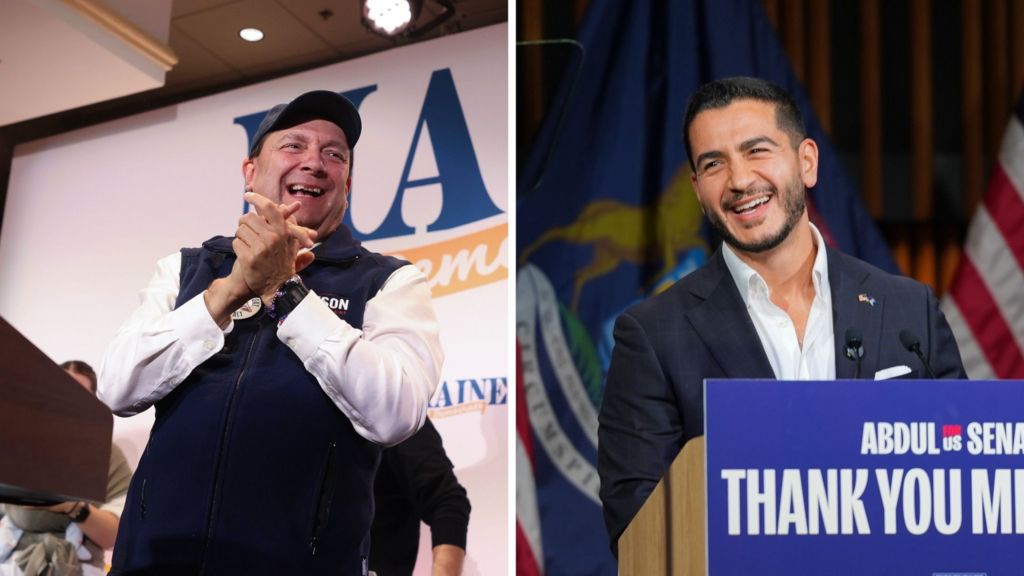
The tariff issue played an outsized role in high-stakes races across two states with deep economic ties to Canada. In Maine, veteran incumbent Republican Senator Susan Collins, who had publicly broken with the Trump White House over the levies and successfully lobbied for targeted exemptions for critical state imports including road salt, refrigeration equipment and seaweed, ultimately lost her re-election bid to Democratic challenger Troy Jackson. A parallel dynamic unfolded in Michigan, where the domestic auto manufacturing sector is inextricably linked to Canadian supply chains: Democratic candidate Abdul El-Sayed defeated Republican Mike Rogers, who had attempted to distance himself from Trump’s trade policies with a campaign television ad declaring “Canada is not our enemy”. A 2026 analysis from the US National Taxpayers Union Foundation calculated that Trump’s 25% tariff on non-US manufactured passenger vehicles and light trucks had triggered layoffs in Ontario’s auto sector and added thousands of dollars in annual unplanned costs for the average Michigan household. El-Sayed publicly derided the auto levies as “dumb”, explicitly blaming them for soaring local consumer prices. In Ohio, newly elected Democratic Senator Sherrod Brown, who defeated Republican rival Jon Husted, labelled the tariffs a “disaster” and pledged to cut household living expenses by rolling back the duties.
Top congressional Democratic leaders including Hakeem Jeffries and Chuck Schumer, who now hold enhanced legislative power following the midterm wins, have spent recent months advocating for scaling back the Canada-focused tariffs. Even so, Democratic control of Congress is far from a guaranteed path to tariff elimination, as the vast majority of Trump’s levies on Canadian goods were implemented via unilateral executive orders that did not require congressional approval. In a Tuesday night Fox News interview following the election, Trump reaffirmed his “ultimate power” to veto any congressional bills that attempt to roll back his trade policies. A faction of Democratic lawmakers have also historically supported select tariffs to protect domestic manufacturing jobs, and may push to retain a subset of the existing levies.
The current suite of US tariffs on Canada covers major sectors including automobiles, steel, aluminium and forestry products. After bilateral trade talks collapsed in August 2026, the Trump administration imposed an additional 50% tariff on $20 billion worth of Canadian consumer and agricultural goods ranging from dairy products to cosmetics and furniture, alongside a full import ban on Canadian motorcycles, whey protein and alcohol. Ottawa retaliated with an equivalent 50% “dollar-for-dollar” tariff on US imports, while most Canadian provinces implemented parallel bans on the sale of American alcohol. Trump had also previously threatened to escalate the trade conflict further by raising auto sector tariffs even higher starting 1 January 2027.
In the weeks leading up to the midterm vote, the Trump administration appeared increasingly sensitive to the public backlash against the levies, with Trump telling reporters just days before polling day that a comprehensive trade deal with Canada was “very close” following a direct conversation with Canadian Prime Minister Mark Carney. Speaking to reporters on election night, Carney noted that US negotiators were now “asking less and offering more” in ongoing discussions. However, Canada’s US-Canada Trade Minister Dominic LeBlanc struck a pragmatic note on Wednesday, stating that the midterm results would not alter Ottawa’s immediate policy approach, and dismissing widespread speculation about the incoming Democratic-controlled Congress’s potential tariff actions as “an interesting discussion at a faculty club luncheon”.
Colin Robertson, a former Canadian diplomat and fellow at the Canadian Global Affairs Institute, argued that Trump may now face greater pressure to finalise a trade agreement with Canada, given voters’ clear repudiation of his tariff policies. “Will this change Trump’s mind? It might, because he suffered such a beating at the polls,” Robertson observed, though he added that the exact nature of Trump’s response to the bruising electoral loss remains unpredictable. Robertson also highlighted that Ottawa holds a critical narrow window to finalise a deal before the new Democratic members of Congress are sworn in early next year, after which Trump is expected to be distracted by new congressional investigations into his family’s finances, business dealings and senior administration officials. Earlier this year, US Trade Representative Jamieson Greer stated his goal was to finalise interim updates to the revised North American Free Trade Agreement, known as USMCA in the US and CUSMA in Canada, with Canada and Mexico before the end of 2026. While Carney has struck an increasingly optimistic tone on the trajectory of trade talks in recent public comments, he told Politico last month that he remained fully prepared to wait for a new US presidential administration if necessary to secure a fair, mutually beneficial trade deal for Canada.