The immediate aftermath of the 2026 U.S. midterm elections has laid bare a raw, bitter rift within the Republican Party, as a string of historic Democratic upsets in traditionally uncompetitive deep-red states has shifted initial post-election shock into widespread frustration and finger-pointing directed at sitting President Donald Trump. Going into Tuesday’s vote, most Republican operatives had braced for a narrow loss of the House of Representatives, and acknowledged the steep challenge of defending their Senate majority amid the well-documented historical trend that the party holding the White House almost always loses seats in midterm cycles. But no one in the party’s inner circle anticipated the scale of the Democratic landslide: the opposition flipped both chambers of Congress, secured statewide wins in Texas (where no Democrat had won top office in more than three decades), Kansas (where no Democrat had claimed a Senate seat since 1932), South Carolina and a swath of other reliably red districts that had been considered safe Republican territory just weeks before polling day. Dozens of House seats, governor’s mansions and Senate posts across the country fell to Democratic candidates, many of whom ran as pragmatic moderates. A dozen senior Republican operatives, campaign officials and White House allies spoke to the BBC on background to share unvarnished assessments of the party’s crushing defeat, with a large contingent laying full blame for the historic losses directly at Trump’s feet. Top Texas Republican lobbyist Bill Miller called the outcome a total, unmistakeable public rejection of the sitting president, describing it as an unforeseen disaster of the highest magnitude. Minnesota-based Republican strategist Gregg Peppin echoed that sentiment, noting that voters across state lines had clearly rejected Trump’s unpopular policy agenda, and that the president had misstep after misstep throughout the campaign cycle. One senior White House ally described the confluence of public anger over the ongoing Iran war, sweeping import tariffs, harsh immigration crackdowns and rising cost of living as a “perfect storm” that sealed the party’s fate, adding that palpable, extreme frustration with Trump’s leadership is rippling through every layer of the Republican Party. Critics pointed to months of apparent presidential disengagement from midterm campaigning over the summer, a period when most congressional Republicans were laser-focused on rallying voters. Trump was instead preoccupied with the overseas conflict in Iran and a slate of high-profile domestic construction projects around Washington D.C., including a new White House South Lawn helipad, a private ballroom renovation, upgrades to his personal golf course, a proposed memorial near Arlington National Cemetery and overhauls to the Kennedy Center. Events such as a UFC viewing party hosted at the White House to mark Trump’s 80th birthday in June reinforced the perception among voters that the president prioritized personal celebration over addressing pressing household economic concerns, as he repeatedly dismissed widespread public anger over spiking gasoline prices as a Democratic manufactured hoax. When Trump finally pivoted to full campaign mode ahead of the November vote, his efforts repeatedly backfired. The party’s first midterm convention in decades, held in Dallas, was completely dominated by the president’s rambling keynote address, where he made the unorthodox promise to give $5,000 to every voter who cast a ballot for a Republican candidate, and publicly mocked Texas Senate nominee Ken Paxton for lacking charisma and having unflattering physical traits. The convention drew dismal television ratings, with even senior Republicans acknowledging the event did nothing to boost their candidates’ profiles. On the campaign trail in the final weeks before election day, Trump continued to make unforced errors: he drew bipartisan criticism for labeling Michigan Democratic Senate candidate Abdul El-Sayed a “jihadist,” and made viral off-topic comments gushing over Ohio Republican Senate candidate Jon Husted’s physical physique. A cascade of last-minute White House scandals further undermined Republican messaging: newly appointed press secretary Katie Zacharia was forced out of her role after just five days on the job, U.S. Ambassador to Greece Kimberly Guilfoyle resigned after reports emerged she had pressured a political donor to pay off her personal credit card debt, and Trump faced widespread bipartisan backlash after cutting a last-minute deal to purchase Russian diesel, a move that completely blindsided congressional Republicans just weeks after he signed a bill imposing strict new sanctions on Russian energy exports. Democratic campaign teams seized on each of these missteps to frame the Republican majority as chaotic and out of touch with ordinary voters, a message that resonated even in deeply conservative districts. Defenders of Trump pushed back against the narrative that he was solely responsible for the losses, pointing to the long historical pattern of midterm losses for the incumbent president’s party: since 1934, the White House’s party has gained seats in a midterm election only three separate times. They also argued that weak, underperforming Republican candidates in key battleground states dragged down the ticket, with one anonymous Texas operative noting that Ken Paxton ran the worst Senate campaign seen on either side of the aisle in the country, failing to knock on even 100,000 doors during the entire cycle, while his Democratic opponent James Talarico ran a sharp, well-organized race. Krish Mathrani, youth chair of the Michigan Republican Party, added that Trump’s official duties as sitting president made it impossible for him to campaign 24/7, and that his high-profile rallies still succeeded in turning out loyal core Republican voters. But as election results rolled in, it became clear that Trump’s vaunted reputation as a voter turnout machine failed to translate to cycles where his name was not on the ballot, a pattern that repeated for the third consecutive election. The president remained largely silent on election night until both chambers of Congress were formally called for Democrats, when he posted a statement on his Truth Social platform claiming he was not on the ballot, and that he would have won in a historic landslide if he had been a candidate. He later told Fox News he was slightly surprised by the scale of the losses, but reiterated his long-held talking point that the president’s party always struggles in midterm elections, and said he would accept the final certified results. The outcome has thrown Trump’s second term into a period of unprecedented uncertainty, as the newly empowered Democratic majority in Congress has already promised to launch sweeping investigations into his administration, block all of his pending judicial nominees and completely derail the rest of his policy agenda. The historic losses have also forced the Republican Party to confront a reckoning over its future direction, with a growing number of senior operatives openly discussing a post-Trump era ahead of the 2028 presidential election. Iowa Republican National Committeeman Steve Scheffler noted the party has a deep bench of potential 2028 candidates ranging from Vice President JD Vance to Marco Rubio and Ted Cruz, setting the stage for a wide-open nomination fight. Strategist Gregg Peppin went a step further, saying he sincerely hoped the devastating midterm results would allow the party to turn the page on the Trump era entirely, and move forward with new leaders, new policy priorities and a renewed focus on the concerns of ordinary voters.
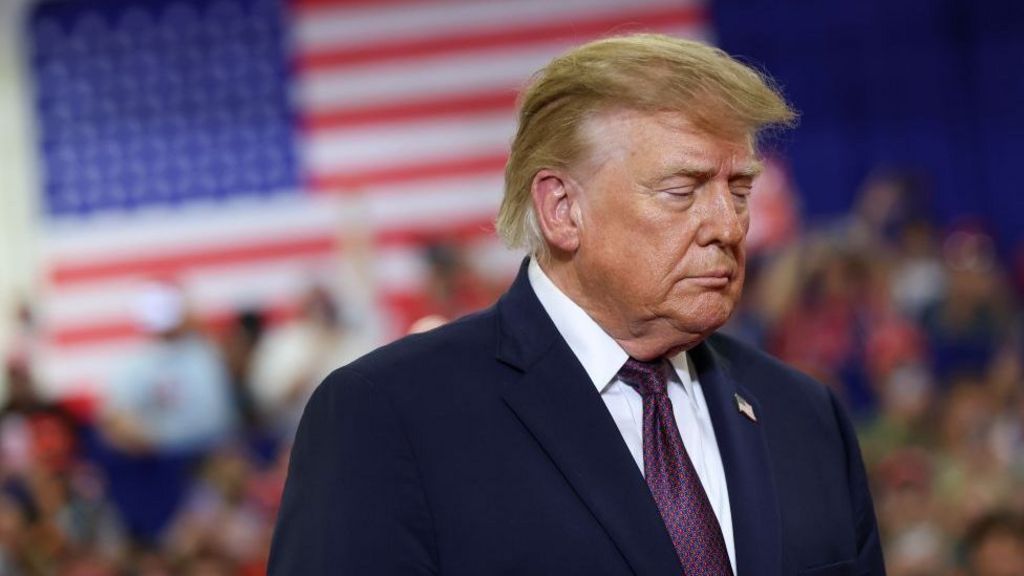
‘This is a disaster’: Angry Republicans blame Trump for midterms defeat