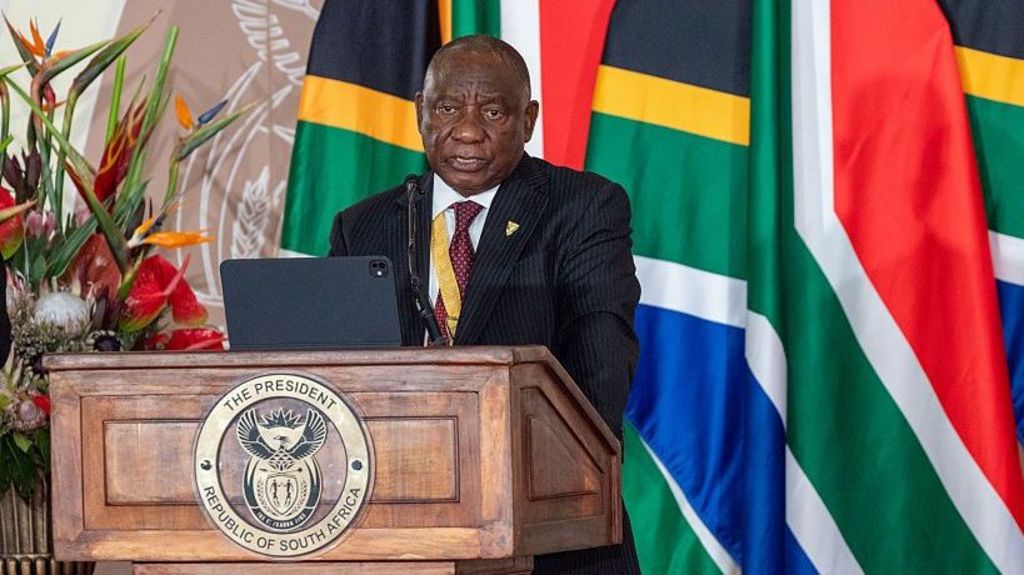
In a landmark ruling delivered on a Monday, a South African regional court handed down guilty verdicts to two individuals linked to the high-profile 2020 heist at President Cyril Ramaphosa’s Phala Phala cattle farm in Limpopo Province, a case that has roiled national politics for three years and triggered repeated calls for the head of state’s impeachment. Lead defendant Imanuwela David was convicted on two core charges: grand theft and conspiracy to commit housebreaking with intent to steal, while Froliana Joseph, a former cleaner employed at the private farm, was found guilty solely of the conspiracy offense. A third defendant, Ndilinasho Joseph, who is the brother of Froliana Joseph, was fully acquitted of all related charges after the court determined there was insufficient evidence to tie him to the 2020 break-in. The court confirmed that David orchestrated the unauthorized entry to the remote farm property in February 2020, where he stole a total of $580,000 in undeclared cash that had been hidden inside a residential sofa on the premises. Following the burglary, David embarked on a lavish, months-long spending spree using the stolen funds, purchasing a fleet of luxury vehicles that included three Mercedes-Benz cars (one of which he gifted to his girlfriend), a high-end Porsche, two Volkswagen models, multiple diamond-studded Rolex timepieces, and a residential property. In his defense, David attempted to argue that all his newfound wealth had been generated through legitimate diamond trading operations and Bitcoin investment gains, but the presiding judge thoroughly rejected these claims as unsubstantiated fabrications. Court records also confirmed that David was the only one of the two convicted parties to hold traceable portions of the stolen cash in his personal bank accounts. Formal pre-sentencing proceedings for the convicted pair are scheduled to convene on November 13, where the court will hear mitigation and aggravating evidence before issuing final penalties. The high-profile legal ruling represents the latest chapter in the so-called “Farmgate” scandal, a political saga marked by repeated twists and turns that first burst into public view in 2022. The break-in had been kept largely out of official public records for two years until Arthur Fraser, the controversial former South African intelligence chief and a close ally of ex-president Jacob Zuma, filed formal public accusations claiming that Ramaphosa had deliberately concealed the large-scale theft from local law enforcement agencies and national tax authorities. Ramaphosa later publicly acknowledged that the burglary had occurred, but consistently maintained that he had committed no illegal or unethical conduct in relation to the incident. A government-appointed independent investigative panel later concluded the same year that Ramaphosa faced credible, unresolved questions regarding his handling of the stolen funds, though national members of parliament subsequently voted down a proposal to launch a full formal impeachment inquiry. The saga took another unexpected turn in May 2024, when South Africa’s Constitutional Court issued a ruling that parliament had acted unlawfully by arbitrarily shelving the independent panel’s official report. Just two months later, in July 2024, Ramaphosa successfully secured a provincial high court interdict that blocked parliament from moving forward with the planned impeachment inquiry, temporarily halting the legislative process against him.