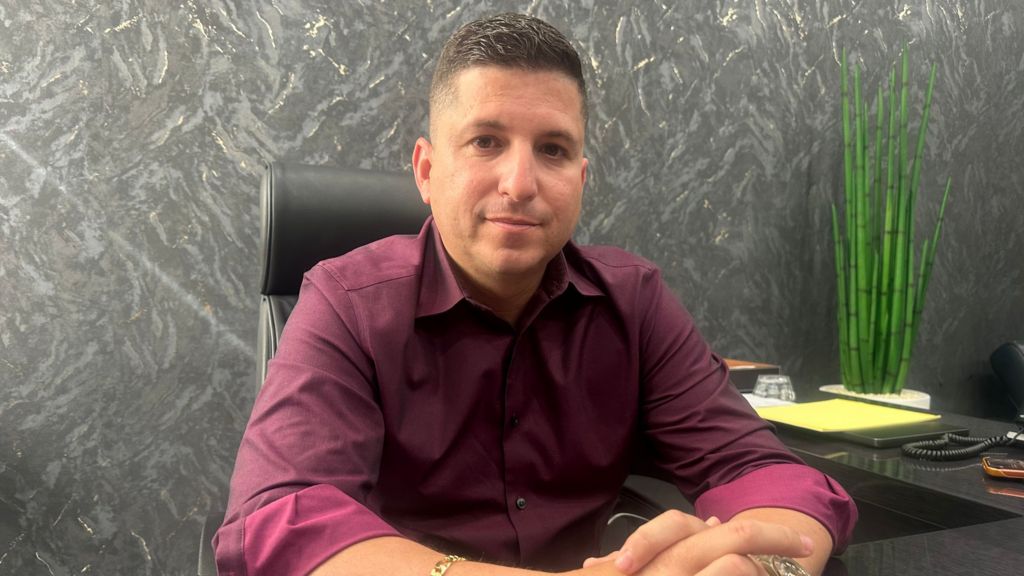
Two years into the Trump administration’s sweeping nationwide undocumented immigration crackdown, the Miami office of Cuban-born immigration attorney Ismael Labrador operates at full, unrelenting capacity. His waiting room is perpetually packed, his appointment calendar saturated with frantic family members of detained non-citizens scrambling to navigate legal channels to prevent their loved ones from being expelled from the U.S. and returned to their home countries. Though his legal practice is more commercially successful than ever, Labrador expresses profound regret over the circumstances driving that boom.
“Right now, so many of our community members are trapped in constant fear, and we have already had relatives deported back to Cuba, a devastating outcome none of us anticipated,” Labrador shared. For decades, Cuban migrants have held uniquely privileged immigration status under the 1960s Cuban Adjustment Act, a long-standing piece of federal legislation that offered them a clear path to permanent residency. But widespread, unannounced raids across Florida carried out by U.S. Immigration and Customs Enforcement (ICE) teams have shattered that perceived safety net, leaving the Cuban American community far more exposed to removal proceedings than at any point in modern U.S. history. Labrador notes, “The simplest way to frame it is: if you do not hold a valid Green Card in this country, you could be targeted for detention at any moment.”
Hundreds of user-shared mobile phone clips have documented these detentions unfolding in spaces once universally considered off-limits to immigration enforcement: parents being led away in cuffs outside elementary school pick-up zones, at public bus stops, during local youth sports matches, and even inside courthouse lobbies where migrants had arrived for pre-scheduled, routine immigration hearings. No piece of footage has resonated as widely as the viral clip capturing 39-year-old Ecuadorean migrant Grace Calero and her 19-year-old daughter Giulianna Carriel being taken into custody while recovering in a central Florida hospital ward. The pair had been severely injured in a traffic collision on their commute to work in Kissimmee two months prior, and were receiving medical treatment when ICE agents entered their ward to arrest them; both were deported back to Ecuador within 72 hours, with no opportunity to arrange for their affairs or challenge the order. Even Labrador’s own cousin was swept up in the enforcement dragnet, and despite the attorney’s full use of his professional expertise and legal resources, he was unable to prevent the man’s deportation to Cuba. “It is an impossible fight when you are up against the nearly unlimited federal resources allocated to these operations,” Labrador lamented.
The White House has repeatedly defended the policy, noting that Trump ran and won the 2024 presidential election on an explicit pledge to implement mass deportation measures. A White House spokesperson told the BBC last week, “He fulfilled his promise to stop the invasion of our nation, and as a direct result of his policies, more than 3 million undocumented people have left the United States.” ICE, meanwhile, has maintained that its enforcement actions are targeted exclusively at individuals who have violated U.S. immigration law and are residing in the country without valid authorization.
Labrador was part of the 68% of Florida’s Cuban American electorate that cast their vote for Donald Trump in 2024, a decision he now openly describes as a catastrophic, unforeseen mistake. Though Trump had never hidden his hardline immigration platform, repeatedly vowing at Florida campaign rallies that he would “launch the largest deportation program in American history on Day One” of his second term, Labrador and tens of thousands of other disenchanted Latino voters operated under the assumption that the administration would only prioritize removing migrants with documented criminal records. “We were completely blindsided by what actually unfolded,” he explained. “I voted for Trump because I wanted to get violent criminals out of this country, and I believed his claims that the Biden administration had allowed a flood of communist sympathizers to enter from Cuba. We wanted a safer United States, but we never imagined he would go after every single undocumented person regardless of their background. This is not at all what I cast my ballot for.”
Labrador is far from the only Cuban American voter in Florida experiencing this post-election buyer’s remorse. Congresswoman Maria Elvira Salazar, who represents Florida’s 27th Congressional District, recently released a public video filmed outside the White House in which she formally distanced herself from the administration’s deportation policies, stating that the crackdown had “gone far too far.” She directly addressed President Trump in the footage, noting, “The very same Hispanic communities that helped carry you to the White House in 2024 feel completely betrayed today.” Salazar is currently locked in a fiercely competitive re-election race against Democratic challenger Eliott Rodríguez, a fellow Cuban American, and critics note that her past close ties to Trump’s immigration agenda could cost her the seat in the upcoming November midterms.
Florida remains a solidly pro-Trump Republican stronghold for now. At a recent gathering of Cuban American small business owners in Miami, the prevailing sentiment was overwhelmingly supportive of the president. “Miami loves Trump, Cuban Americans love Trump,” said local real estate developer Juan Omar Sixto, gesturing to the crowd of fellow attendees behind him. “Everyone here agrees that any person who crossed the border illegally should be required to leave the country” — a stance he maintained even while acknowledging that he himself entered the U.S. without valid legal documentation 60 years earlier. A recent survey published by Florida International University paints a more nuanced picture, however: 76% of South Florida Cuban respondents said they disapprove of the administration’s practice of deporting Cubans with no prior criminal record, even as 68% confirmed they still plan to vote for Republican candidates in the upcoming midterm elections. Across other regions of the U.S., overall support for the Republican Party among Latino voters is dropping sharply. In the 2024 presidential election, Trump defeated Kamala Harris among Florida Latino voters by a 56.1% to 43% margin — the largest gap for any presidential candidate in the state since 1988 — but a recent NBC News/Telemundo poll of 8,000 registered Latino voters nationwide found that nearly 60% want Democrats to take control of Congress, compared to just 35% who prefer a Republican majority. Skyrocketing costs of living, including steep spikes in grocery and gasoline prices that place a heavy strain on working-class households, are a major driver of that discontent, but for many Hispanic voters, the stories of families torn apart by deportation operations have also shifted their political calculus.
One of the most widely shared of these stories belongs to Heydi Sanchez, who fled Cuba in 2019 as the island descended into a crippling economic collapse, and crossed the U.S.-Mexico border without legal authorization. After spending nine months in a federal detention facility, she was released on an I-220B Order of Supervision, a temporary status that allowed her to remain in the U.S. but required her to attend regular check-ins with ICE agents, with a constant underlying risk of deportation. She settled in Tampa, where she worked caring for children with autism and elderly residents, and after years of costly, complicated fertility treatments, she and her U.S. citizen husband welcomed a baby daughter named Kailyn. Most I-220B holders pursue permanent status through humanitarian parole, but last year, the Trump administration revoked temporary humanitarian parole protections for roughly 300,000 Cuban migrants. Sanchez realized her status was at risk when ICE unannounced rescheduled her next mandatory check-in to an earlier date. When she arrived at the appointment, she was immediately detained, and Kailyn was taken from her arms and placed in the care of her father. Within 24 hours, Sanchez was placed on a deportation flight back to Havana in shackles, with no opportunity to file an appeal. The author met her in Cuba, where she now resides in a small one-bedroom apartment in the rural Mayabeque province outside Havana. “It felt like the sky fell down and crushed me the moment they took my baby away,” she said through tears, describing the separation from her daughter. “When we video call, she keeps saying ‘Mummy, come home.’ All I can say is ‘Honey, Mummy is away working.’ What else can I tell her? How do you explain something that cruel to a small child?” Despite public expressions of support from several U.S. politicians including Congresswoman Salazar, more than a year has passed since her deportation, and Sanchez remains trapped in Cuba with no clear path to return to the United States to reunite with her child. In a formal statement responding to inquiries about the case, ICE claimed that “the parent in this case stated they wished to be removed without their child, and left the child in the care of a safe, pre-vetted relative in the United States.”
The Trump administration’s rollback of the long-standing special immigration privileges afforded to Cuban migrants has resulted in the expulsion of thousands of people to an island that the U.S. State Department has formally designated as a “failed state,” currently in the throes of its worst energy crisis in history, exacerbated by a months-long U.S.-imposed fuel blockade. Two years after Cuban American voters in Florida overwhelmingly cast their ballots for Donald Trump in 2024, many in the community have come to the stark realization that they hold no special protection from deportation, and face the same level of risk as every other migrant community in the country. That widespread frustration is expected to have tangible impacts on Republican electoral performance in the upcoming midterm elections.