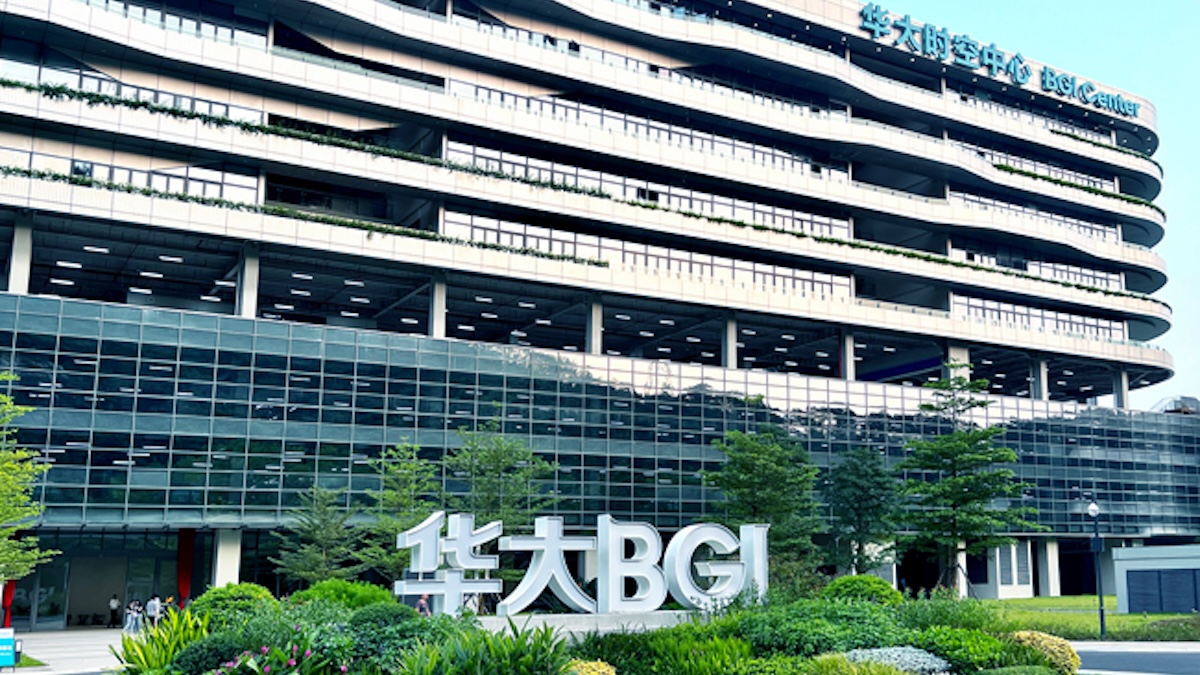
Washington’s latest trade restriction targeting China’s top genomics enterprises has pushed long-running bilateral economic frictions into the high-stakes biotechnology sector, with the move unfolding just weeks before the scheduled face-to-face meeting between the Chinese and US heads of state at the 2026 APEC Leaders’ Summit in Shenzhen.
On a Wednesday in late October 2026, the US Department of Homeland Security (DHS) formally added three Shenzhen-based affiliated entities – BGI Group, its publicly traded genetic testing arm BGI Genomics, and gene sequencer and reagent manufacturer MGI Tech – to the Uyghur Forced Labor Prevention Act (UFLPA) Entity List. The designation imposes a blanket presumption that all goods produced by the three firms are manufactured using forced labor, barring their entry into the entire US market unless American importers can provide conclusive, DHS-verified proof to the contrary.
DHS claimed in its public announcement that the three firms, which collectively operate one of the world’s largest end-to-end gene sequencing and genetic material collection ecosystems, have collaborated with the Xinjiang regional government to build and operate mass surveillance infrastructure that leverages genetic data to monitor ethnic minority populations, while supporting labor transfer programs and internment schemes framed under the guise of public health initiatives. Notably, the agency did not release any supporting evidence for these allegations to the public. US Homeland Security Secretary Markwayne Mullin framed the designation as a routine measure to enforce existing US federal laws and shield domestic American businesses from unfair competitive practices.
The move builds on prior US regulatory actions targeting the Chinese biotech sector: in June 2026, the US Pentagon expanded its 1260H roster of Chinese military-linked companies to include pharmaceutical developer WuXi AppTec and gene sequencing firm Novogene, with BGI and MGI already listed on the same registry. This designation places the firms under the purview of the Biosecure Act, signed into US federal law in December 2025, which bars them from accessing any US federal government contracts or public research grants. Unlike the Biosecure Act’s narrow restriction limited to federal public spending, the new UFLPA listing, which took effect the day after its announcement, imposes far broader restrictions that block all imports of the three firms’ gene sequencers, testing reagents and related biotech products for all US customers, not just government agencies.
House Select Committee on China Chairman John Moolenaar issued a strongly worded statement hailing the move, describing BGI as a state-controlled Chinese DNA collection entity that poses a national security threat to the US public, and claiming that the company’s alleged use of forced labor must not be permitted to operate in US commercial markets. He further urged American pharmaceutical firms to immediately cease all clinical trial activities in Xinjiang, citing unsubstantiated concerns over data ethics and integrity.
In response, BGI Group released an official statement the following Thursday forcefully rejecting all allegations of misconduct. The firm emphasized that it has no involvement in any forced labor practices whatsoever, and noted that the UFLPA designation would not generate material negative impacts on its core operational activities, with its ongoing research initiatives, production lines and global commercial partnerships across China and other international regions continuing to operate as normal.
Both China’s Ministry of Commerce (MOFCOM) and Ministry of Foreign Affairs issued coordinated condemnations of the US action the same day, vowing to take all necessary steps to protect the legitimate legal rights of Chinese domestic enterprises. A MOFCOM spokesperson stated that there is no systemic forced labor in China, and that the US has repeatedly weaponized human rights-related pretexts to advance unilateral protectionist policies and economic bullying that directly violates the prior consensus reached by the two countries’ heads of state, and threatens to destabilize the entire framework of Sino-US economic and trade relations. Chinese Foreign Ministry spokesperson Guo Jiakun further noted that the US has been spreading deliberate disinformation about Xinjiang, using the fabricated “forced labor” narrative propagated by anti-China political forces as a false justification to suppress Chinese high-tech firms, with the explicit goals of destabilizing Xinjiang, smearing China’s international reputation and curbing its legitimate technological development. When pressed on whether the latest US restriction would disrupt the upcoming bilateral presidential meeting in Shenzhen, Guo declined to offer a direct response, only confirming that China will roll out targeted countermeasures as needed to safeguard the lawful interests of its domestic companies.
The high-stakes planned APEC summit meeting between US President Donald Trump and Chinese President Xi Jinping is scheduled to take place on November 18 and 19, 2026, in Shenzhen, with US Treasury Secretary Scott Bessent set to travel to the city ahead of the summit for preparatory working-level talks with Chinese Vice Premier He Lifeng to lay foundational groundwork for the leaders’ discussions.
The latest escalation marks a notable expansion of the UFLPA’s original scope, which was signed into law by former US President Joe Biden in December 2021 and initially targeted only labor-intensive Xinjiang-produced goods including cotton, tomatoes and polysilicon. Prior updates to the UFLPA Entity List, including a 30% expansion to 187 total entities in August 2026, were overwhelmingly limited to firms in the textile, aluminum and agricultural processing sectors. The biotech industry has already emerged as a new front in the long-running Sino-US tech trade rivalry: in February 2025, MOFCOM added leading US gene sequencer manufacturer Illumina to its Chinese unreliable entities list, followed by a formal export ban on Illumina sequencers to China one month later.
Multiple Chinese industry analysts frame the latest US import ban as the culmination of a years-long commercial patent dispute between BGI’s subsidiary Complete Genomics and Illumina. In May 2022, a US federal jury in Delaware ruled that Illumina had willfully infringed two core DNA sequencing patents held by Complete Genomics, ordering the US firm to pay $333.8 million in damages. The two sides reached a $325 million settlement in July 2022, alongside a cross-licensing agreement that halted all ongoing litigation. A widely circulated analysis by Shandong-based industry commentator “Chengzi Zhanggui” noted that US congressional lobbying disclosure records show Illumina spent approximately $500,000 on advocacy efforts related to the Biosecure Act in the first quarter of 2024, months before the US House of Representatives passed a version of the bill by a 306-81 vote that explicitly named BGI, MGI and Complete Genomics as foreign adversary biotech entities. The commentator argued that Illumina failed to secure a favorable outcome in the courtroom, and instead leveraged US legislative and executive regulatory power to eliminate a smaller rival that held only a 7-10% share of the global gene sequencer market, compared to Illumina’s longstanding 70% global market dominance.
The UFLPA designation was announced less than one week after the US Treasury Department published a formal proposal to add the entire biotechnology sector to its Outbound Investment Security Program (OISP), which already restricts US capital flows into Chinese semiconductor and artificial intelligence enterprises, with public comments on the proposal set to close on December 7, 2026. In a parallel regulatory move, China’s MOFCOM and Ministry of Science and Technology released a joint public consultation draft on October 16, 2026 that would add 40 sensitive technologies across the AI, photovoltaic and biomedical sectors to China’s catalog of technologies subject to export prohibitions or restrictions, requiring all relevant exporters to complete official registration before shipping these technologies overseas, with the consultation period running through November 15, 2026.
Pre-APEC US ban on Chinese genomic giant widens biotech decoupling