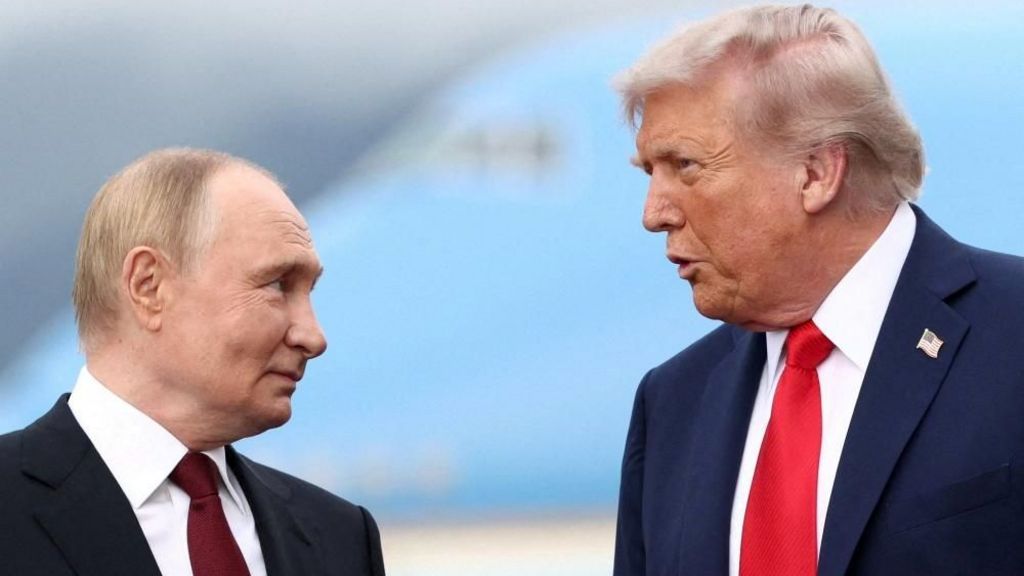
A major political firestorm has erupted in Washington after former U.S. President Donald Trump, exercising presidential executive authority, moved to block a sweeping package of new sanctions against Russia that had been overwhelmingly approved by the U.S. Congress to penalize Moscow for its full-scale invasion of Ukraine.
The sanctions legislation, formally titled the Lindsey Graham Sanctions Act in honor of the late longtime Republican senator from South Carolina — one of Ukraine’s most unwavering advocates in U.S. politics before his passing in July — was signed into law by Trump himself back in September, and was scheduled to enter into full effect this Sunday, October 18. However, in an executive order released late Friday, Trump asserted that withholding a large portion of the proposed punitive measures aligns with the United States’ core national interests.
Trump’s latest move comes just one week after he announced that he had held a phone conversation with Russian President Vladimir Putin, and that the two had reached an agreement for the U.S. to import Russian diesel. The president framed that decision as a strategic step to lower domestic energy prices ahead of November’s critical midterm elections, which will determine which political party holds majority control of both chambers of Congress for the next two years.
Even before Trump’s executive order blocking sanctions, the Russian diesel import plan sent shockwaves through Capitol Hill, drawing swift and unified condemnation from lawmakers across both major political parties. Just one day before Trump issued his executive order, a bipartisan cohort of 20 sitting U.S. lawmakers released an open letter addressed to the White House urging the president to uphold the new sanctions law. The lawmakers thanked Trump for originally signing the legislation, but pressed for “full and faithful implementation” of all its provisions without delay. They argued that full enforcement of the Graham sanctions would be “decisive in forcing Putin to take peace talks seriously” and called on the administration to apply all of the law’s punitive measures to their fullest extent.
The sanctions package is designed to target key pillars of the Russian economy, granting the president broad authority to impose tariffs of up to 100% on the top five buyers of Russian crude oil and natural gas — a list that prominently includes major emerging economies China and India, which have continued to maintain robust energy trade ties with Moscow since the 2022 invasion. Beyond energy-related measures, the law also codifies direct sanctions against Putin, senior members of his inner circle and Russian government leadership, major Russian banks and financial institutions, and the so-called “shadow fleet” of oil tankers that Russia has deployed to evade existing international sanctions on its energy exports.
The combination of Trump’s decision to import Russian diesel and his subsequent move to block congressionally approved sanctions has also drawn sharp criticism from U.S. international allies, who have raised urgent concerns that these steps will provide critical economic support to Russia’s war machine, undermining the coordinated global sanctions regime that has been built up over more than three years of the full-scale invasion. Ukrainian President Volodymyr Zelenskyy has been among the most outspoken critics, calling the diesel import agreement an outright gift to Putin that amounts to “an investment in a war that must be ended.”