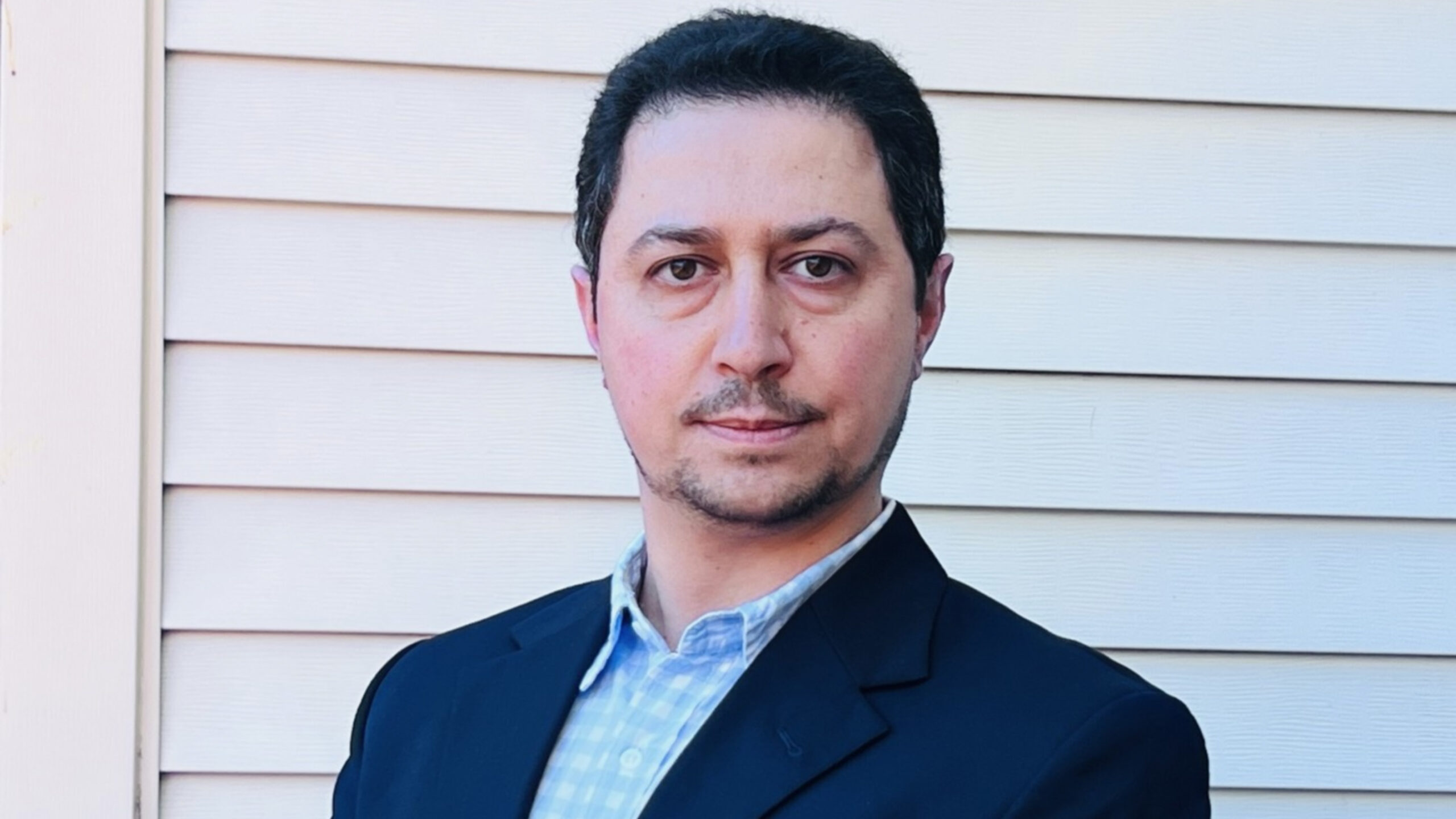
On a seemingly ordinary Monday morning in mid-April, Yousof Azizi, an Iranian PhD candidate at Virginia Tech University who had built a life in the United States over nearly 13 years, completed a routine parental task: dropping his 12-year-old daughter and 4-year-old son at their Baltimore, Maryland schools before heading home. What awaited him there was not the quiet of a normal workday, but a coordinated law enforcement operation that would upend his entire family’s life and expose a sweeping, politically motivated crackdown on Iranian dissenting voices in the US.
When Azizi pulled up to his residence, multiple unmarked FBI vehicles lined the street. No sooner had he stepped out of his car than he was surrounded by agents from U.S. Immigration and Customs Enforcement (ICE), their rifles raised and aimed directly at him. He was immediately taken into custody and transferred to a local Baltimore detention center.
The core accusation against Azizi, a well-known political commentator with more than 68,000 subscribers on his Persian-language YouTube channel and a vocal public opponent of war on Iran, was that he had been a member of the Basij, a volunteer paramilitary group affiliated with Iran’s Islamic Revolutionary Guards Corps, during his master’s studies at Tehran’s Sharif University of Technology between 2007 and 2010. The U.S. designated the Basij as a terrorist organization in 2019, requiring any former members seeking U.S. visas to disclose their affiliation on applications.
Azizi has repeatedly and categorically denied ever being part of the Basij. He told Middle East Eye that while authorities claimed to have multiple sources confirming their allegation, they never produced a single piece of supporting evidence during his detention or subsequent court proceedings. The FBI itself acknowledged in court that Azizi had no prior criminal record and had never committed any proven violation of U.S. law, and he and his wife had never faced any issues with U.S. authorities in the 13 years they had resided in the country.
Alongside the unsubstantiated Basij claim, federal authorities also alleged that Azizi’s student visa had been terminated after he failed to re-enroll full-time for the Fall 2025 semester at Virginia Tech. Azizi countered that he had formally applied for a status change to part-time study to reduce the financial burden of tuition fees, a move he says he initiated months before his arrest. Records confirm he was questioned about his visa status by the FBI as early as two months prior to his detention, when agents asked if he would agree to leave the U.S. if his application was rejected, a question to which he answered yes. Days before his arrest, a special agent contacted Azizi via text requesting an in-person meeting in another city for additional questioning. Azizi declined the request, following advice from his university that the outreach could be a scam, and directed the agent to communicate through his legal counsel.
Over the course of his detention, Azizi was transferred repeatedly between detention facilities across multiple states, a move that legal advocates say was legally questionable given that his spouse and minor children were residents of Baltimore. He was first moved from the Baltimore ICE center to a facility in Louisiana, then to Arizona, and finally to a processing center in California City. In recounting his experience, Azizi described inhumane and degrading conditions during his transport and detainment.
“I was handcuffed, there was a chain around my waist which my arms were attached to, and my ankles were shackled,” Azizi said. “It was physically very painful. I had to sit like that for 13 days.” In Arizona, he and 19 other detainees were held for 48 hours in an overcrowded, frigid small room with no bedding, pillows, or adequate warm clothing. “We had to sleep there … and had to crawl over each other just to get to the toilet,” he recalled. “By the time we got to California most people were ill.” Azizi added that he was even denied access to basic pain medication for persistent headaches during his detention.
Beyond the procedural accusations, Azizi said interrogators pressed him for information unrelated to his visa or alleged Basij affiliation, revealing that authorities were targeting him for his public commentary. He was asked whether Iran had the capability to deploy naval mines in the Strait of Hormuz, a strategic waterway, a question he called absurd given that U.S. intelligence agencies already maintain extensive surveillance of the region. Agents also questioned the origin of data and analysis Azizi used in his YouTube videos, repeatedly accusing him of receiving the material from official Iranian sources, despite Azizi’s confirmation that all content was derived from his own independent research using publicly available data. Azizi said interrogators explicitly offered him release in exchange for cooperating with their investigation, a deal he could not accept because he had no damaging information to provide.
During his detainment, a representative from the Iranian Interests Section at the Pakistani Embassy in Washington (which handles Iranian diplomatic affairs in the U.S.) visited Azizi and informed him that he was one of 25 Iranian residents on an FBI security watchlist targeted for deportation. “I think they needed some information about Iran, and my videos caused the FBI to focus on my case, and they just wanted to get rid of me,” Azizi said.
As the case dragged on, Azizi faced a grim choice: wait up to two years for a final court hearing with no guarantee of a favorable ruling, or accept voluntary departure to Iran. At his bond hearing, the FBI reiterated all previous allegations and highlighted that a clip of one of Azizi’s media interviews had been shared on a Telegram channel operated by the IRGC. Azizi explained that he had given interviews to dozens of outlets, many of which are banned inside Iran, and had no involvement in the IRGC sharing his clip. Even with 250 letters of support from professors across U.S. universities and vigorous defense from his legal team, the court did not dismiss the case. In late June, Azizi made the difficult decision to request voluntary departure, and on June 30, he, his wife, and their two children left the U.S. for Iran via Turkey.
Today, Azizi plans to complete his PhD dissertation remotely from Iran and has no immediate plans to return to the U.S. “I have to focus more on my life in Iran, with my parents, who are over 80 years old, and my children, who know our culture here in Iran,” he said. He summarized his experience with a blunt assessment of U.S. policy toward the Iranian diaspora: “I think America wants a single narrative on Iran from the Iranian diaspora and wants to get rid of other voices who are against the war. I don’t know if this is motivated by Israel, or by Iranian opposition groups in the United States who have targeted me recently.”
The National Iranian American Council (NIAC), a non-profit that advocates for Iranian-American rights and diplomatic engagement between the U.S. and Iran, supported Azizi throughout his detention and has documented a broader pattern of politically motivated targeting of Iranians in the U.S. Jamal Abdi, president of NIAC, told Middle East Eye that Azizi’s case fits a clear pattern of repression of dissenting voices. “Our involvement in these cases is to make sure people have access to the resources necessary for them to protect themselves and to not be exploited because we know of so many cases where it’s a complete black box – nobody can tell what is happening or what their fate is going to be,” Abdi said. “It seems like in Yousof’s case there was potentially a political dimension to the effort to deport him, more so than what already exists in this highly political environment where Iranians are being targeted by ICE for detainment and deportation. It seemed particularly galling that he was detained given the fact he was a prominent commentator, somebody whose research and analysis was featured on television and in print news, and it was hard not to see this as potentially an act to silence somebody whose politics didn’t align with the current administration.”
Azizi is far from alone in facing this targeting. In early April, Hamideh Soleimani Afshar and her daughter Sarinasadat Hoseiny were arrested by ICE and remain in custody, after right-wing commentator Laura Loomer falsely claimed the pair were relatives of assassinated Iranian general Qassem Soleimani. Despite the unproven connection, U.S. Senator Marco Rubio repeated the claim and supported the revocation of Afshar’s green card, citing her public support for the Iranian government.
Abdi argues that the targeting of Azizi and others fits a pattern of “lawfare” — the use of legal process as a political weapon to force outcomes that could not be won in a fair court. “It’s like lawfare where wealthy entities will launch lawsuits, not because they think they can win on the merits but because they think they can bury you in the cost and the resources as it’s not a fair matchup,” he explained. “It’s sort of similar if you throw someone in a detention centre that is dirty and they don’t have access to food or a bathroom, are moved around the country with no certainty as to when they will ever get their day in court or if there’s a light at the end of the tunnel. A lot of people will say, ‘Fine, I’ll go back to my country of origin.’ I think that’s what Yousof faced.”
A recent NIAC investigation, built from nearly 300 pages of internal ICE emails obtained via Freedom of Information Act requests, has uncovered alarming details about the coordination of Iranian deportations: an ICE attaché based at the U.S. Embassy in Tel Aviv played a central role in organizing the deportation of dozens of Iranians from the U.S. in 2025. The order to accelerate deportations of Iranians came directly from the White House in June 2025, coinciding with the 12-day U.S.-Israeli military campaign against Iran. NIAC’s data shows that between June and December 2025, ICE detained 418 Iranians, 300 of whom were arrested in June and July alone. Between September 2025 and January 2026, 125 Iranians were deported to Iran on three coordinated flights.
While ICE maintains attachés in countries around the world, Abdi said the level of involvement of the Tel Aviv-based official in Iranian deportations is unprecedented and raises serious questions about Israeli influence over U.S. immigration enforcement. Abdi noted that past reporting from Israeli outlet Haaretz has documented Israeli campaigns to influence Persian-speaking diaspora audiences, including efforts led by former Israeli Intelligence Minister Gila Gamliel that used bots and inauthentic online accounts to promote pro-Israeli narratives about Iran. “The decision to send those people back was made as the US and Israel were bombing Iran, and so there was not a disconnect between the fact that we were bombing a country and planning to send vulnerable people back there,” Abdi said. “This is an administration that is unable to distinguish between a war on Iran versus a war on people who are Iranian, and they have been at war with Iranian people for many years.”
In response to a request for comment from Middle East Eye, the U.S. Department of Homeland Security denied any Israeli involvement in the deportation of Iranians, stating that “ICE HSI has attaches stationed around the word responsible for administering a variety of law enforcement initiatives, including helping to deter, disrupt, and dismantle transnational criminal and terrorist organizations that pose a threat to the American people. The country of Israel does not assist in the deportation of Iranian nationals.” The Israeli Foreign Ministry did not respond to requests for comment by the time of publication.
Azizi’s deportation and the broader pattern of targeting uncovered by NIAC has sparked new calls for transparency into U.S. immigration enforcement policies targeting the Iranian diaspora, with advocates arguing that American voters and policymakers deserve answers about how foreign policy interests are shaping the fates of hundreds of immigrant families.