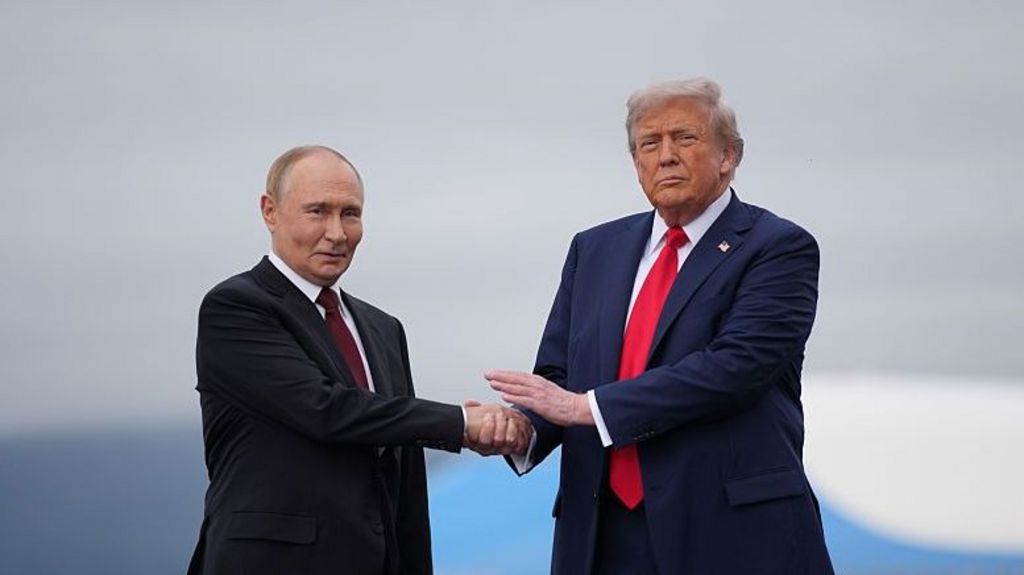
Weeks before pivotal congressional elections that will determine which party controls the US legislature, and with early voting already underway in key battleground states, incumbent President Donald Trump has turned to a surprising partner – Russia and its leader Vladimir Putin – in a last-ditch bid to ease sky-high diesel prices that have eroded his approval ratings among American voters.
The political gambit quickly unraveled, however, leaving global leaders scrambling to respond and failing to deliver the quick energy price relief Trump had promised voters. The turbulent sequence of events began on a Friday afternoon, when Trump made an unexpected announcement: he had struck a new agreement with Putin that would bring hundreds of millions of tons of Russian diesel to the United States over the coming months.
For months, soaring energy costs – particularly diesel prices, which are critical to Midwestern agricultural states that depend on the fuel to power farm equipment and transport crops to market – have been a major source of voter discontent. Polling shows a majority of American voters blame the ongoing US-Iran war for driving up energy costs, and Trump’s overall approval ratings, as well as his support on handling the war and the national economy, have plummeted in recent weeks.
Framing the deal as a win for working Americans, Trump took to his social platform Truth Social to herald the agreement, and immediately issued an order to the US Treasury Department to suspend existing sanctions that blocked Russian diesel from entering global markets. Just two days later, he returned to the same platform to boast of a new “energy ceasefire” agreement between Russia and Ukraine that he claimed would stabilize global energy markets.
The reality of the situation, however, proved far more complex than Trump’s announcements suggested. Ukrainian President Volodymyr Zelensky revealed that his administration had received no advance warning of the so-called ceasefire, even as he noted Ukraine would respect the proposed truce if it were honored. Russia, for its part, issued no public confirmation of the agreement – and by Sunday night, Russian forces had launched a new wave of missile strikes targeting Ukrainian energy infrastructure.
“It’s clear that Putin does not read Truth Social,” Zelensky joked dryly in comments to reporters on Monday, adding that Ukraine would take proportional action if Russia refused to uphold the energy truce through the coming winter.
Tensions between Trump and Zelensky have run high throughout Trump’s second term in office. The US president has flip-flopped on blame for the ongoing Russia-Ukraine conflict, which he repeatedly claimed during his 2024 campaign he could end in days if he returned to the White House. In recent days, Zelensky has become the primary target of Trump’s anger, as Ukrainian strikes on Russian oil refining infrastructure have worsen global supply shortages and kept fuel prices high.
Over the weekend, Trump told reporters at the White House that it was “time for Ukraine to get a new president,” and both the Financial Times and CNN have independently confirmed that the Trump administration has threatened to cut off all arms sales and intelligence sharing to Ukraine if Zelensky does not halt attacks on Russian energy facilities. “Zelensky better damn well stop,” Trump told reporters.
Terry Haines, founder of independent policy think tank Pangaea Policy, told the BBC that the president’s outburst aligned with a long pattern of public behavior. “I think that the president has a decade long public record of lashing out at people who aren’t doing what he wants, when and how he wants to do it,” Haines explained.
This premature announcement of an unsealed agreement is far from unprecedented for Trump: the president has a well-documented history of touting diplomatic breakthroughs – from Middle East ceasefires to sweeping regional peace deals – before negotiations have been finalized. Whether the rushed announcement stems from Trump’s well-known impatience with slow diplomatic progress or a calculated negotiating tactic to force parties to finalize a deal, the result has been widespread global uncertainty and confusion.
International pushback against the deals arrived quickly. Canadian Prime Minister Mark Carney, who has emerged as one of Trump’s most outspoken international critics, offered tentative support for the proposed energy ceasefire but condemned the Russian diesel deal as a major blow to European security. Carney argued the agreement would directly help Russia finance its “illegal, unjustifiable war against Ukraine.”
Even inside the United States, the announcement drew significant criticism – including from members of Trump’s own Republican Party. Four Republican senators joined their Democratic colleagues to sign a public letter calling on Trump to immediately reverse his decision to lift sanctions on Russian diesel. “Congress explicitly banned Russian energy imports in 2022 to prevent American dollars from financing Putin’s brutal war against Ukraine,” the senators wrote in their Sunday statement. “President Trump’s decision to allow Russian diesel imports to the US runs directly counter to that law.”
Worse for Trump politically, the much-hyped agreements have so far failed to move the needle on diesel prices, which remain well above $6 per gallon – down from record highs set earlier this year, but still far higher than most American consumers can afford. At the same time, new violence in the Middle East threatens to upend any modest progress on energy prices regardless of the situation in Ukraine.
Over the weekend, Houthi forces launched a wave of attacks on targets inside Saudi Arabia, including strikes on civilian airports and energy infrastructure that killed at least 13 people. The attacks have threatened to escalate a decade-long regional conflict that has been simmering throughout the ongoing US-Iran war, raising fears of a broader regional conflict that could disrupt global oil supplies.
Michael Ratney, former US ambassador to Saudi Arabia, told the BBC the strikes carried a clear, alarming message. “This is the Houthis sending a message that it’s not just military targets, it’s not just energy infrastructure, they’re going to strike at civilian airports that could kill a lot of people,” Ratney explained. He added that the ongoing US-Iran conflict was unwanted by every Arab nation in the region, and the latest Houthi offensive was a predictable outcome of the ongoing standoff between Washington and Tehran.
With the US and Iran locked in a prolonged military and diplomatic standoff, any new escalation in hostilities could easily trigger a broader regional war and send global oil prices soaring to new record highs. “I do think it gets uglier before it really deescalates,” Ratney warned.
In recent weeks, Trump has attempted to shift blame for global energy shortages onto Ukraine, rather than the ongoing conflict with Iran – a framing that many analysts view as an attempt to deflect voter anger onto a conflict that began during the previous presidential administration. But political analysts note that American voters almost always hold the sitting president responsible for economic conditions, regardless of past policy decisions.
After a chaotic weekend that once again demonstrated there are no quick, easy fixes to the ongoing global energy crisis, that political reality may be the worst possible news for Trump and his party ahead of the upcoming congressional elections.