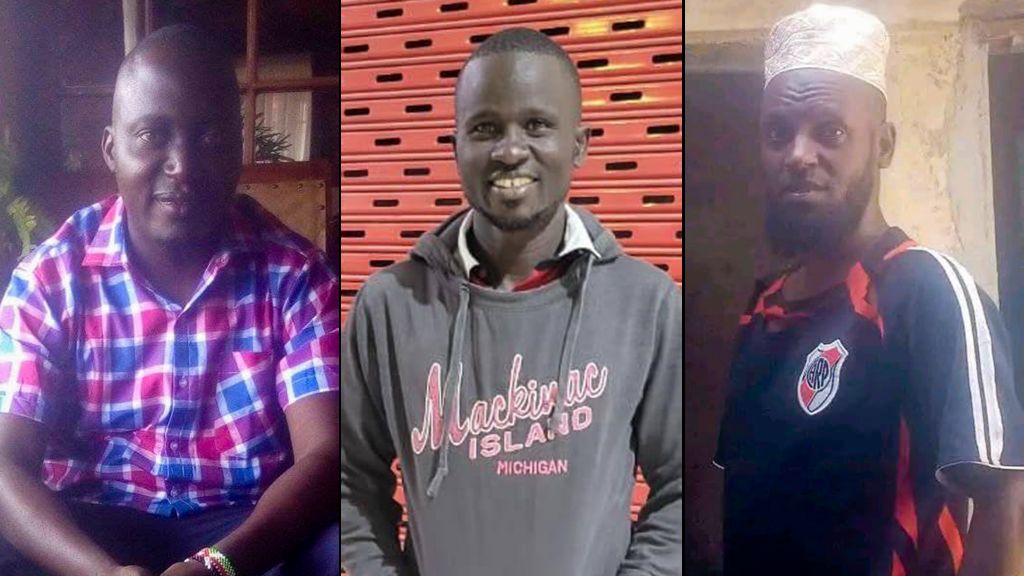
It has been 12 months since three Kenyan mourners were shot dead by police during a national state farewell for iconic former prime minister Raila Odinga, and a months-long investigation by BBC Africa Eye has upended the official narrative around the deadly incident.
Odinga, Kenya’s longest-serving opposition leader and one of the nation’s most consequential political figures, died at the age of 80 in October 2024 while receiving medical treatment in India. His death sparked an unprecedented outpouring of national grief, with thousands of Kenyans gathering to welcome his repatriated body at Nairobi’s Jomo Kenyatta International Airport. The funeral event was originally scheduled to host Odinga’s lying-in-state at Kenya’s parliament building, but an unexpected surge in crowd size and fears of a potential security breach forced organizers to relocate the memorial to Kasarani Stadium at the eleventh hour. Officials later acknowledged they had barely any time to secure the 48,000-capacity venue, leaving thousands of unvetted mourners to stream into the stands and onto the pitch without checks.
On the day of the memorial, 16 October 2024, mourners waited for hours in 30-degree Celsius heat with no functioning public address system to share updates. Tensions eventually boiled over in a small section near the VIP pavilion, where a group of attendees began throwing objects at police guarding the restricted area. As the crowd pushed toward the VIP section, officers opened fire with live ammunition. While most of the crowd across the stadium remained peaceful, three attendees were killed. Officials initially claimed the deceased were involved in the clash that triggered the gunfire.
But after reviewing more than 1,500 pieces of footage and photos from inside the stadium, and interviewing surviving family members of the victims, BBC Africa Eye has confirmed the three killed were nowhere near the confrontation. Forensic geolocation analysis places 40-year-old chef and father of seven Evans Kiche roughly 60 meters from the scuffle, where he suffered a fatal gunshot wound to the head. The other two victims – 36-year-old father of three Vincent Ogutu and 42-year-old Jidah Burka – were in the opposite stands, at least 160 meters away from the unrest, on the opposite side of the stadium. Autopsy reports confirm Ogutu was killed by a gunshot to the chest, while Burka suffered a fatal wound to the head.
Further analysis of footage tracked the shooters to a group of eight unmarked tactical officers, clad in military camouflage with covered faces and no visible unit insignia. Their uniforms, positioning and pre-shooting security protocols match the profile of the elite police unit assigned to protect Kenya’s sitting president and senior VIPs. At least three officers from this presidential protection unit fired their weapons during the incident, the BBC confirmed. While the outlet cannot definitively link specific bullets to each victim, it says the evidence strongly suggests the fatal shots came from this elite unit. The BBC also found no evidence that the objects thrown by the crowd included stones, contradicting official claims – video does confirm plastic chairs were thrown, however.
For Yvonne Akinyi, Ogutu’s widow, the finding offers little comfort, but answers the lingering questions that have haunted her for a year. Ogutu never planned to attend the memorial: he was in central Nairobi with friends when the group decided to join the crowd heading to the stadium on a whim. Within hours, he was dead, leaving Akinyi a young widow with three orphaned children. “The people we look to protect us, these are the people that cause us this pain,” Akinyi told the BBC. “There were so many people at Kasarani, why him? It leaves a hole deep inside that never goes away, even when I try to be strong for my children.”
Kenya’s Interior Minister Kipchumba Murkomen has defended police actions, telling the BBC officers showed “restrained” response to the unrest. He argued officers had worked nonstop for hours, were reassigned to the new venue at the last minute, and operated under extreme pressure, making split-second, on-the-ground judgment calls. “I don’t think anybody in command ordered officers to open fire; it was the judgment of the officer in the moment,” Murkomen said. He added that the independent police oversight body, the Independent Policing Oversight Authority (IPOA), is still conducting its own probe, and the government will take appropriate legal action once those findings are released.
One year on, however, no officer has been held accountable for the three deaths, and IPOA did not respond to the BBC’s request for comment on the Africa Eye investigation. The Kenya National Police Service acknowledged in a statement to the BBC that the incident has been a major learning experience for the force, adding that the lessons from the shooting will drive more professional, responsible use of force in future public events.
The families of the three victims continue to wait for accountability, as the investigation exposes deep gaps in Kenyan police accountability and crowd control protocols for high-profile national events.