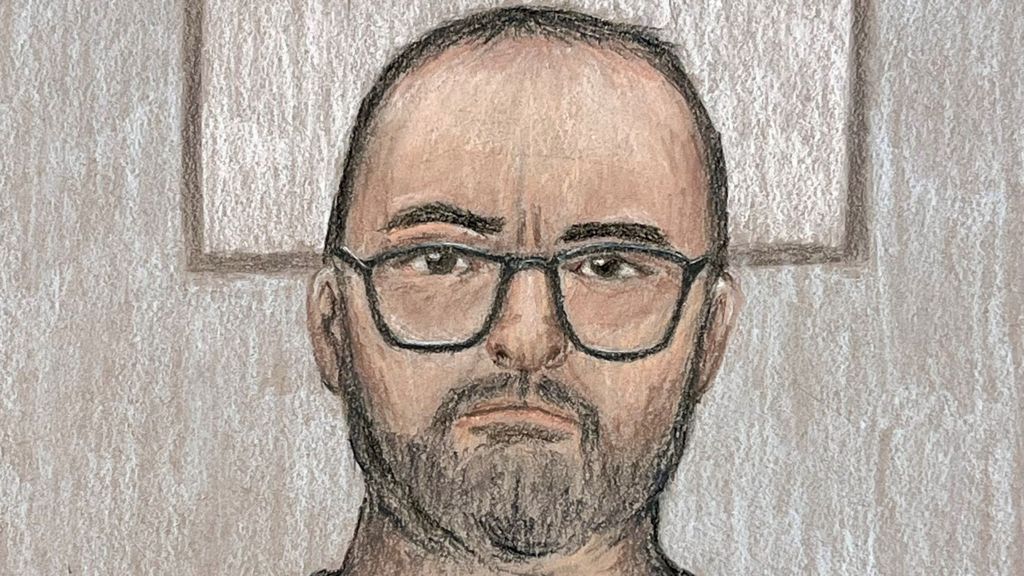
More than two months after his extradition back to Ireland to face major organized crime charges, alleged transnational cartel leader Daniel Kinahan has finally secured legal representation for his upcoming court proceedings. The 49-year-old suspected organized crime boss appeared via videolink from Ireland’s high-security Portlaoise Prison before Dublin’s Special Criminal Court on Monday, marking his second public court appearance since his August extradition.
Defence barrister David Perry informed the three-judge, non-jury court that Darragh Mackin, a prominent solicitor from Belfast-based Phoenix Law in Northern Ireland, will act as Kinahan’s lead defence solicitor for the case. Mackin was unable to attend Monday’s hearing in person due to unforeseen, urgent commitments that required his presence elsewhere, Perry told the court. In response to Perry’s request for a one-week adjournment to allow Mackin to prepare and join the proceedings, Judge Caroline Biggs granted the adjournment, remanding the case until next Monday.
Perry also confirmed to the court that Kinahan will appear in person for the next scheduled hearing, noting that a in-person appearance is the defendant’s own preference. This update marks a key procedural shift for Kinahan’s case: during his initial court hearing last August, immediately following his extradition, Kinahan had no legal representation lined up.
Kinahan’s path to trial in Ireland began when he was first arrested by law enforcement in the United Arab Emirates this past April. He launched a lengthy legal battle to block his extradition, but all of his appeals were ultimately rejected by UAE courts. On August 9, he was transferred into Irish custody and flown back to Dublin aboard the Irish government’s new official jet, in a high-security operation that drew international attention to the high-profile case.
Upon his arrival, Kinahan was formally charged by Irish authorities with directing the activities of a proscribed criminal organization between October 18, 2015, and April 6, 2017. The charges stem from long-running investigations into the Kinahan cartel, which global law enforcement agencies have labeled one of the world’s most harmful transnational criminal networks. The UK’s National Crime Agency has previously documented that the cartel is responsible for smuggling thousands of tonnes of illegal narcotics and trafficked firearms across global markets, and has been directly linked to at least 14 gangland-related killings. The U.S. Treasury Department has also publicly designated the Kinahan cartel as one of the most dangerous organized crime groups operating internationally, and Kinahan has long been a target of law enforcement actions on both sides of the Atlantic.
The case against Kinahan is being heard by the Special Criminal Court, a specialized Irish court that hears organized crime and terrorism cases without a jury, instead relying on a panel of three senior judges to rule on evidence and deliver a verdict.