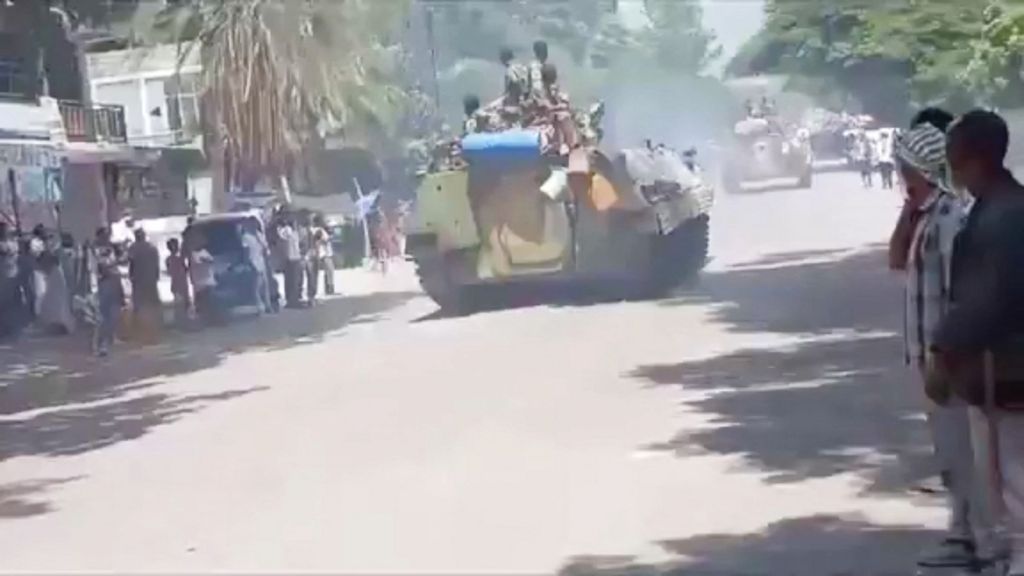
After months of simmering tension that followed a 2022 peace agreement ending a two-year civil conflict, full-scale fighting has erupted once again in Ethiopia’s northern Tigray region, triggering a catastrophic humanitarian emergency and raising fears of a wider regional escalation. Multiple sources on the ground have confirmed that at least 52 civilians, including infants as young as three days old, have been killed in three days of intense artillery and explosive clashes centered on the border town of Alamata.
Verified social media footage captured heavy military hardware, including tanks and armored vehicles, moving through Alamata’s streets, as federal government forces appear to have seized control of the town from Tigrayan regional fighters. Military analysts say the advance positions government troops to push north toward Mekelle, Tigray’s administrative and population center. The Alamata general hospital anonymous medical source told the BBC that 12 civilians alone died in a single strike targeting the town’s crowded market, with residential neighborhoods heavily damaged by shelling that caught ordinary residents in crossfire. Displaced people from surrounding rural areas have flooded into Alamata seeking safety, only to find all essential services completely cut off.
The resumption of hostilities traces back to the collapse of the 2022 ceasefire deal, with both sides trading blame for the outbreak of violence. The Tigray People’s Liberation Front (TPLF), the governing party of the Tigray region, claims the renewed fighting began in response to a federal offensive that included drone strikes on TPLF positions. The Ethiopian federal government, by contrast, accuses TPLF fighters of instigating the conflict by seizing regional airports and launching offensive operations first.
The conflict has already spilled beyond Tigray’s borders, drawing in allied armed groups and affecting neighboring regions. In Amhara region, fighting between federal forces and an Amhara militia allied with the TPLF has disrupted life around the iconic UNESCO World Heritage Site of Lalibela, the location of ancient 13th-century rock-hewn churches that draw Orthodox Christian pilgrims and international tourists from across the globe. Thirty-three foreign tourists remain stranded in Lalibela after the local airport was closed to commercial traffic amid the military deployment. A anonymous British tourist trapped in the town told the BBC that continuous gunfire and artillery fire could be heard throughout the past week, with a heavy military contingent deployed across Lalibela. Though fighting has quieted in the area over the past 48 hours, local residents remain on edge, as military convoys continue moving north toward the Tigray frontline. Some tourists have already been evacuated: 14 Israelis were extracted by military helicopter earlier this week, and five more left via a non-governmental organization road convoy against official travel safety advice. The remaining stranded tourists include citizens of the United States, United Kingdom, South Korea, South Africa, New Zealand, Mexico and other nations.
Fighting has also broken out in Ethiopia’s Afar region, where TPLF fighters control a strategic corridor that connects landlocked Ethiopia to the Port of Djibouti, the country’s primary gateway for international trade. Medical humanitarian organization Médecins Sans Frontières (MSF) reports that more than 700 wounded people have been admitted to hospitals the group supports across Tigray, overwhelming strained medical resources.
Wider concerns are growing that the conflict could draw in neighboring Eritrea, which played a key role in the earlier Ethiopian civil war. The Ethiopian federal government has publicly accused Eritrea of providing military and logistical support to the anti-government alliance, a charge that Asmara has repeatedly denied.
Independent on-the-ground reporting from Tigray and surrounding conflict zones remains impossible, as all communications infrastructure to the region has been shut down. The Ethiopian government has suspended all banking services across Tigray, freezing the accounts of even Tigrayans who have relocated to the capital Addis Ababa and other parts of the country. A former Mekelle resident who moved to Addis Ababa two months ago told the BBC that his Tigray-registered bank account remains frozen, leaving him unable to pay for basic goods and services. “It has created havoc for many people like me who escaped the situation in Tigray,” he said. “Many Tigrayans are now in trouble.”
For residents trapped in Tigray by the internet and telecoms blackout, a small lifeline has been launched by the Tigray Broadcasting Service, which operates out of Addis Ababa. The broadcaster has started collecting short video greetings and personal updates from family members outside Tigray via its Telegram channel, then airing the messages on satellite television for those able to receive the signal inside the region. While limited to brief personal updates, the initiative provides one of the only connections between separated families amid the full communications shutdown.
A local source in Alamata described the rapidly worsening humanitarian situation, with thousands of displaced people crammed into the town with no access to food, fuel, or cash. “All the residents of the surrounding areas entered the town of Alamata by walking on foot for as long as an hour, hoping the town would be safe. Unfortunately, everything is blocked – no banking service, no money transfer, no power, no internet, no phone. Hence people are in crisis, simply suffering, everyone is desperate and frustrated.”