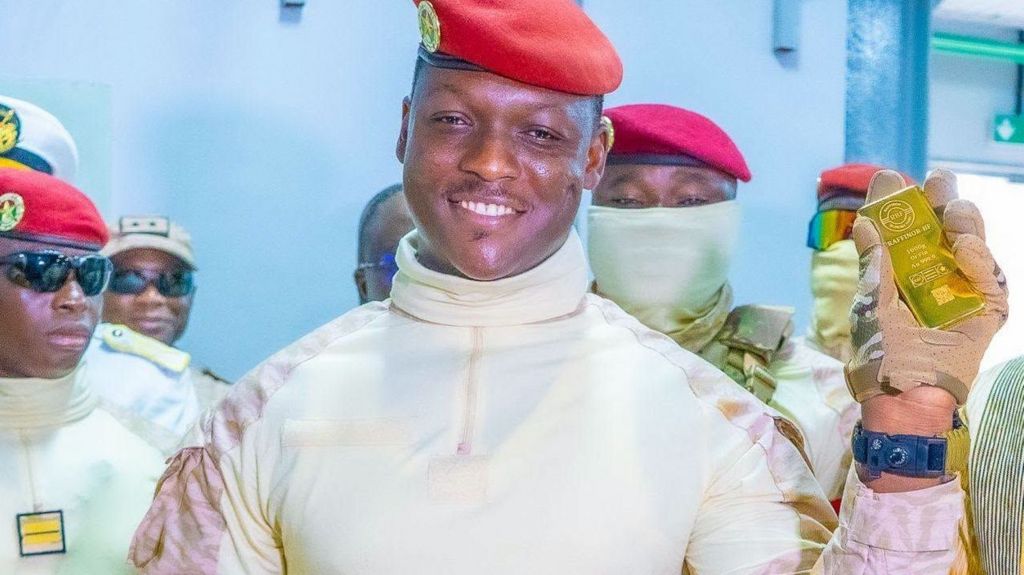
In a landmark step toward economic sovereignty and greater state control of its strategic mining sector, Burkina Faso has launched its first domestic gold refinery, a project that aligns with the military-led government’s nationalist agenda to end over-reliance on foreign processing of its mineral wealth. The inauguration of the facility, named Raffinor-BF, took place in the capital Ouagadougou on Monday, with junta leader Captain Ibrahim Traoré and senior government officials in attendance. Traoré emphasized that the refinery is a core component of a broader push to keep the entire gold value chain within the country’s borders, reversing the long-standing practice of exporting unprocessed raw ore for refinement abroad. “We want to refine all our metals on site… we want to have the entire value chain on site,” Traoré stated during the opening ceremony. As one of Africa’s largest gold producers, Burkina Faso has for years grappled with systemic challenges in its mining sector: an enormous unregulated artisanal and small-scale mining industry rife with smuggling, limited state revenue from gold exports, and persistent allegations that illegally traded gold helps fund the years-long Islamist insurgency that has destabilized large swathes of the country. For decades, nearly all of the nation’s gold was shipped overseas for processing, allowing foreign actors to capture the bulk of the industry’s added value while most Burkinabè communities continued to face widespread poverty. Mines Minister Yacouba Zabré Gouba framed the launch of the refinery as a turning point for national economic autonomy: “This is the day we take back the keys to our own house. Our gold will no longer be used to create added value for others while our people remain in need.” The 11 billion CFA franc ($19 million) project was developed through a partnership between the Burkinabè state – including the state-owned National Precious Metals Company (Sonasp) – and domestic private sector stakeholders. Initially, the new refinery will have an annual processing capacity of 164 tonnes of gold, a volume that already exceeds Burkina Faso’s current annual gold output. Government plans project that capacity will eventually expand to 515 tonnes per year, positioning the landlocked nation to become a regional gold refining hub that can process ore from neighboring countries. The refinery is the latest in a series of policy moves by Traoré’s government to consolidate state control over natural resources, two years after the administration established a state-owned mining firm to oversee national resource operations. Under current rules, foreign mining companies operating in Burkina Faso are now required to grant the state a 15% stake in their projects and deliver comprehensive training to local workers. The country has already seen consistent growth in gold output, with the World Gold Council reporting a 17% year-on-year production increase in the second quarter of 2026, driven by expanded activity at multiple industrial mines. Traoré, who seized power in a September 2022 coup, has centered his economic agenda on nationalist policies focused on domestic value addition and reduced reliance on former Western partners. Beyond the mining sector, his administration has prioritized investments in cotton processing, textile manufacturing, and domestic food production to build broader economic self-sufficiency. In 2024, the government suspended gold exports from artisanal and semi-mechanized mining operations as part of a crackdown on illegal trade and smuggling, a move designed to force unregulated production to flow through domestic channels and into the new refinery. Traoré has repeatedly stated that illegal gold smuggling has generated significant funding for Islamist insurgent groups linked to al-Qaeda and the Islamic State, which have waged an insurgency in Burkina Faso for nearly a decade, leaving large portions of the country outside full government control. The push to bring gold refining onshore is not unique to Burkina Faso across West Africa. Neighboring Guinea and Ghana have already implemented restrictions on raw gold exports, while nearby Mali is constructing its own first refinery with support from a Russian company, and Ivory Coast has plans to open its own domestic facility next year. The project comes as global gold production hit a record high of an estimated 3,672 tonnes in 2025, according to the World Gold Council, with international prices remaining at historically elevated levels that have incentivized expanded regional investment in gold sector infrastructure.
Burkina Faso’s junta leader opens major gold refinery to keep mining profits at home