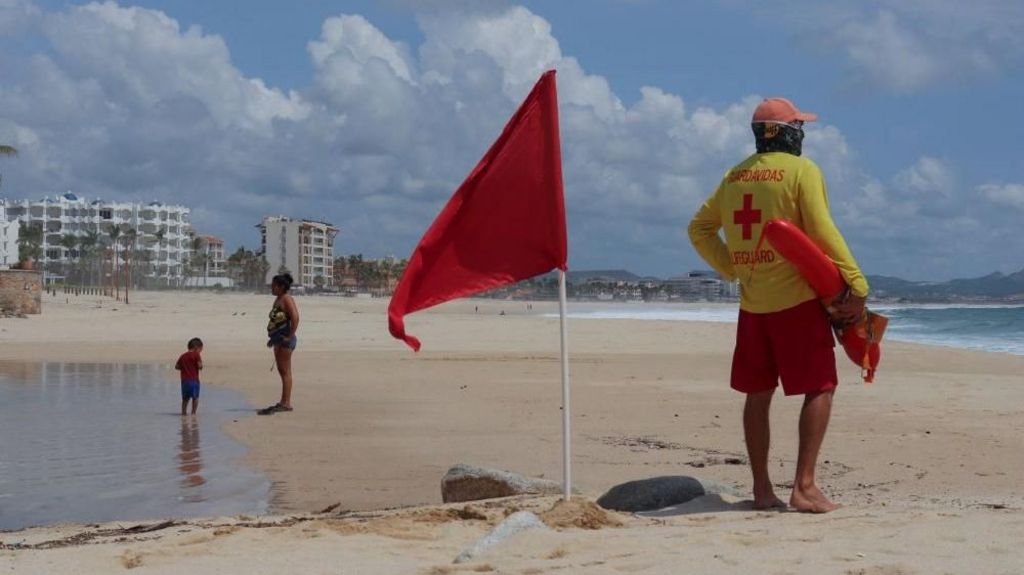
As Category 3 Hurricane Polo barrels toward Mexico’s northern Pacific coastline, communities across Baja California Sur have been forced into emergency preparations, with authorities closing beaches, shutting down schools, and deploying military resources ahead of the storm’s expected landfall Monday night or early Tuesday.
The National Hurricane Center (NHC), based in the United States, reports the storm carries maximum sustained winds of approximately 115 miles per hour (185 kilometers per hour). Forecasts show the hurricane is on track to pass directly over Baja California Sur, a region renowned for its popular tourist resorts, particularly the high-profile destination of Los Cabos. Polo has been fueled by unusually warm ocean temperatures linked to the El Niño climate pattern, moving gradually toward the Mexican coastline over recent days.
Meteorologists have issued multiple warnings about the potentially catastrophic impacts of the storm. Beyond strong winds, the NHC forecasts intense rainfall that could trigger life-threatening flash floods and mudslides, particularly in the region’s mountainous and steep-terrain areas. The storm is also expected to bring a dangerous storm surge, combined with large, destructive waves that threaten coastal infrastructure and beachfront communities. Lifeguards across Baja California Sur have already raised red warning flags to alert vacationers of the extremely hazardous sea conditions, and local officials in Cabo San Lucas have closed access to all public beaches. Cabo San Lucas, famous for its millennia-old natural rock arch shaped by centuries of wind erosion and tidal activity, is a major hub for sport fishing and whale watching tours; many local businesses, including waterfront restaurants, have already closed their doors in anticipation of the storm’s arrival.
Regional and federal authorities have implemented a wide range of preventive measures to protect residents and visitors. The Baja California Sur regional government ordered all schools to remain closed on Monday as a safety precaution. Governor Víctor Manuel Castro Cosío announced that temporary emergency shelters have been set up across the state to accommodate residents who need to evacuate high-risk areas. At the federal level, Mexican authorities have deployed thousands of army and navy personnel, along with specialized heavy machinery, to support evacuation efforts, emergency response, and post-storm recovery.
On Sunday, as news of the approaching storm spread, local residents rushed to grocery and hardware stores to stock up on essential supplies, including drinking water, non-perishable food, and emergency equipment, as communities braced for what could be one of the most significant hurricanes to impact the region in recent years.