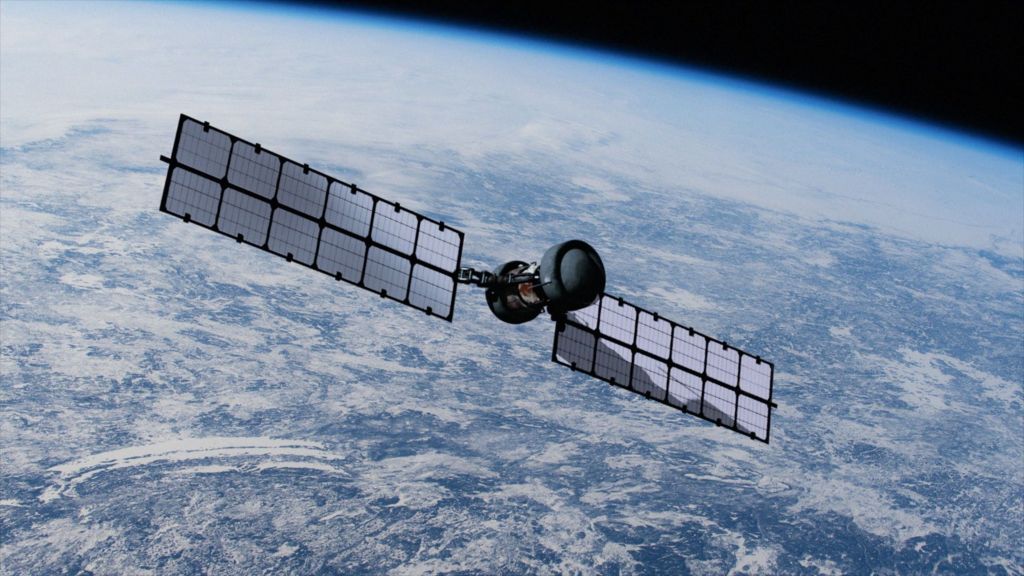
In a historic confirmation that has sent ripples of concern through the international security community, the United States has publicly acknowledged it has placed an offensive space weapon into Earth’s orbit — marking the first time any major global power has openly admitted to possessing such offensive capabilities in outer space.
The revelation comes at a moment of growing geopolitical competition between major space-faring nations, as more countries expand their exploration and military activities beyond Earth’s atmosphere. Experts on global security and outer space governance have rapidly sounded alarms, warning that the open admission of an offensive orbital weapon risks triggering an all-out space arms race that could fundamentally reshape global security dynamics for decades to come.
For decades, the international community has operated with broad, though unenforced, norms against placing offensive weapons in outer space. Many nations have pushed for multilateral agreements to ban space weapons, arguing that keeping Earth’s orbit weapons-free is critical for maintaining access to satellite infrastructure that supports global communications, weather monitoring, navigation, and scientific research. The U.S. confirmation breaks with long-standing ambiguity around offensive orbital capabilities, opening a new chapter in military competition beyond Earth’s boundaries.
Analysts note that other major space powers, including Russia and China, have previously signaled concerns about U.S. military activity in space, and have been developing their own counter-space capabilities in recent years. The open acknowledgment of a deployed offensive weapon is expected to accelerate those efforts, as nations move to protect their own orbital assets and establish deterrence capabilities against potential attacks. This tit-for-tat dynamic, experts warn, increases the risk of accidental conflict in space that could have catastrophic consequences for the entire planet, given the reliance of modern civilization on satellite systems.
International organizations have already called for urgent diplomatic talks to de-escalate tensions and renegotiate binding rules for space activity. However, diplomatic observers note that deep geopolitical divides make a quick agreement unlikely, leaving the world facing a new era of uncertainty in the final frontier.