Last month, when Turkey, Pakistan, and Saudi Arabia put their signatures to the Mecca Joint Defence Agreement, controversy erupted almost instantly. Critics have zeroed in on one glaring question: why has the newly minted alliance failed to mount a coordinated response to ongoing Houthi attacks originating from Yemen targeting Saudi Arabia?
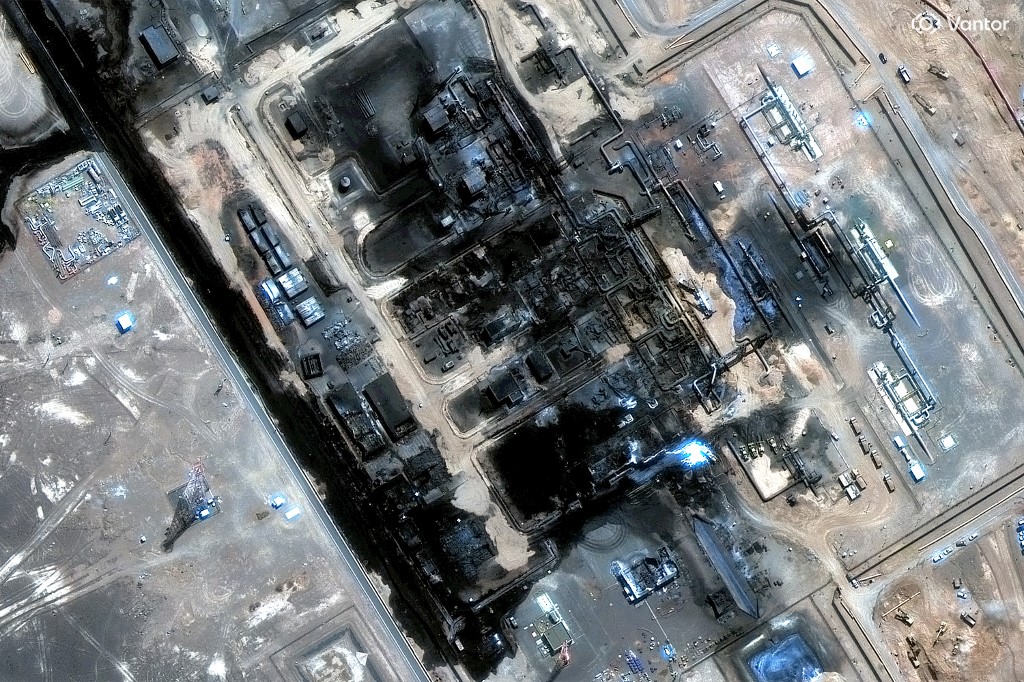
Ever since the signing ceremony wrapped up, regional and global security analysts have openly cast doubt on whether Turkey would honor its commitments to come to Riyadh’s defense amid persistent Houthi strikes on Saudi energy infrastructure and populated civilian areas. The debate grew far sharper after recent Houthi military gains over the weekend: the group seized extended stretches of Yemen’s Red Sea coast adjacent to the strategically critical Bab al-Mandeb Strait, followed by a targeted attack on Saudi Arabia’s East-West Pipeline, a vital energy chokepoint that carries nearly 4% of the world’s total oil supply.
Yet critics who dismiss the pact as a failure purely on the basis of its lack of an immediate joint military response are missing three core, unaddressed questions: have the agreement’s defence obligations actually entered into legal force? Have member states built the institutional and operational mechanisms required to execute mutual defence commitments? And are the signatories already demonstrating meaningful political solidarity? In an exclusive off-the-record interview with Middle East Eye, a senior anonymous Turkish official pushed back against widespread narratives that the alliance is already ineffective, arguing that such criticism is deliberately misleading and designed to undermine the new bloc.
The official’s core clarification is straightforward: the treaty’s mutual defence commitments are not yet legally binding on any of the three signatories. The bureaucratic, institutional, and military coordination structures needed to put the agreement into practice will require months, if not years, of work to fully establish. Before defence obligations become enforceable under international law, the agreement must first complete domestic ratification processes in each of the three member states.
According to the official, Turkey will formally submit the agreement to its parliament for approval as early as October, when the full text of the treaty will be released to the public and the legislative review process will get underway. Under Turkey’s constitution, the presidency lacks the authority to ratify binding security agreements without formal parliamentary approval. Pakistan follows a similar requirement, mandating parliamentary sign-off before the treaty can take effect, while Saudi Arabia is able to complete ratification via royal decree.
This explanation directly counters claims that Turkey has already reneged on a legally binding mutual defence pledge, though it does not fully resolve all open questions surrounding the agreement’s legal standing across all three member states. “People don’t want to understand but what we founded is not only a security alliance but actually an international organisation,” the official emphasized. “And the founding treaty, once revealed, would show to the world how carefully it was crafted.”
Even after the agreement formally enters into force, the three nations will still need to develop shared mechanisms to assess emerging threats, hold coordinated consultations, and align collective assistance. “We need to draw defence and readiness plans, work on interoperability issues and create a long-term plan to establish deterrence for these three countries,” the official added.
This is not to say the three militaries have no history of cooperation: Turkey has previously held and organized joint military drills with Pakistan and Saudi Arabia individually, but this marks the first time the three have formalized a permanent trilateral security framework. A key outstanding task is addressing interoperability gaps, ensuring that the three countries’ personnel, military equipment, and operational protocols can function seamlessly together during joint actions.
Work to build the alliance’s core governing institutions is already underway. During a consultative meeting held in Istanbul on August 31, member states reached agreement to establish a permanent alliance secretariat based in Saudi Arabia, with an initial three-year term for a Pakistani secretary-general to lead the body. They have also agreed to a schedule of joint activities designed to boost collective military capabilities and deepen cooperation. “The consultative Istanbul meeting by the allies to establish a secretariat, appoint a secretary-general and regularly meet to hold defence negotiations is a sign that we are on a long way to institutionalise it,” the official noted. “This could take a few years.”
Of course, the announcement of a secretariat does not mean the bloc has already finalized or tested coordinated response protocols for missile or drone attacks. The Mecca agreement’s core principle— that an attack on one signatory counts as an attack on all— has drawn inevitable comparisons to Nato’s iconic Article 5 mutual defence clause. The Turkish official confirmed that the agreement’s drafters drew consistent inspiration from the Nato founding treaty throughout the drafting process.
Article 5 is widely regarded as the global gold standard for collective security guarantees, but it has only been invoked once in Nato’s 74-year history: in the aftermath of al-Qaeda’s September 11, 2001 terrorist attacks on the United States. Under the clause, all member states are obligated to assist an ally under attack, but each member retains the right to determine what form that assistance will take. Support does not automatically require the use of armed force, nor does it mandate an immediate retaliatory strike.
The Mecca pact follows this same model, requiring collective consultation before any response is agreed upon, the official explained. “As in the Nato case, Mecca allies will receive a petition from any member states, host a conference on this and decide how to respond,” the official said. “An attack simply doesn’t trigger a military counter-attack.”
So far, both Turkey and Pakistan have already demonstrated formal political solidarity by issuing public statements condemning the recent Houthi attacks on Saudi Arabia. Pakistan has also clarified that under its existing bilateral security treaty with Riyadh, it has not yet received any official request for military intervention from Saudi leadership.
To put the criticism of the Mecca pact in context, the official drew a parallel to a 2015 incident: when Turkey shot down a Russian warplane that it said had violated its national airspace, Ankara requested an emergency Nato meeting. The alliance’s support for Turkey included bolstering Turkish air defences and deploying additional air and maritime capabilities to the region. But the official also pointed to more recent incidents where Nato failed to mount a unified response to aggressive actions: “Russian drones have repeatedly violated the Nato airspace and landed in several allied countries, what was Nato’s response?”
The official pointed to August’s suspected drone incident in Germany, where German authorities blamed Russia for an attempted explosive drone attack at Leipzig/Halle Airport. An explosive-laden drone was found near a Ukrainian cargo plane, but failed to detonate due to a faulty detonator; debris from a second suspected explosives drone was discovered near the airport 10 days later. Despite the clear provocation, the entire episode never triggered a unified collective response from the Nato alliance.
For the three signatories of the Mecca agreement, the core purpose of the pact is not to deliver an immediate fix to every ongoing regional conflict, but to build long-term strategic deterrence, the official argued. “We all know that a possible India-Pakistan fighting, or Houthis attacking Saudi Arabia are the soft tummies of this agreement,” the official acknowledged. “But we signed this deal to ensure that this alliance in the long run would establish enough deterrence to de-escalate things.”