### Exit Polls Show Left Bloc Narrow Lead in Tight Swedish General Election
Following Sunday’s national general election in Sweden, initial exit polls from the country’s two leading broadcasters, SVT and TV4, point to a narrow lead for the center-left four-party political bloc over the incumbent right-wing alliance. Early projections put the left-wing coalition at 51.3% of the national vote, compared to 46.8% for the right bloc led by current Prime Minister Ulf Kristersson.
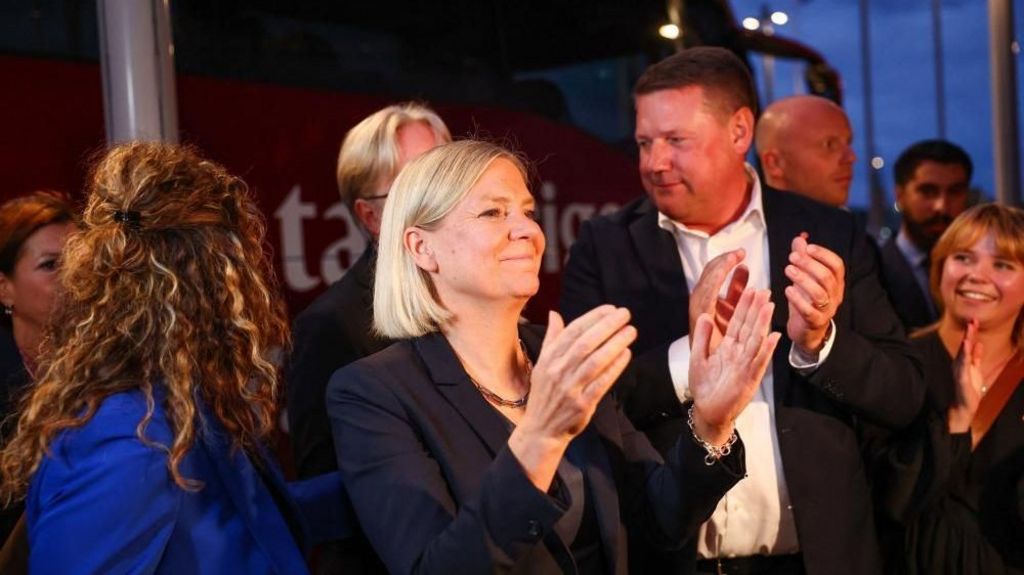
If these preliminary results are officially confirmed in the final vote count, Magdalena Andersson, leader of the Social Democrats and head of the left alliance, is set to return to the post of prime minister — a role she previously held from 2021 to 2022 before her bloc lost power in the last election cycle.
### Right Bloc’s Shift to Hard-Right Allies Faces Voter Backlash
Kristersson’s conservative Moderate Party has governed in a minority administration supported by the hard-right Sweden Democrats (SD), a party with well-documented origins in neo-Nazi and far-right extremist circles. Founded by open Nazi sympathizers in the 1980s, the SD was widely shunned by mainstream Swedish political establishments for decades. That changed after the 2022 election, when the party became Sweden’s second-largest in parliament after running a high-profile campaign focused on gang violence and immigration restrictions.
For the first time since the SD entered the national parliament in 2010, exit polls indicate the party is on track to lose voter support, a shift widely attributed to growing public unease over its outsized influence in the current right-wing administration. Kristersson had pledged to expand the SD’s role in government, offering cabinet positions to the party’s leaders if his bloc retained power.
### Decades-Old Bloc Dynamics Frame Coalition Negotiations
Sweden’s political landscape is traditionally split into two equal four-party blocs, one on the left and one on the right, meaning minority and coalition governments have long been the norm in the country. The Social Democrats, Andersson’s party, have been the dominant force in Swedish politics since the conclusion of World War Two, anchoring the country’s iconic social welfare system and shaping decades of domestic policy.
On election day, after casting her vote, Andersson framed the election as a defining choice for Sweden’s future. “Should we have a government entirely dominated by the Sweden Democrats, something that has never happened in Sweden before? Or should we have a government led by me, which will steer Sweden in a new spirit of co-operation?” she told reporters.
Speaking after casting his ballot in his home municipality of Strängnäs, Kristersson struck a confident tone, arguing that voters were ready to reward his administration for its work. “I think there is a genuine enthusiasm for us being able to continue our important work,” he said.
### Key Issues That Shaped the 2026 Election Cycle
The 2026 general election campaign was dominated by three core voter priorities: national security in the wake of Sweden’s recent NATO accession, rising gang-related violent crime that has gripped major urban centers, and public debate over welfare system funding and sustainability. With results still preliminary, formal coalition negotiations are expected to begin in the coming days once all ballots are counted and official results are released by election authorities.