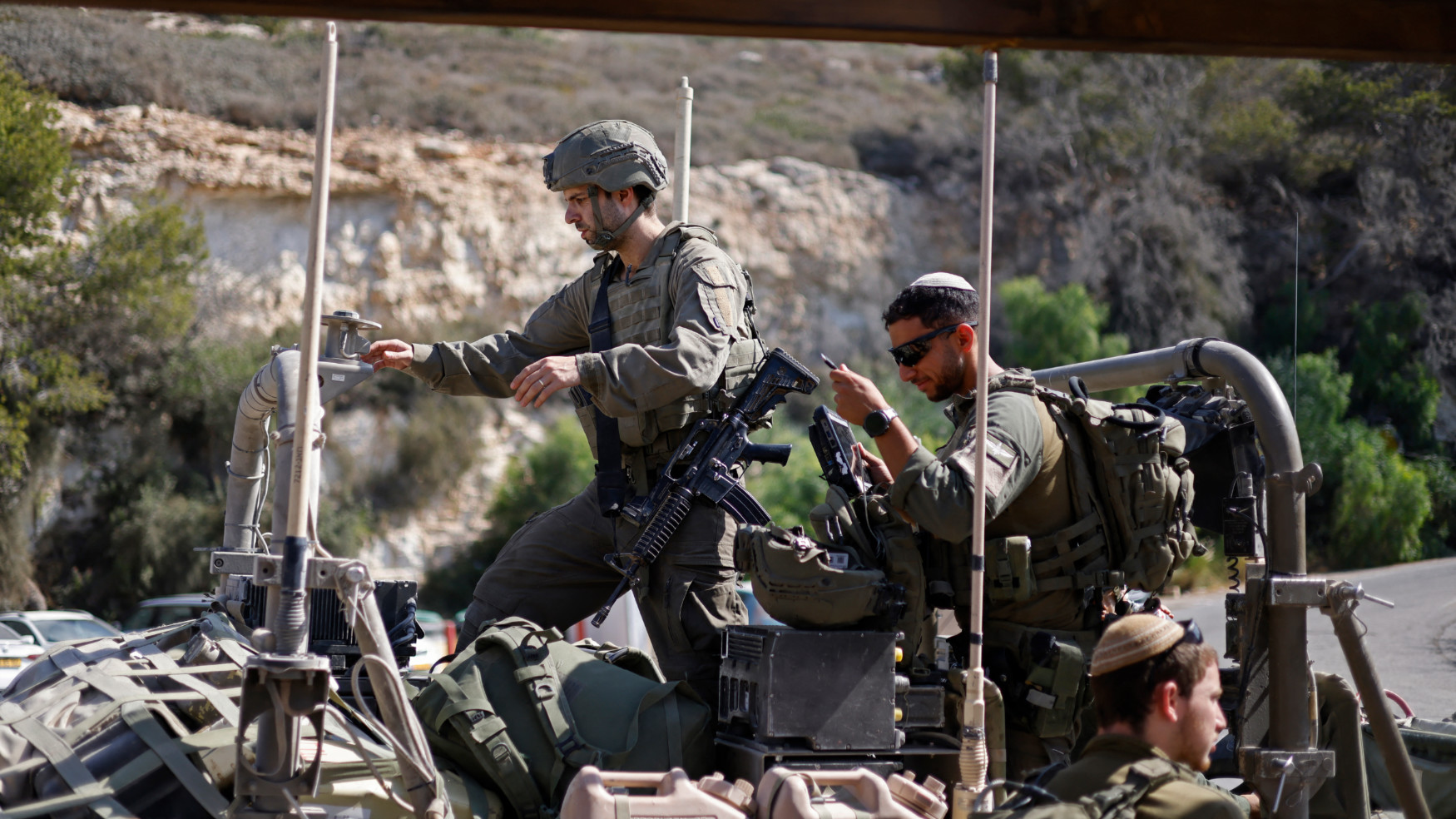
Before the first light of dawn broke over southern Lebanon on September 3, Saleh, a local farmer who has refused to abandon his land and home despite escalating cross-border tensions, stepped outside to begin harvesting his fig crop in the border village of Halta. It took only a moment for him to recognize the danger: bright lights illuminated the yard of a neighboring home, a property that had been empty since the most recent round of open conflict between Israel and Hezbollah.
The lights belonged to an Israeli infantry unit conducting house-to-house searches across the small village, which sits just kilometers from the Israeli-occupied Syrian Golan Heights. The soldiers contacted three Halta residents by mobile phone, ordering them to exit their homes and surrender immediately. After hours of on-site interrogation, the unit detained all three men, among them Hatem Abdel-Aal, a sitting member of Halta’s municipal council. Abdel-Aal was eventually released and returned to the village around midnight, following instructions from soldiers to walk to the designated handover point without any vehicle.
“He couldn’t refuse. They told him exactly what to do, and he followed,” Saleh, whose name has been changed for personal security, told Middle East Eye in an on-site interview. During the entire raid, military loudspeakers blared warnings ordering all other villagers to remain locked inside their homes, while Israeli artillery repeatedly fired on the forested hills rising above Halta. “This is their standard practice everywhere they operate here,” Saleh explained. “They fire artillery to warn locals not to approach, to keep us locked in our homes. I’ve stayed here through every round of fighting because if I leave, I know I’ll lose everything I’ve built – my home, my land. We’ve learned to live with these patterns.”
Halta, a small Sunni community of roughly 350 people located on the outskirts of Kfarchouba, has escaped the total widespread destruction that gutted most majority-Shia border towns caught in the crossfire of the 2023-2024 Israel-Hezbollah war. But the village has been no stranger to repeated Israeli cross-border incursions and enforced detentions of local civilians.
This is not an isolated incident. Over the past three years, Israeli forces have repeatedly abducted Lebanese civilian residents during cross-border military operations, with the Israeli government framing the detentions as legal captures of enemy combatants. While no official government tally of detained Lebanese exists from the two most recent conflicts between the two states, a local committee tracking detainee cases has compiled a public list of 35 people held by Israel – including at least 12 members of Hezbollah and 16 confirmed civilians.
Just hours after the Halta raid, the Israeli government announced it would release five detainees, two of whom were Syrian nationals, after concluding the group had no links to Hezbollah. The fate of Lebanese citizens held in Israeli detention has long been a core sticking point in US-mediated negotiations between Israel and Lebanon, but little to no progress has been made on the issue, as larger disputes remain deadlocked. Most notably, Israel has yet to withdraw its forces from the contested “pilot zones” established under a 2024 framework agreement that was meant to allow the Lebanese army to fully take control of the southern border area.
Earlier the same week, US Ambassador to Lebanon Michel Issa traveled to Tel Aviv to meet with Israeli Prime Minister Benjamin Netanyahu, in a push to break the months-long negotiation impasse and address key Lebanese demands. The subsequent small-scale release of detainees was quickly praised by Lebanese Prime Minister Nawaf Salam as a tangible success from Issa’s diplomatic outreach. But the Halta raid, which resulted in new detentions just as the release was being announced, has undercut that narrative.
The incident echoes a similar abduction in May, when Israeli soldiers seized three farmers from the Atiyyeh family as they worked their land near Kfarchouba. More than four months later, the fate of the three men remains unknown. Local municipal officials have repeatedly attempted to secure information on their whereabouts through the International Committee of the Red Cross and the United Nations Interim Force in Lebanon (UNIFIL), but all requests have gone unanswered.
“They have no connections to any armed group, no political affiliations at all. They are just working laborers, trying to earn a living to feed their families,” explained Lubna Salha, a member of Kfarchouba’s municipal council.
Regional analysts argue that Israel’s recent partial release of detainees is little more than a symbolic gesture, crafted to ease domestic pressure on the Lebanese government, which has faced widespread public criticism for failing to deliver meaningful results from the US-brokered talks. “Israel gave a little with one hand, and took more with the other,” explained Johny Mounayer, a Beirut-based political analyst. “They abducted new civilians from areas like Halta, while also asserting operational control over the Ali al-Taher ridge. In practical terms, they have given Lebanon nothing of substance.”
The Ali al-Taher ridge, a strategic high point that overlooks the major southern Lebanese city of Nabatieh on the edge of Israel’s self-declared border buffer zone, has been one of the most active flashpoints for cross-border clashes in recent months. Israel claims Hezbollah has built a command center and a network of attack tunnels under the ridge, claims Hezbollah has disputed.
Michael Young, senior editor at the Carnegie Middle East Center, added that the detainee release also serves as a diplomatic goodwill gesture to Washington, which has struggled to keep the faltering Israeli-Lebanese negotiations on track. “There are clear signs this move was done as a favor to the Americans,” Young noted. “A lot of Israeli actions in this process aren’t aimed at Lebanon at all – they’re aimed at the mediator.”
Late last week, Lebanese President Joseph Aoun released a public statement expressing gratitude to the Trump administration for its role in facilitating the detainee release. Local Lebanese media outlets have reported that the next round of formal negotiations between Israeli and Lebanese delegations is scheduled to take place on September 15 and 16. But for residents of border villages like Halta, every additional day of deadlock brings new uncertainty and danger.
From his home in Halta, Saleh describes a daily reality of occupation: “We sit locked in our houses, and Israeli flags fly on the hills and surrounding villages all around us. We are surrounded on every side.”