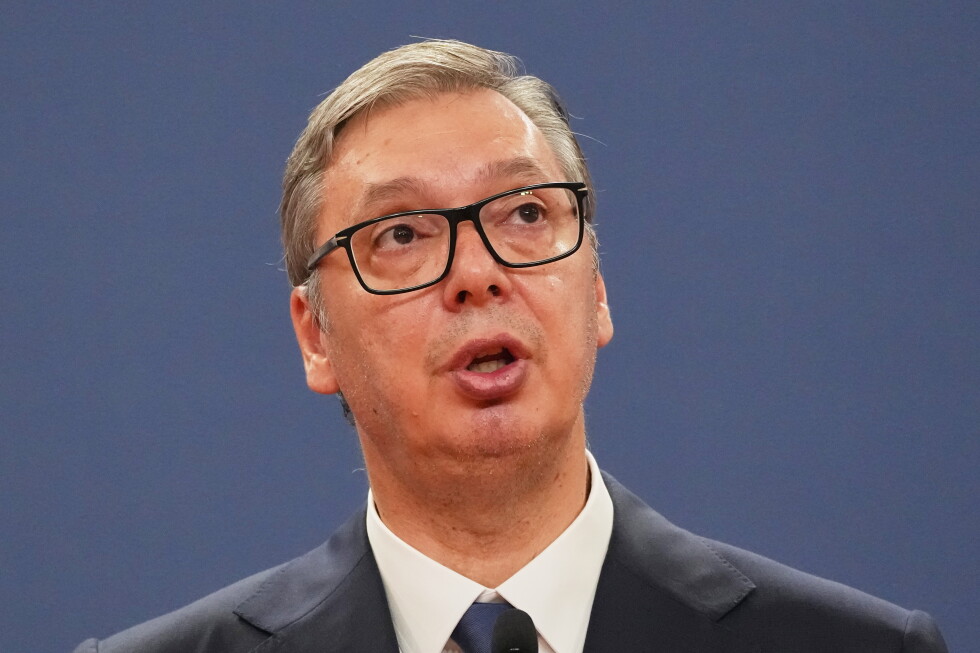
BELGRADE, Serbia — Serbia’s long-ruling populist Serbian Progressive Party (SNS) formally announced Saturday that incumbent President Aleksandar Vucic will be its nominee for prime minister, should the party secure victory in the upcoming snap parliamentary election. The contest, widely viewed as the most significant political test for Vucic’s administration after more than a year of sustained anti-government street demonstrations, is slated to take place on October 25, though Vucic has not yet officially dissolved parliament to formalize the election call.
The early vote comes nearly two years after a fatal concrete canopy collapse at a Novi Sad train station in northern Serbia that killed 16 people. That disaster sparked massive youth-led demonstrations, with protesters arguing that deep-rooted government corruption and administrative incompetence directly enabled the tragedy through shoddy renovation work. Tensions remain high across the country as the ruling party fights to retain control amid sweeping popular discontent: on the same day SNS held its nomination conference in the southern city of Nis, hundreds of anti-government demonstrators marched through the city, with police cordoning off the National Theater to block protesters from accessing the party meeting venue.
Vucic confirmed to party officials Saturday that he will officially call the election in the coming days, after which he will resign from the Serbian presidency to launch his campaign for prime minister. A separate presidential vote will be held at a later date, he added. For Vucic, who has held national power for 14 years, the 12 months of continuous protests have represented the greatest threat to his political control of his career. At their peak, demonstrations drew hundreds of thousands of participants across the country, all demanding accountability for the November 1, 2024 canopy collapse and an end to systemic corruption.
Vucic has taken a hardline stance against the protest movement, drawing international condemnation for reports of excessive police violence and arbitrary detentions of demonstrators. He has repeatedly made unsubstantiated claims that the student and academic organizers behind the protests are plotting to overthrow the Serbian government. He doubled down on these accusations Saturday, claiming the unrest has been orchestrated by foreign actors. “This evil,” Vucic told party delegates, “is not coming from the inside, it is coming from the outside.”
The election will see SNS face off against a broad field of opposition groups. A student-backed coalition consisting of university professors and policy experts is expected to run, though the full list of candidates has not yet been released. Both right-wing and center-left opposition parties will also contest the vote, alongside several smaller political factions.
Tensions around the election have been further heightened by recent revelations that at least 14 Serbian activists and students — including student protest organizers — were targeted with commercial spyware earlier this year. The Belgrade-based nonprofit Share Foundation called the incident the largest documented case of surveillance abuse against political opponents in Serbia to date. Vucic’s administration has rejected the allegations as baseless.
Serbia has been in the European Union accession process for years, but talks have stalled under Vucic’s leadership over documented democratic backsliding, including proven election irregularities in previous national votes. Vucic has also defied EU consensus by refusing to join European sanctions against Russia following its full-scale invasion of Ukraine, and has maintained close economic and diplomatic ties with China throughout his tenure.