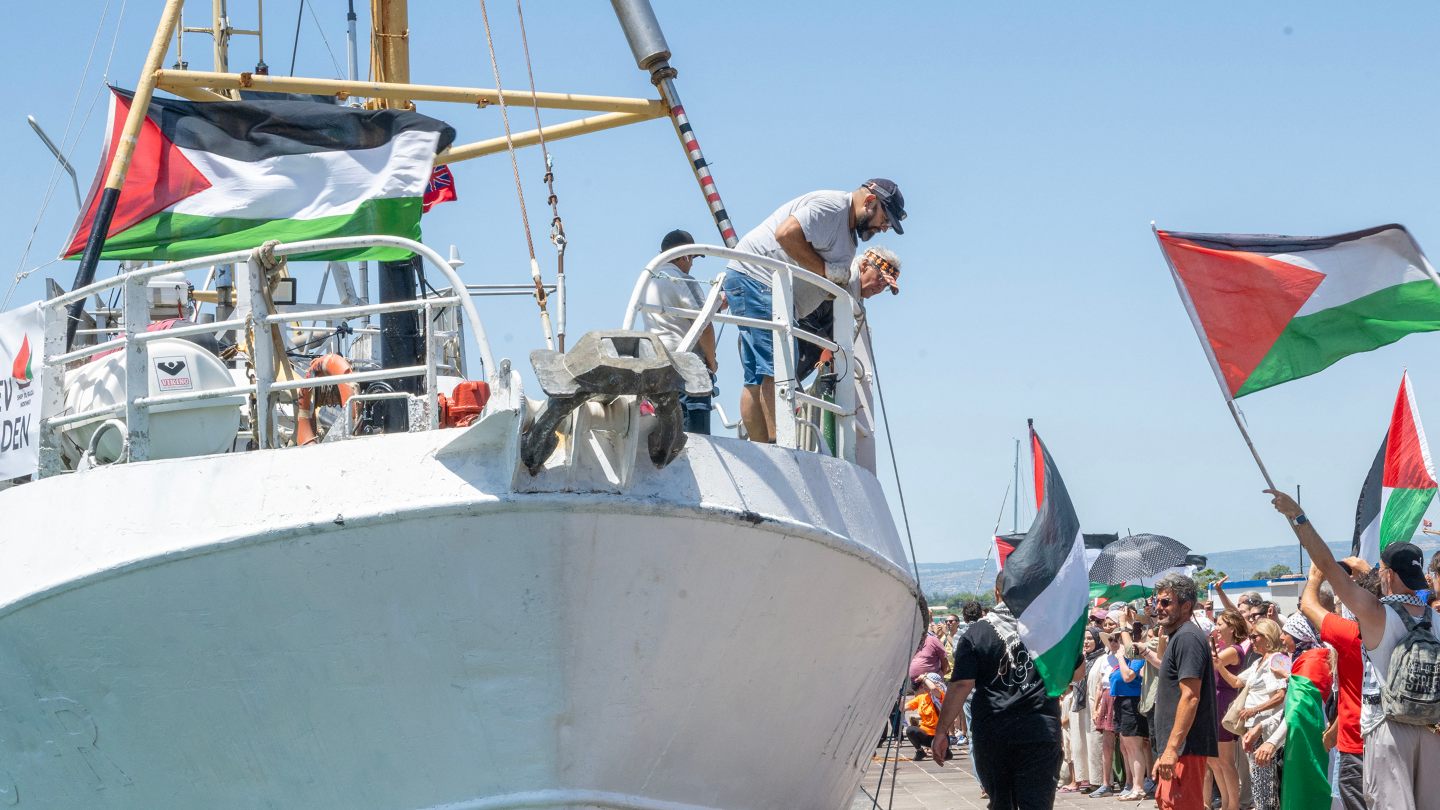
Against a backdrop of a lingering humanitarian crisis and years of deadly interceptions of aid missions, the Freedom Flotilla Coalition (FFC) has launched a bold new international initiative to challenge Israel’s long-running blockade of the Gaza Strip. The coalition announced that two activist vessels are already traversing European ports, with a coordinated attempt to reach the besieged Palestinian territory scheduled for October.
The mission will proceed despite a documented history of brutal violence and abuse against flotilla volunteers by Israeli forces during previous attempts to break the blockade. FFC representatives confirmed that past participants have faced severe beatings, repeated use of tasers, sexual assault, and arbitrary detention, abuses that have not deterred the coalition from moving forward with its latest effort. Organizers frame the voyage as a necessary response to what they call Israel’s deliberate restriction of life-sustaining supplies, including food, medicine, and fuel, that has pushed Gaza’s humanitarian situation into catastrophic territory.
“Freedom Flotilla sails again because our governments continue to fail to uphold their obligations,” stated Zohar Chamberlain Regev, a member of the FFC steering committee. “At every port, we will carry the demand that Palestinians be free to live with dignity. In October, we intend to carry that demand and the solidarity of people around the world to Gaza’s shores.”
As of the coalition’s latest update, two vessels have already completed stretches of their European port tour. The Handala II visited Norway, Sweden, and Denmark throughout June and July, while the Kate departed from Bristol, United Kingdom, earlier this month and has already made stops in Ireland, Germany, and France. The flotilla will next call at ports in Spain, Portugal, and Italy before setting a course for Gaza’s coastline.
The mission draws a diverse cohort of participants from across the globe, including seasoned human rights advocates, trade union organizers, sitting elected representatives, independent journalists, certified medical professionals, and other grassroots supporters of Palestinian rights. At every stop along the European route, organizers will host public gatherings and community meetings to build awareness of the crisis in Gaza and rally local support for the campaign.
Beyond the voyage itself, the FFC has issued a set of clear demands to national governments worldwide: halt all weapons and energy shipments to Israel, end all diplomatic and military cooperation with the Israeli state, impose targeted sanctions, and prioritize the creation of safe corridors for unimpeded humanitarian aid to enter Gaza. The coalition is also calling on governments to guarantee the flotilla’s right to free passage under international law, and to explicitly warn Israel that any attack, seizure, diversion, or unlawful arrest of the mission’s vessels and crew will carry tangible diplomatic consequences.
Crucially, the FFC is demanding permanent, unobstructed free access to Gaza and a full end to what it terms Israel’s illegal blockade of all essential goods, including food, clean water, and medicine.
Participants in the mission acknowledge the severe risks inherent in sailing toward Gaza, but frame inaction as a far greater moral failing. “We know that sailing toward Gaza carries serious risks,” said Edward Digilio, an engineer from Maryland in the United States who is joining the voyage. “But silence and inaction carry a much greater cost for Palestinians and the world. This mission is an expression of shared humanity and a refusal to accept the destruction of an entire people as normal.”
This latest effort comes as the latest chapter in nearly two decades of activist attempts to break the Gaza blockade. The FFC grew out of the original Free Gaza Movement, which launched its first voyages to Gaza in 2008. The most infamous incident came in 2010, when Israeli commandos stormed the Turkish vessel Mavi Marmara, killing 10 activists on board. In the years since, activists have repeatedly documented severe abuse during interceptions, including allegations of abduction, torture, and sexual assault.
Most recently, a separate 2025 aid mission, the Global Sumud Flotilla, launched in direct response to what the coalition calls Israel’s ongoing genocide and aid blockade of Gaza, saw at least 15 boats raided by Israeli naval forces in international waters hundreds of nautical miles off Gaza’s coast. All crew members were abducted, according to the mission, and many vessels were deliberately disabled and left adrift, stranding activists at sea. In June 2025, British participants in the Global Sumud Flotilla told Middle East Eye that they were detained in international waters, subjected to beatings, sexual humiliation, tasering, and other forms of mistreatment after their boats were intercepted. They reported being transferred to Israeli “prison ships” and held in custody, accusing the British government of failing to provide any meaningful consular support during their detention.
The FFC’s new voyage comes as Gaza still grapples with a devastating humanitarian emergency, even after a ceasefire was declared in October 2025. Organizers say the central goal of the October 2026 voyage is to build sustained international pressure to secure permanent unrestricted access to Gaza and force an end to the Israeli blockade. Throughout the journey, the coalition will continue urging national governments to uphold international law protecting freedom of navigation and hold Israel accountable for any attempt to intercept or detain the mission’s crew and vessels.