After seven weeks of explosive testimony and 40 hours of stalled jury deliberations, a Massachusetts judge declared a mistrial Friday in the high-profile case of Lindsay Clancy, the 36-year-old former nurse charged with murdering her three young children in 2022. The jury’s failure to reach a unanimous verdict has mirrored the deep national divide the case sparked, pitting competing narratives of mental health systemic failure against calls for strict criminal accountability.
Clancy admits to strangling her children — 5-year-old Cora, 3-year-old Dawson, and 8-month-old Callan — before attempting suicide by jumping from a second-story window, an act that left her permanently paralyzed and reliant on a wheelchair. Her defense team has centered its case on the argument that Clancy suffered from severe, untreated postpartum psychosis that triggered debilitating hallucinations and delusions in the weeks leading up to the killings, eliminating her capacity for criminal intent. Prosecutors, by contrast, have alleged the murders were premeditated and intentional, pushing back against claims that her mental state absolves her of legal responsibility.
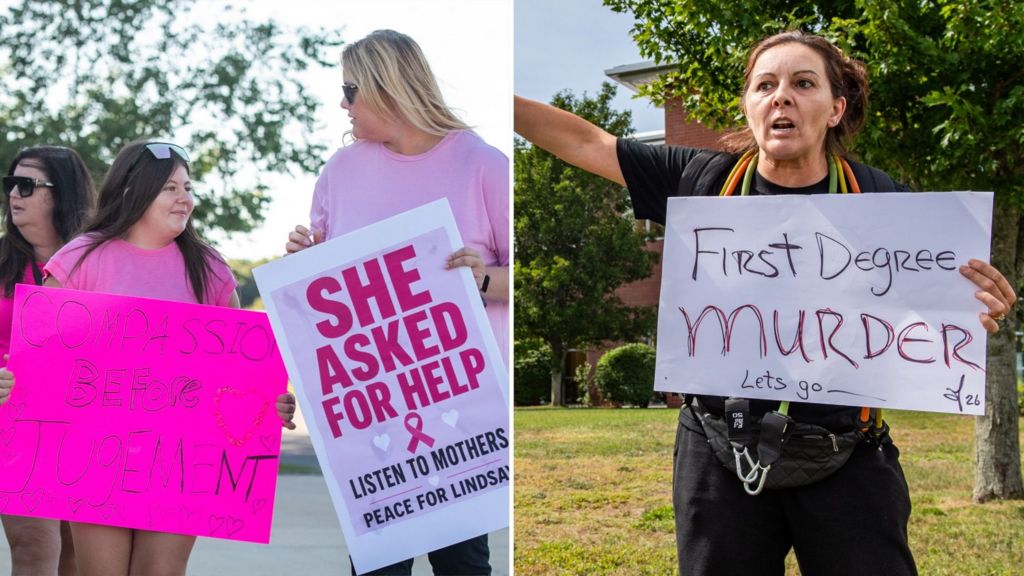
The trial quickly transfixed the American public, drawing passionate crowds to the Plymouth courthouse and igniting fierce debates across social media platforms, family dinners, and public discourse nationwide. Dozens of supporters, many clad in pink to signal solidarity with Clancy, gathered outside the court throughout the trial to show their backing. Among them was Jodi Fournier, who spent 15 consecutive days at the courthouse to demonstrate her support, arguing that Clancy was failed by a broken U.S. healthcare system that left her postpartum mental health needs unaddressed. “This is a global issue,” Fournier said. “It doesn’t just affect small-town Massachusetts — it affects women everywhere.” Other supporters, including Melissa Merrill, a mother who shared similar postpartum suicidal experiences after giving birth and received care at the same hospital as Clancy, said Clancy’s story reflects widespread gaps in perinatal mental health support. Merrill called Clancy a “sad, defeated woman” and delivered a handwritten message of support to her legal team outside court.
On the opposing side, critics of the widespread public sympathy for Clancy have pushed back against framing her as a martyr for maternal mental health struggle. Nicole Russell, a Texas mother of four who followed the trial closely, argued that millions of women navigate postpartum hardship and severe mental health challenges without harming their children. She dismissed outpourings of support as “toxic empathy,” pointing to the extensive care Clancy received from medical providers, her family, and her household staff in the months before the killings as evidence that she had access to more support than most American mothers. Others, including Illinois father of three Vincenzo Vazquez, argued that gender bias has shaped public perception of the case, noting that a father accused of the same crime would be unlikely to receive the same level of public sympathy. “Whatever someone is dealing with, there is no excuse for killing your own children,” Vazquez said. “We should be rallying for justice for three children who never got to live their lives.”
Witness testimony throughout the trial only deepened these divisions. More than 10 expert medical witnesses testified about Clancy’s postpartum mental state, but several key statements undermined the defense’s core argument. Jennifer Tufts, Clancy’s treating therapist who saw her for more than a dozen sessions over five months, testified she never observed signs of psychosis during their appointments. Psychiatrist Avram Mack further told the court that the American Psychiatric Association does not formally recognize postpartum psychosis as a standalone diagnostic category, a claim that strengthened the prosecution’s position.
Online discourse around the case has been particularly heated, with unsubstantiated conspiracy theories spreading widely across platforms like TikTok, where millions of users have followed the trial’s developments. Patrick Clancy, Lindsay Clancy’s ex-husband who was present throughout the proceedings and testified to his wife’s deteriorating mental state, has become a target of aggressive online harassment, with false claims that he covered up details of the crime or bore responsibility for the killings. His legal team issued a statement in August pushing back against the false accusations, noting that “Patrick Clancy has suffered an unspeakable and unimaginable loss, which has only been compounded by patently false, defamatory, and injurious public statements.”
The mistrial declaration leaves Clancy’s future and the case’s next steps unresolved. A pre-scheduling hearing set for the end of September will clarify whether prosecutors will pursue a second trial or negotiate a plea deal with Clancy’s defense team. For the public, however, the national conversation the case ignited — about postpartum mental health access, systemic failures in maternal care, gender bias in criminal justice, and the line between mental illness and criminal culpability — shows no sign of fading anytime soon.
This story contains discussion of infanticide and suicide. Anyone experiencing mental distress or suicidal thoughts can reach out to a local medical provider or visit Befrienders Worldwide for a directory of global support resources.