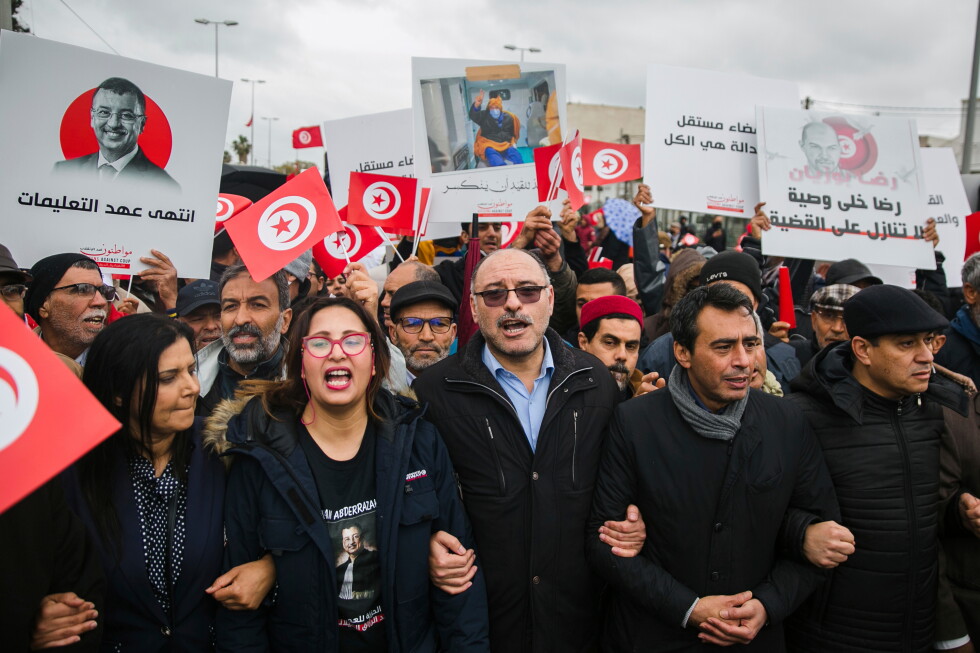
TUNIS, Tunisia — Tunisia’s highest judicial body, the Court of Cassation, has delivered a final ruling upholding long prison sentences for dozens of high-profile opposition leaders, legal practitioners and human rights advocates convicted in a widely divisive state security conspiracy case, according to judicial sources cited by Tunisia’s state-run news agency TAP Thursday evening. The court rejected all appeals filed by the defendants, leaving intact sentences of up to 45 years originally issued by a lower appellate court in 2023. This verdict has amplified already widespread international scrutiny of President Kais Saied’s administration, deepening alarms over the erosion of judicial independence and political pluralism in the North African nation. The conspiracy case stands as a central pillar of a sweeping government crackdown that has unfolded since Saied seized nearly unchecked executive power in July 2021, when he moved to suspend parliament, dismiss the sitting prime minister’s cabinet, and rule the country via presidential decree. The charges brought against the defendants include conspiracy against the state’s internal and external security, membership in a terrorist organization, and plotting to alter the country’s system of governance — all allegations that the accused have consistently and vehemently denied, with their legal teams repeatedly challenging the legitimacy of the judicial process. Speaking at a Friday press conference, Faiza Rahem, wife of detained opposition activist Issam Chebbi, announced that families of the convicts would shift their legal fight into a broader political movement following the top court’s ruling. “After four years of ongoing harassment and persecution, we will not stop our work to defend the detainees. We will never grow tired or surrender,” Rahem stated. She added that the government’s repressive tactics have only hardened the opposition’s commitment: “As authoritarianism has grown more brutal, our ranks have grown, too. Every time they try to silence our voices, we only speak louder.” Saied has publicly backed the convictions, framing the prosecutions as a critical measure to safeguard Tunisia’s national security and hold what he calls enemies of the state accountable. He has previously labeled his political opponents “traitors” and “terrorists,” claiming the defendants in this case plotted to destabilize the country and incite widespread social unrest. Elected to the presidency in 2019 on a populist platform promising to dismantle Tunisia’s corrupt, dysfunctional post-Arab Spring political system, Saied has repeatedly rejected accusations that he is engineering a full authoritarian takeover to suppress all dissent. He maintains his sweeping executive actions are necessary to root out systemic corruption and shield Tunisia from foreign interference. Defense lawyers for the convicted individuals have already raised sharp objections to the handling of the appeal process, noting they received just three days’ advance notice of Thursday’s final hearing. The extremely short timeline, they argue, deprived them of adequate time to prepare a robust defense for their clients. The list of high-profile figures handed lengthy sentences includes veteran opposition leader Ahmed Nejib Chebbi, prominent activist Chaima Issa, and seasoned politicians Jaouhar Ben Mbarek, Ghazi Chaouachi, Ayachi Hammami, Khayam Turki and Abdelhamid Jelassi. A number of the defendants spent multiple years in pretrial detention before their convictions, while others who were released on bail during the lengthy appeals process have now been rearrested to begin serving their sentences after this final ruling. Global human rights organizations have harshly condemned the convictions. Amnesty International had publicly urged the Court of Cassation to overturn the guilty verdicts ahead of the ruling, describing the entire case as blatantly politically motivated and noting the trial was plagued by repeated violations of due process and basic legal rights. The organization has also raised urgent alarms over poor prison conditions for the detained opposition figures, warning that many convicts are already suffering from declining health, conditions that have been severely exacerbated by recent repeated heat waves in overcrowded, poorly ventilated prison facilities. In August, Haifa Chebbi, a lawyer and the daughter of 82-year-old Ahmed Nejib Chebbi, shared that her father, one of the most high-profile detainees, was experiencing severe shortness of breath and chronic extreme fatigue, with prison officials only providing minimal monitoring of his fragile health condition.