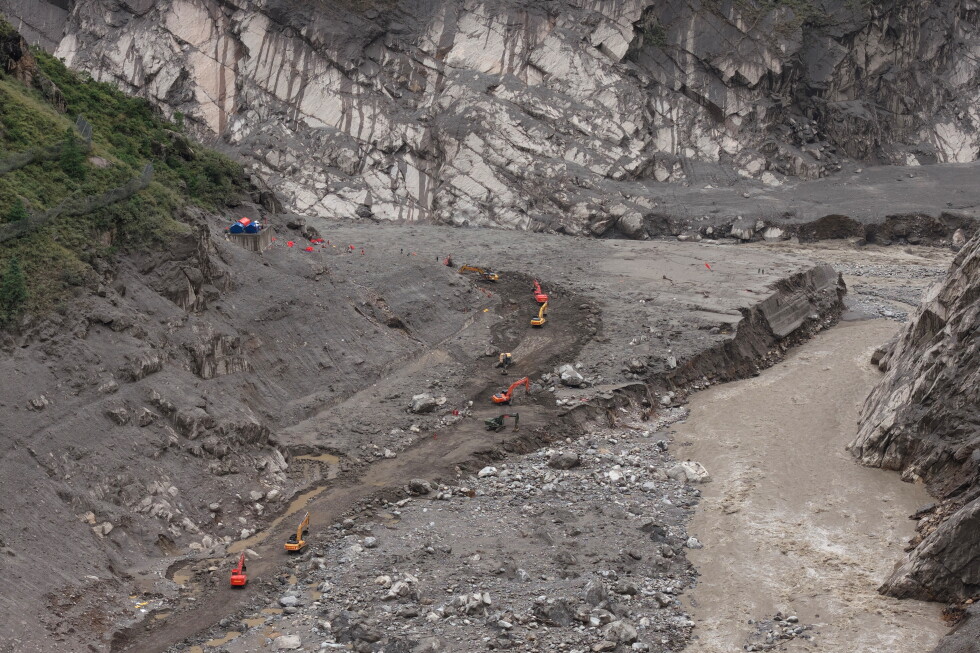
Over a week has passed since catastrophic flash floods swept across the China-Nepal border, leaving a devastating trail of death and disruption that has now claimed more than 1,000 lives and left over 4,500 people unaccounted for across both nations. What stands out most in the wake of this natural disaster is the starkly contrasting approach to information transparency between the two neighboring countries, drawing new attention to long-standing patterns of information control in China around major crisis events.
On Nepal’s side of the shared border, disaster response communications have aligned with open governance norms. Nepali authorities have released frequent, granular updates on fatalities and missing persons, maintaining a public, searchable online registry that tracks survivors and those lost to the floods. Independent domestic and international journalists have been granted near-unrestricted access to hard-hit areas, with only basic accreditation requirements in place. Reporters have been allowed to visit temporary aid camps for survivors, document mass burial sites, and film rescue operations, including harrowing footage of mud-caked survivors pulled from hydropower tunnels by helicopter crews.
Grieving families have been able to share their stories publicly, conduct symbolic burial rites, and organize independent searches for missing loved ones, giving a human face to the disaster that has been largely absent from coverage on the Chinese side.
The contrast with China’s side of the border, where the disaster impacted Tibet Autonomous Region, could not be sharper. As of the most recent update released late Wednesday, Chinese authorities report 21 deaths and 541 missing people in Tibet, including 261 foreign nationals from 23 countries. Official updates are released only every few days, and access to the disaster zone has been restricted exclusively to China’s top state-run media outlets: Xinhua News Agency and China Central Television (CCTV).
Unlike Nepal’s open reporting, state media coverage has centered almost entirely on official disaster relief logistics rather than the human cost of the flood. Programming has highlighted rescue workers’ heroism, President Xi Jinping’s directives for relief efforts, and technical analysis of the glacial lake outburst that caused the floods. Names and personal stories of victims and their families have been almost entirely excluded from official coverage, and independent sources confirm that non-state journalists across China have been ordered not to conduct interviews with victim families, and to only republish official Xinhua material. The Associated Press, among other international news outlets, requested access to the affected areas shortly after the disaster struck but has yet to receive approval to enter.
This tight information control is particularly pronounced in Tibet, a region that has been marked by heavy government surveillance and restricted access for foreigners and journalists since China asserted control over the area in 1951. Even for accredited foreign journalists working elsewhere in China, travel to Tibet requires special government approval, and cross-border communications for Tibetans are heavily monitored.
Beyond restricting reporting, Chinese authorities have moved to punish social media users who have questioned the official narrative around the disaster. Tibetan cyber police have publicly announced 10 cases of people detained or fined for “spreading online rumors” related to the flood, with penalties ranging from 5 to 10 days of police detention and fines up to approximately $150. Many of these cases involved posts questioning the low official death toll, including one that noted the poster estimated at least 1,000 people had been killed, contradicting an early official count of just three dead.
This pattern of delayed and incremental updates to disaster death tolls is not unprecedented in China. In July 2024, for example, authorities waited more than a month to revise the official death toll for severe typhoon flooding in Guangxi Province, raising it from 39 initially to 159.
For families of missing Chinese victims, the lack of official transparency has forced them to turn to rare independent channels outside of Chinese government control to share their loved ones’ stories. One such outlet, the exile-based independent Chinese media Aquarian, has interviewed relatives of missing victims including Peng Guangming, a young worker on a Chinese-backed highway project on Nepal’s side of the border, who lost contact with colleagues just 10 minutes before the flood hit. Another missing person, He Hongrong, was last seen waiting to cross back into Tibet from Nepal, carrying a green backpack and en route to Lhasa. Her family has shared her photograph via the independent X account Fat Parrot, which reposts content from Chinese social media, in the hopes of finding new information about her whereabouts.
The differing approaches to disaster information between the two countries have underscored how China’s system of state-controlled media and internet regulation shapes public access to information during crises, leaving critical details about the disaster’s impact on the Chinese side still unknown more than a week after the floodwaters first surged.