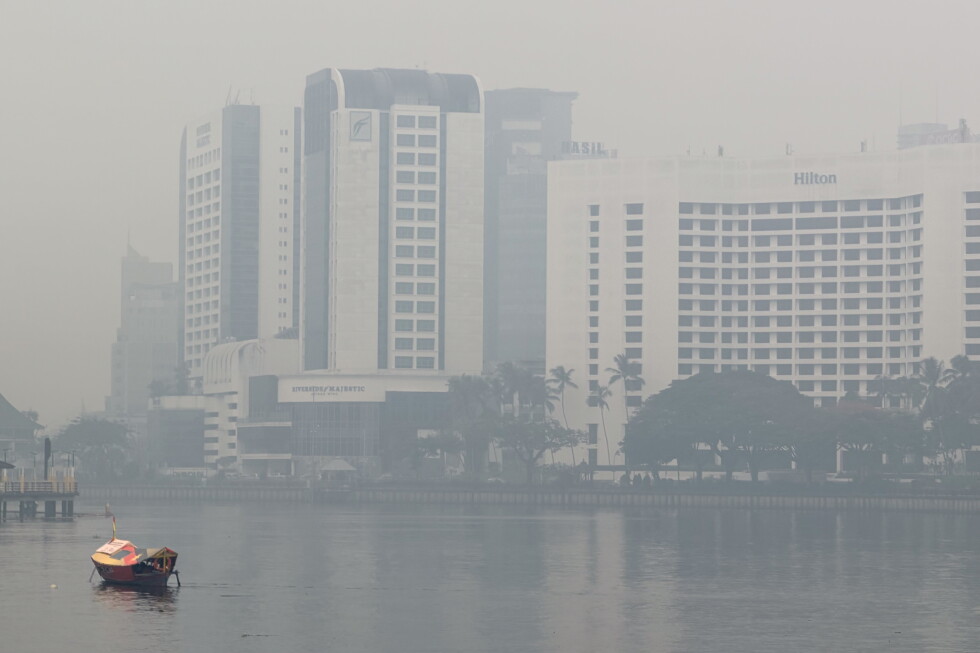
A small agricultural town on Malaysia’s Borneo Island has recorded hazardous haze levels that cross the country’s emergency threshold, amplifying concerns over the annual regional air quality crisis driven by Indonesian forest fires. On Friday, Sarawak state’s Serian, a border community of roughly 89,000 people adjacent to Indonesia’s Kalimantan province, saw its Air Pollutant Index (API) spike to 521, according to official data from Malaysia’s environment department. Not far away, Kuching, Sarawak’s capital and largest urban center, also posted a dangerous reading of 311, placing it firmly in the hazardous category of Malaysia’s air quality scale.
Transboundary haze is a chronic seasonal challenge for Southeast Asia. Every dry season, smoke from slash-and-burn land clearing and forest fires in Indonesia drifts across national borders, degrading air quality in neighboring countries including Malaysia, Brunei and Singapore. Under Malaysia’s regulatory framework, any API reading above 500 triggers an emergency protocol that requires halting non-essential work and outdoor activities; schools have already been ordered closed in areas with readings exceeding 200. As of Friday evening, Malaysian officials had not yet issued a formal emergency declaration for Serian.
This year’s haze outbreak is far more severe than average, experts note, fueled by a combination of increased fire activity across multiple Indonesian provinces and extended dry weather conditions that have allowed blazes to spread rapidly across Borneo. Sarawak has emerged as the hardest-hit region in Malaysia, with multiple localities recording hazardous air pollution levels for consecutive days.
Indonesian authorities have ramped up response efforts to contain the blazes. Latest satellite data from Indonesia’s Forestry Ministry, released Friday, shows 717 confirmed hot spots — areas of elevated temperature linked to active fires — detected across the country since August 1, with 103 new hot spots recorded in just the 24-hour period leading up to the report. To slow fire growth, Indonesian authorities have deployed large-scale ground and aerial firefighting teams, and have carried out cloud seeding operations to induce much-needed rain.
Law enforcement action has also been stepped up, particularly in Kalimantan, the Indonesian portion of Borneo that is the source of much of this year’s smoke. Five companies operating in the province have already had their business licenses suspended over allegations that illegal fires burned within their concession areas. Forestry Minister Raja Juli Antoni announced that penalties could extend far beyond temporary suspensions: companies that fail to meet mandatory land restoration requirements, or that are found to have intentionally set fires, will face full criminal prosecution.
The ongoing crisis highlights the persistent challenge of addressing transboundary air pollution in Southeast Asia, where dry seasonal conditions and lax land management enforcement have created a recurring public health threat that crosses national borders.