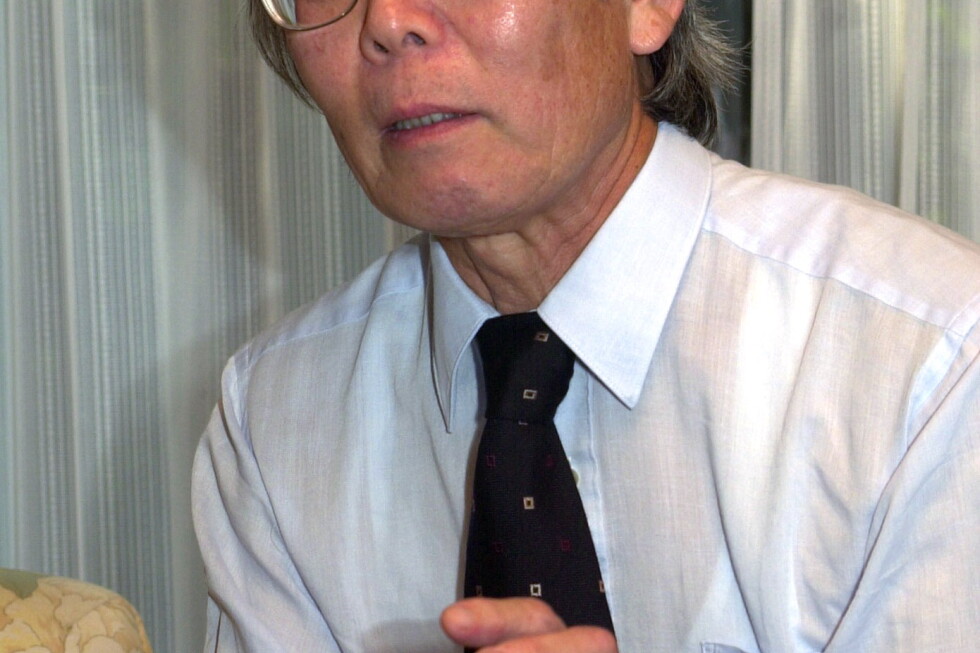
Hideki Shirakawa, the groundbreaking Japanese chemist who shared the 2000 Nobel Prize in Chemistry for his transformative work on conductive polymers, has passed away at the age of 90.
Shirakawa’s collaborative research with two American scientists, Alan Heeger and Alan MacDiarmid, upended long-held assumptions about the properties of plastic, proving that this ubiquitous material could carry electrical current just as metals do. This counterintuitive discovery unlocked a vast new range of applications across modern electronics, laying the foundation for technologies that shape daily life around the globe today.
The University of Tsukuba, the Japanese research institution where Shirakawa built his career as a professor and researcher after joining its faculty in 1979, confirmed his death on August 24. The university did not release any details about the specific cause of death. Japan’s leading daily newspaper, Yomiuri, reported that Shirakawa died at a medical facility in Yokohama, a major port city located just west of Tokyo.
Born in Tokyo in 1936, Shirakawa built his academic foundation early, earning his doctoral degree in engineering from the Tokyo Institute of Technology in 1966. A decade later, he took a research position at the University of Pennsylvania, where he began his landmark partnership with MacDiarmid and Heeger that would redefine materials science.
Prior to their work, conventional scientific wisdom held that all plastics were natural insulators, incapable of conducting electricity. The trio’s breakthrough defied this common understanding, clearing a path for the development of low-cost conductive materials that outperform traditional metals in key areas: they are far lighter, far more flexible, and adaptable to a wide range of commercial and industrial uses. Today, these materials power critical modern technologies from photovoltaic solar cells to the touchscreens of smartphones and mobile devices, touching millions of lives worldwide.