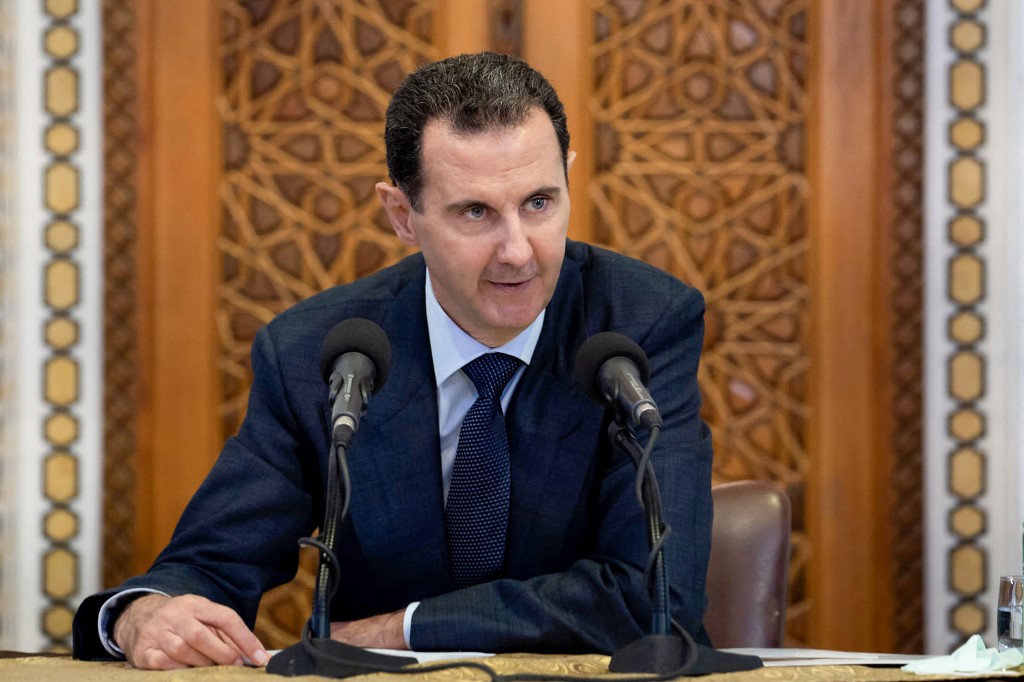
After 16 years of official denial and behind-the-scenes speculation, Israel has for the first time publicly confirmed its role in the 2008 targeted assassination of Muhammad Suleiman, a senior military and intelligence official who served as a top aide to former Syrian President Bashar al-Assad. The long-awaited admission comes in a new memoir from Ehud Olmert, Israel’s prime minister at the time of the killing, marking the first high-profile, on-the-record confirmation of an operation that had only been hinted at in anonymous leaks and diplomatic accusations for decades.
Suleiman was far more than a standard presidential aide: he held broad oversight over all of Assad’s most sensitive military and intelligence projects, and was explicitly tasked with leading construction and security efforts for a secret undeclared nuclear reactor being built by the former regime in Deir Ezzor, eastern Syria. The killing came roughly a year after Israeli warplanes destroyed the partially completed reactor in a September 2007 airstrike, an operation also carried out during Olmert’s premiership.
New details of the covert assassination are laid out in excerpts of Olmert’s book published by Israeli news outlet Ynet. Olmert recounts that on the night of the attack, Suleiman was relaxing with guests on an oceanfront balcony at his vacation property. Under cover of complete darkness, Israeli naval commandos moved into position, splitting into two teams that advanced to within 150 meters of the balcony on opposite sides. After positively identifying Suleiman, even with crowds of civilian beachgoers nearby who never detected the operatives, the commandos received the green light to strike. Olmert writes that three bullets were fired directly at Suleiman, all striking him in the back of the head, killing him instantly. The operatives then withdrew without incident to a waiting extraction boat off the coast, disappearing before any local security forces could respond.
While previous unofficial information had linked Israel to the attack — most notably a 2015 leak of classified documents from the U.S. National Security Agency that pointed to Israeli commando responsibility — Olmert’s book represents the first formal, public acknowledgement from a senior Israeli official. For its part, the now-defunct Assad regime consistently blamed Israel for Suleiman’s killing from the day of the attack, despite Israel’s years of official silence.
The timing of the admission, which coincides with the collapse of Assad’s government in December 2024, aligns with a newly released United Nations report that independently confirms what Israel and Western intelligence agencies have long alleged: the Assad regime was actively developing an illicit nuclear weapons program at the Deir Ezzor site. According to the UN report, nuclear inspectors from the International Atomic Energy Agency conducted verification work at multiple Syrian locations in August 2024, shortly before Assad’s ouster, and confirmed the site’s purpose as a secret nuclear reactor.
In his memoir, Olmert emphasized Suleiman’s central role in the covert nuclear project, noting that Suleiman “had a hand in everything” related to the Deir Ezzor facility. As a reward for his leadership on the project, Olmert added, Assad gifted Suleiman a brand-new Mercedes-Benz just one month before the assassination, a public gesture of gratitude for his work advancing the regime’s nuclear ambitions.
Olmert’s political legacy is complicated: he left office in 2009 and was ultimately convicted on bribery charges in 2014, serving a six-year prison sentence before his release in 2017. The publication of his memoir has brought new attention to the covert operations of his premiership, which reshaped Middle East security dynamics long before the collapse of the Assad regime in late 2024.