Nearly two weeks after catastrophic glacial outburst floods tore through mountain valleys and towns across Nepal, thousands of displaced survivors sheltering in temporary relief camps are still grappling with critical gaps in essential services, even as government agencies deliver basic food provisions to those who lost everything. The disaster, triggered by a glacier collapse on August 26, has become one of South Asia’s deadliest climate-linked disasters in recent years, leaving an unprecedented trail of destruction and loss that continues to disrupt recovery efforts.
For many families already reeling from the loss of loved ones and entire homes, the lack of access to prescription medications and emergency cash has compounded the hardship of life in temporary shelters. Suresh Kumar Karanjit, a resident who has taken shelter at a relief center in Devighat, Nuwakot district, lost his younger brother to the flood’s surging waters last week. Living with a chronic heart condition, Karanjit found that the limited medications available at the camp did not match his required prescription. With no personal cash on hand to purchase his regular drugs, he was forced to sell a carton of relief-issued noodles for 400 Nepalese rupees, equal to roughly $2.60, to cover the cost. “We have been living here for a week, and it is good that relief materials are being provided. But there is a clear lack of appropriate medicine,” Karanjit told reporters in an interview this Thursday.
Official data from Nepal’s disaster management agency puts the confirmed death toll from the disaster at 1,252, with more than 4,200 people still listed as missing. Across the border in China’s Tibet Autonomous Region, authorities reported as of late Wednesday that 21 people had been killed and 541 others remain unaccounted for. In total, close to 4,000 displaced Nepalese residents are currently housed across 32 government-run relief centers spread across the worst-hit regions.
Dharam Raj Uprety, Nepal’s top disaster management official, stated that authorities have established dedicated health camps staffed with licensed doctors and stocked medication at each relief hub, with additional work focused on improving hygiene and sanitation to prevent post-flood disease outbreaks. However, on-the-ground accounts from survivors contradict official claims of full service provision, highlighting gaps in matching the specific medical needs of vulnerable people with chronic conditions.
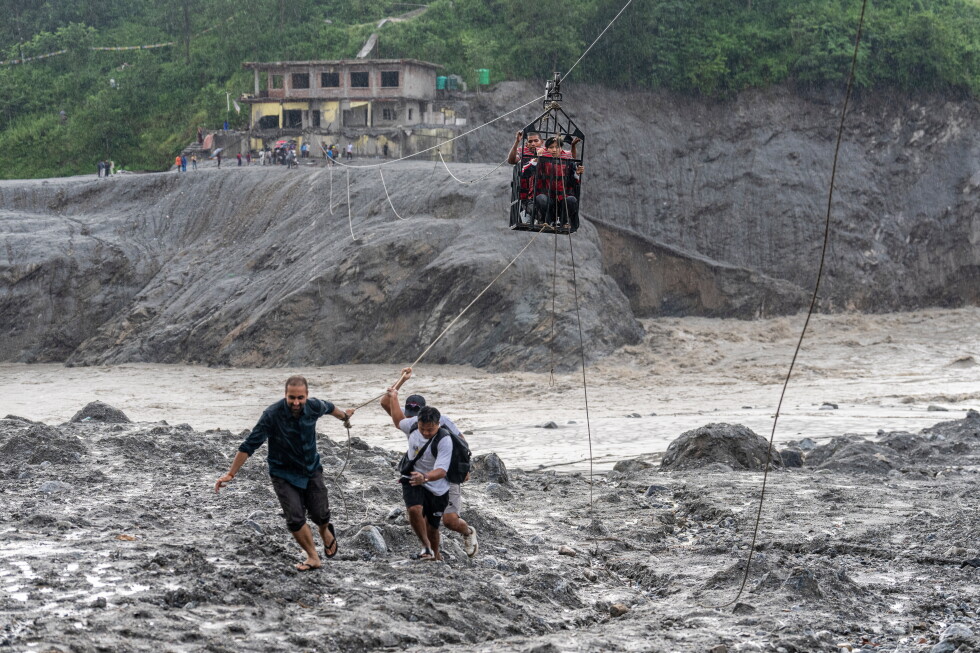
In hard-hit areas cut off by destroyed transport links, local residents and military personnel have improvised alternative routes to restore basic connectivity. In Bidur town along the Trishuli River, where all permanent bridge crossings were washed away by floodwaters, residents now rely on a makeshift zip line to travel between the two riverbanks. Nepalese Army personnel have been deployed to assist riders as they board and disembark, while dozens of locals wait along the bank for their turn to cross.
In recent days, rescue operations have increasingly shifted focus to collapsed tunnels at several hydropower construction sites across the flood zone, where an estimated 900 workers are believed to have been trapped when debris and floodwaters inundated the passages. Specialized rescue teams from India, China, and the United States have joined the search and recovery effort, but difficult terrain and heavy debris have slowed progress significantly. As of Thursday, there was still no confirmation as to whether any of the trapped workers remain alive.
At the Trishuli-3A hydropower project tunnel, construction crews have begun manually clearing the upper section of the blocked passage, lawmaker Ram Neupane confirmed. An access road to the excavation site was completed over the past week, but additional rock blasting and large-scale debris removal will be required before heavy rescue machinery can be brought into the area.
Climate scientists have long warned that rising global temperatures are accelerating glacial melt across the Himalayan mountain range, increasing the frequency and severity of glacial lake outburst floods and similar catastrophic events like the one that struck Nepal late last month.