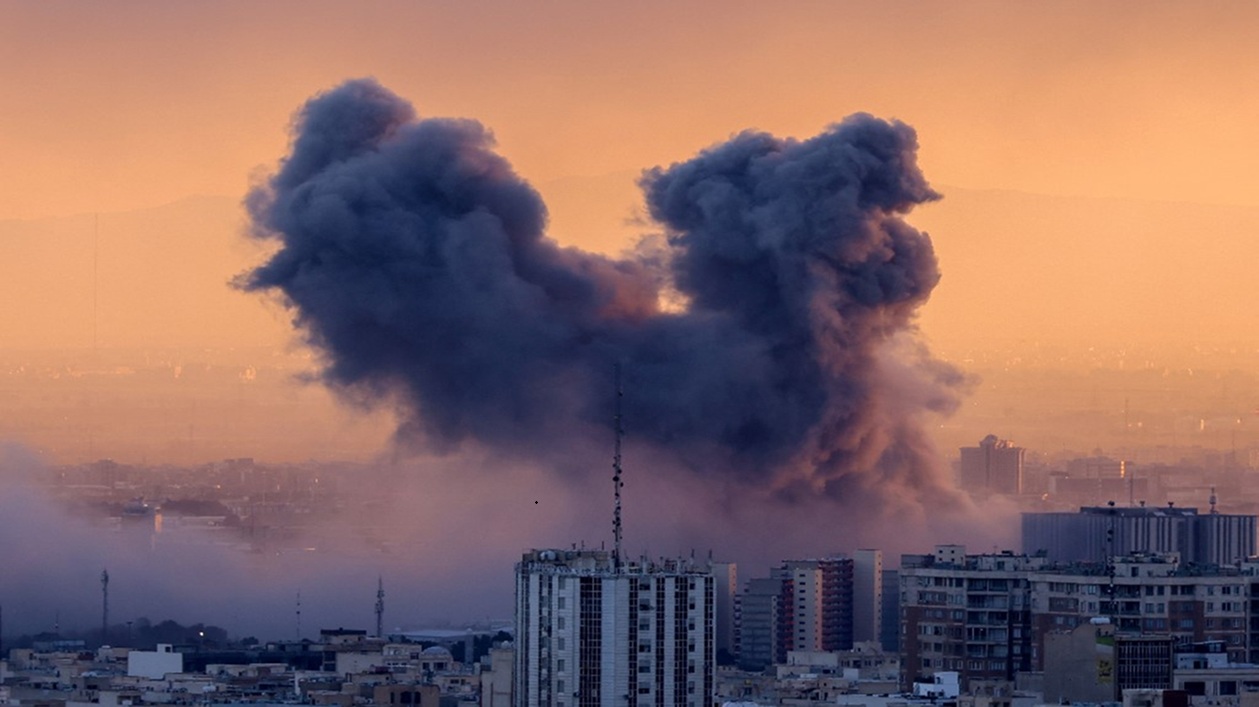
For centuries, armed conflict has retained one core human element: the final decision over who lives and who dies has rested with a human being. A frontline soldier could choose to wound rather than kill an exposed opponent; a military pilot could question flawed intelligence and abort a strike that would harm innocent people. But rapid advances in artificial intelligence and weapons technology are erasing that critical human check on lethal force, as fully autonomous weapons systems move from concept to battlefield deployment.
Activists and humanitarian organizations warn that these unregulated systems already are causing catastrophic civilian harm, with early deployment examples linked to the ongoing conflict between the US, Israel and Iran. AI-powered targeting tools were first fielded by Israel during its military campaign in Gaza, and have since been used in strikes across Iran, with data showing more than 1,000 targeted hits in the conflict’s first 24 hours – a pace of attack that military analysts say is only possible with automated targeting systems.
For more than a decade, the global advocacy coalition Stop Killer Robots has led the push to head off this unregulated new era of warfare, lobbying national governments to adopt an international ban on weapons that can select and engage targets without any form of human oversight. Nicole van Rooijen, the coalition’s executive director, explained to Middle East Eye that the core danger of these systems comes from their core design: built specifically to kill, they eliminate the checks and balances that human decision-makers bring to the battlefield, and their deadly output is entirely dependent on the quality of data fed into their algorithms.
A stark example of this risk, van Rooijen noted, is the February 28 US airstrike on Shajareh Tayyebeh Primary School in Minab, Iran. The strike killed 156 people, 120 of whom were children, making it the deadliest single attack of the entire conflict. Preliminary investigations point to outdated and inaccurate intelligence fed into an AI targeting system as the root cause of the civilian massacre. “It is false promises of being more accurate, more precise, yet the results are worse, not for their militaries but for civilians on the ground. They pay the brunt of it,” van Rooijen said. She added that without ground troops to verify target identities in volatile conflict zones, algorithmic errors become almost inevitable.
Beyond flawed intelligence, the fundamental accuracy of AI targeting is deeply questionable. Independent specialists who study AI integration into military operations estimate that these systems have a reliability rate of just 25 to 50 percent – even in the best-case scenarios, a failure rate that van Rooijen compares to the indiscriminate damage of carpet bombing. A second critical risk is that autonomous weapons drastically lower the political barrier to declaring war, since nations no longer need to risk their own soldiers’ lives to launch an attack. “No one wants to see their soldiers die on foreign land, so that calls for some restraint. You think twice about sending your own people,” van Rooijen said. “If it is all automated, you can just send machines. Israel and the US have been threatening Iran for decades, but never actually went through with it, and I do not think it is a coincidence… it gives you a false sense that you can do it quickly… and come back a winner.”
Compounding these dangers is the complete lack of global governance for the technology. To date, there is no internationally agreed definition of what constitutes a fully autonomous weapons system, and no binding treaty regulating their development, testing, trade or deployment. This regulatory vacuum has created what van Rooijen calls a “free for all” arms race, where large technology corporations can profit from the development of deadly tools at the expense of civilian lives. She points out that even civilian products like new cars or commercial airplanes have far more regulatory safety guardrails than AI integrated into military kill chains.
Human rights campaigners say there is clear historical precedent for banning dangerous weapons before they become a normalized part of warfare, pointing to the 2008 Convention on Cluster Munitions that prohibited the widely harmful weapons. Bonnie Docherty, senior arms advisor at Human Rights Watch (HRW) and a key negotiator of the cluster munitions treaty, says the campaign for autonomous weapons regulation follows the same core humanitarian principle: preventing unnecessary human suffering caused by unaccountable weaponry.
For Docherty, the most fundamental objection to autonomous weapons is an ethical one: machines can never grasp the inherent value of a human life, so delegating life-or-death decisions to algorithms is morally unacceptable. “An autonomous weapon system is a machine and a machine cannot truly understand the value of a human life,” she explained. “To give that machine the power to kill… is ethically inappropriate. Whoever is taking a life should be able to understand the significance of it.”
HRW research has also confirmed that autonomous weapons systems can replicate and amplify existing algorithmic biases, with lethal consequences for marginalized groups. “We looked at the discrimination front and particularly at race, gender and disability,” Docherty said. “For example, on the disability front, artificial intelligence may have trouble distinguishing a cane from a gun.”
Major military powers including the US, Israel, Russia and China have so far resisted regulation, arguing that existing international humanitarian law is sufficient to govern the new technology – an argument Docherty says is identical to the one used by opponents of the cluster munitions ban two decades ago. She noted that what broke the deadlock on cluster munitions was Israel’s widespread use of the weapons in southern Lebanon in 2006, which left thousands of unexploded submunitions scattered across civilian land that continue to kill and maim local residents to this day. “I feel like I am having a deja vu,” Docherty said. “A lot of these arguments, you could just plug in the same weapons system.”
In recent weeks, global institutional leaders have ramped up pressure for action. The United Nations Secretary-General and the President of the International Committee of the Red Cross (ICRC) have reissued their call for a binding international treaty governing autonomous weapons, three years after they first set a 2026 deadline for nations to agree on new rules. Now, leaders warn that the 2026 deadline is no longer feasible, and the world is rapidly approaching an irreversible moral red line.
The ICRC believes that increasingly advanced autonomous capabilities are already being integrated into weapons across multiple active conflicts, used for both defensive and offensive operations even in densely populated civilian areas. While formal verification of battlefield use remains difficult, ICRC legal adviser Georgia Hinds says the trend of growing integration is clear, ranging from cutting-edge state military systems to cheap commercial off-the-shelf technologies that are being adapted for combat.”While it is very hard for us to verify… we are seeing this increasing integration of autonomy into weapons in many conflicts, from sophisticated military capabilities down to more commercial off-the-shelf systems that are being adapted,” Hinds told Middle East Eye.
A critical upcoming opportunity for action will come in November, when national governments gather in Geneva for the Seventh Review Conference of the Convention on Certain Conventional Weapons (CCW), the five-yearly global meeting on conventional arms regulation. For years, the UN Group of Governmental Experts on Lethal Autonomous Weapons Systems has been drafting a regulatory framework that would ban the most dangerous fully autonomous systems and place restrictions on others. The group’s final working session is taking place this week, with its draft text set to go before the full November conference.
Campaigners and humanitarian experts are optimistic that the conference can approve a move to formal negotiations for a full legally binding treaty, a step that has been 13 years in the making. “It really would not take much now to convert that into a binding instrument,” Hinds said. “In November, the decision needs to be taken to move to formal negotiations. Rolling over discussions that have now been ongoing for nearly 13 years in the group of governmental experts is not acceptable. There is really only one option in November for us.”
If governments approve the move to formal negotiations, a final treaty could be finalized in just a matter of months, most likely as an additional protocol under the existing CCW framework. But Hinds cautions that the path forward is not guaranteed, and even if progress is delayed at the conference, campaigners will continue pushing for action through alternative pathways.
The core goal, Hinds emphasized, is to regulate the technology before it spreads too widely to control. As autonomous weapons become more common, cheap commercial systems become easier for non-state armed groups to adapt for lethal use, falling outside the scope of existing regulatory and accountability mechanisms. “The [more] opportunity for these systems to proliferate, the easier it becomes to adapt a commercially available system… it is also likely to be used by non-state actors who fall outside of those more regulated investigation mechanisms,” Hinds said. “All of these things again increase accountability concerns for me. So yes, I think it’s a big risk.”