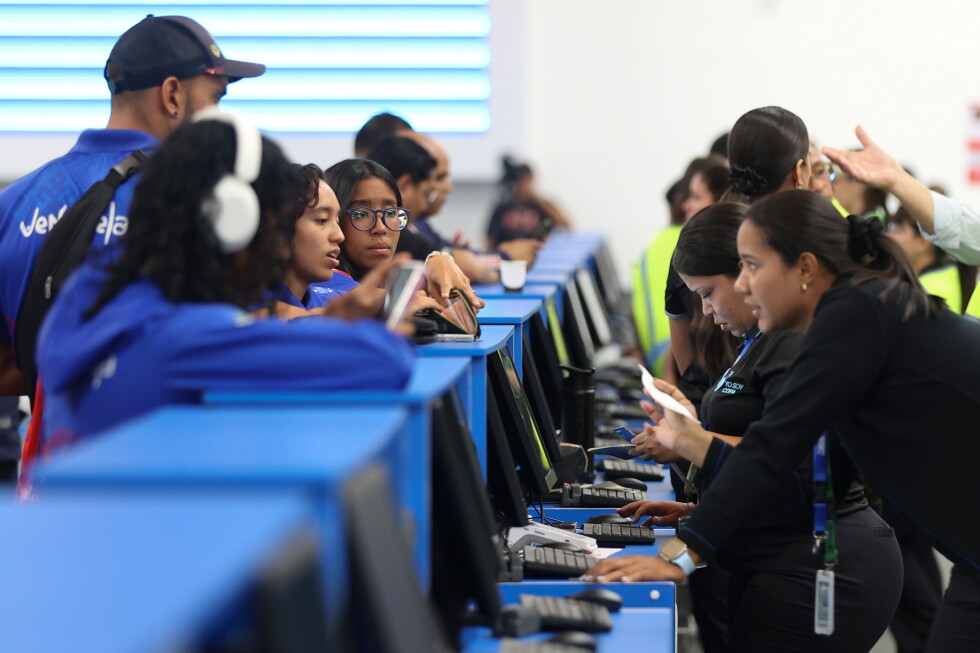
Nearly 10 weeks after two of the deadliest and strongest earthquakes to hit Venezuela in more than a century, the South American nation has taken a key step toward recovery by partially restarting commercial activity at its primary international gateway.
On Tuesday, Simón Bolívar International Airport, located 20 kilometers north of the capital Caracas in the Maiquetía district of coastal La Guaira state, welcomed its first commercial passengers since the twin 7.2 and 7.5 magnitude tremors struck on June 24. The powerful quakes, which hit just 39 seconds apart along Venezuela’s heavily populated coastal mountain range, left more than 6,500 people dead and displaced roughly 17,900 who lost their homes. Severe structural damage forced an immediate full closure of the airport, destroying sections of its runways, damaging the air traffic control tower, and rendering main passenger and cargo terminals unsafe for use.
To enable the phased restart while permanent structural repairs move forward, authorities constructed a 10,000-square-meter temporary passenger processing hub out of modular metal structures in the airport’s existing parking lot. The temporary facility is equipped with full passenger amenities, including check-in counters, climate-controlled waiting lounges, complimentary Wi-Fi access, on-site medical services, and public restrooms. Due to the modified layout, passengers will be shuttled between the temporary terminal and departing aircraft via ground bus transportation.
According to official projections, the new temporary setup can accommodate up to 2,168 passengers per day in this initial operational phase. Transportation Minister Francisco Garcés told reporters on Tuesday that the government expects to restore 25% of the airport’s pre-earthquake flight volume in this first stage. Officials plan a gradual ramp-up of capacity over the coming months, targeting 40% of pre-disaster operations within a few months, and 60% by the end of 2024 or early 2025. Garcés confirmed that international safety oversight organizations completed required inspections and formally certified the airport’s readiness to resume commercial operations.
The restart began with 11 weekly round-trip flights: seven domestic routes and four international services operated by Panama’s Copa Airlines and Spain’s Air Europa. Additional carriers, including Spain’s flag carrier Iberia, are set to add their services to the airport in the coming weeks. Prior to the Tuesday restart, all international flights bound for Venezuela were diverted to smaller regional airports in Carabobo state, 168 kilometers southwest of Caracas, and Anzoátegui state, 314 kilometers east of the capital, forcing passengers to endure hours of additional overland travel to reach the capital.
The disaster hit La Guaira state, Venezuela’s second smallest by area, particularly hard. Most of the earthquake-related fatalities were recorded here, where 440,000 residents, most from low-income backgrounds, rely heavily on tourism, commercial activity, and jobs tied to the airport and the country’s second-largest port, both located within the state’s borders. The tremors also caused widespread damage across the capital Caracas and neighboring central-western states including Carabobo, Miranda, Aragua, and Yaracuy.