MANILA, Philippines — Three remarkable Asian leaders — a veteran Singaporean diplomat who shepherded the creation of the world’s foundational oceans governance framework, a Myanmar pro-democracy activist risking his life to expose military atrocities, and a Bangladeshi social innovator lifting marginalized communities out of poverty — have been named this year’s Ramon Magsaysay Award recipients, the award foundation announced Monday.
Widely recognized as Asia’s equivalent of the Nobel Prize, the Ramon Magsaysay Awards were established in 1958 to honor individuals across the continent who demonstrate extraordinary greatness of spirit through selfless service to the public good. The award is named for Ramon Magsaysay, a beloved Philippine president who died in a 1957 plane crash. This year’s laureates will be formally recognized during a November 15 ceremony at Manila’s Metropolitan Theatre, where each will receive a commemorative medallion, an inscribed certificate, and an undisclosed monetary prize.
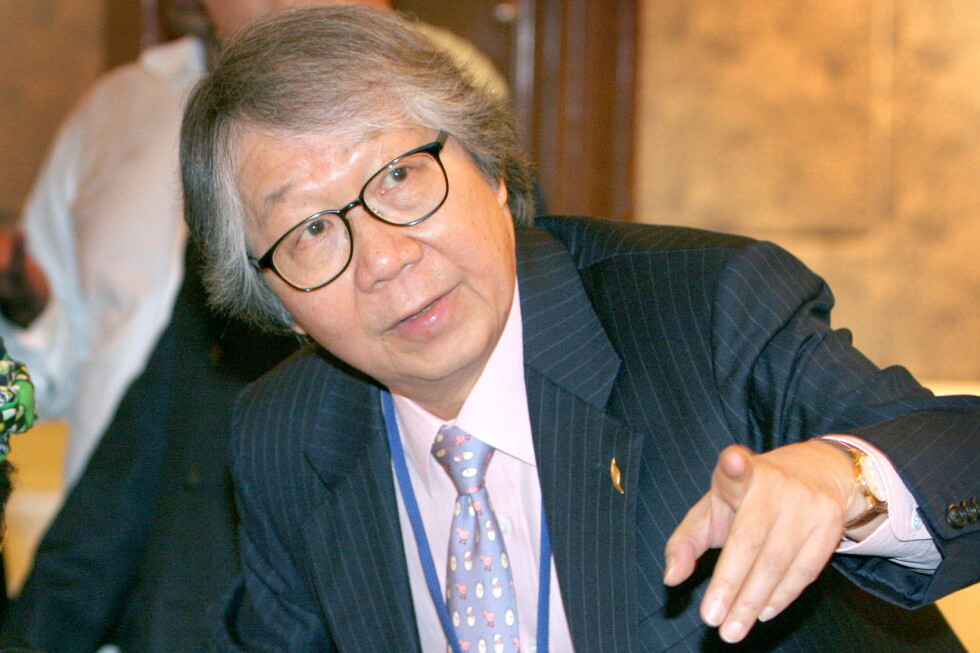
At 88 years old, Singaporean lawyer and diplomat Tommy Koh earns the award for his decades of work advancing international dialogue and the rule of law. His most landmark achievement came when he presided over the 1982 United Nations conference that brought more than 150 nations together to adopt the UN Convention on the Law of the Sea (UNCLOS) — a framework widely described as the “constitution for the oceans.”
The awards foundation noted that UNCLOS carries enormous global significance: it codified clear definitions of territorial waters, outlined sovereign economic rights for coastal states, and established binding mechanisms to resolve maritime disputes. The convention served as the legal foundation for a 2016 Permanent Court of Arbitration ruling in The Hague that invalidated China’s broad territorial claims in the South China Sea. The arbitration case was brought by the Philippines in 2013, but Beijing refused to participate in the proceedings and has continued to reject and defy the ruling. Multiple countries, including the Philippines, Vietnam, Malaysia, and Brunei, alongside Taiwan, have held competing territorial claims in the strategically critical waterway for decades, leading to ongoing regional tensions.
“Through his steadfast faith in dialogue, the rule of law and international cooperation, he has helped make peaceful coexistence possible in a world of unequal power,” the foundation wrote of Koh’s work.
The second laureate, 61-year-old Myanmar activist Bo Kyi, is honored for his unyielding advocacy for democracy and human rights in the face of military rule, a mission that has already cost him seven years of imprisonment across two arrests. Bo Kyi has been a vocal voice demanding the release of all political prisoners detained by Myanmar’s junta, including ousted former leader Aung San Suu Kyi, and has organized critical fundraising to support detainees and their families.
In 2000, Bo Kyi joined with other former political prisoners to found the Assistance Association for Political Prisoners (AAPP), an organization that has become a leading global watchdog documenting political repression by Myanmar’s military. The group maintains detailed records of political imprisonment, amplifies the stories of detainees and their families to the international community, and provides ongoing direct support to those affected by the junta’s crackdowns on dissent.
Rounding out this year’s cohort is 67-year-old Runa Khan, a former Bangladeshi teacher recognized for her decades-long commitment to empowering her country’s most vulnerable populations. Born into a privileged, upper-class family, Khan began her career of service in 1979 teaching children from low-income communities. In 2002, she founded the nonprofit organization Friendship Bangladesh to address the overlapping challenges facing the country’s poorest residents, including climate change impacts, lack of access to education, gender inequality, limited economic opportunity, and systemic social exclusion.
Today, Khan’s organization has grown into one of Bangladesh’s largest grassroots development nonprofits, employing more than 7,500 people across the country. It operates an extensive healthcare network that includes seven floating hospital ships, two land-based hospitals, and 550 mobile clinics that bring care to remote, climate-vulnerable coastal and riverine communities that lack access to formal medical services. Beyond healthcare, Friendship Bangladesh expands educational access for marginalized children, supports women’s economic empowerment, and helps low-income households build sustainable livelihoods that can withstand the effects of a changing climate.
“In her hands, privilege became not an entitlement, but a responsibility; not a family legacy to protect, but a gift to be shared so that others, too, might have the chance to live with hope, opportunity and dignity,” the foundation said of Khan’s work.