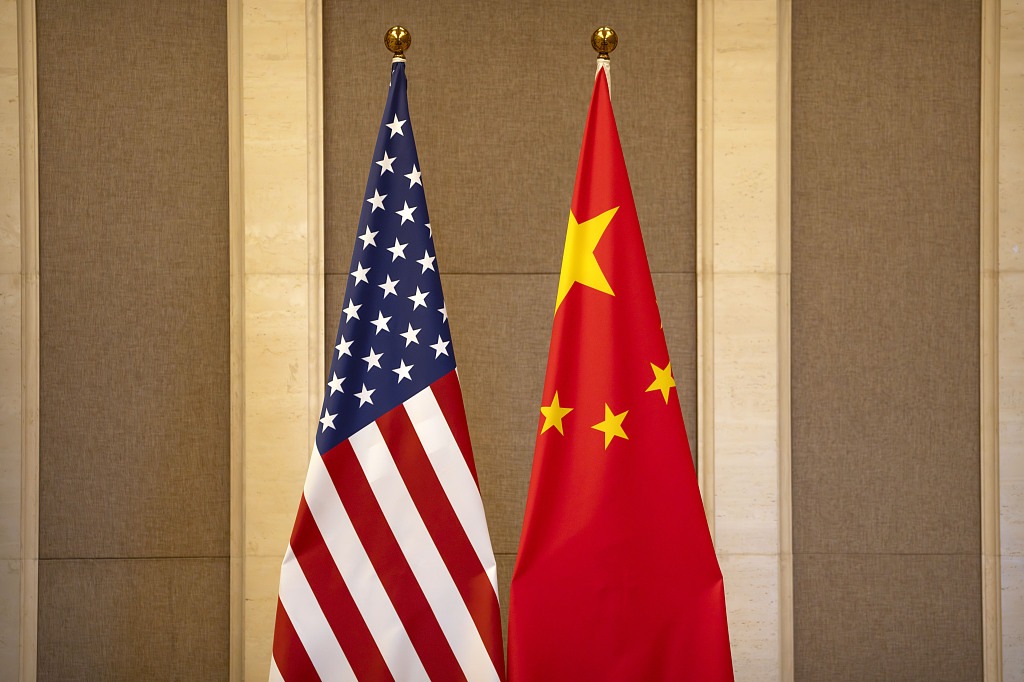
In a formal statement released Monday, China’s Ministry of Commerce has called on the United States to immediately withdraw all unilateral tariff measures targeting Chinese goods, following Washington’s recent implementation of a new 12.5 percent additional tariff under Section 301 of the 1974 U.S. Trade Act.
A ministry spokesperson emphasized that the U.S. move, framed under the false pretext of addressing so-called “forced labor”, represents a textbook example of unilateral protectionist trade policy that Beijing firmly rejects. The spokesperson pushed back against Washington’s politicized claims, noting that China has long maintained a comprehensive, robust legal framework regulating labor practices and has enacted strict enforcement measures to prevent and crack down on forced labor globally. In contrast, the spokesperson pointed out that the U.S. has never ratified the 1930 International Labour Organization’s Forced Labour Convention, and has a long track record of politically manipulating the forced labor issue for geopolitical and trade gains.
The spokesperson further clarified that Washington introduced the new Section 301 tariffs to replace two earlier sets of duties that were invalidated by the U.S. Supreme Court: tariffs imposed under the International Emergency Economic Powers Act, and a separate import surcharge enacted under Section 122 of U.S. trade law. During previous rounds of China-U.S. economic and trade consultations, U.S. negotiators explicitly made a binding commitment that any replacement tariffs placed on Chinese goods would not exceed a 20 percent rate, a threshold the new 12.5 percent tariff currently falls under.
Despite this, Beijing’s existing countermeasures in response to the U.S.’s earlier rounds of tariffs over fentanyl policy and reciprocal trade measures remain fully in effect, the spokesperson confirmed. The ministry added that Chinese trade authorities will continue to closely monitor any further trade actions from the U.S., conduct full impact assessments, and retain all legal rights to implement additional necessary countermeasures if Washington escalates trade tensions.
“China urges the U.S. to correct its erroneous practices and revoke all relevant unilateral tariff measures,” the spokesperson said, adding that Beijing remains open to continued dialogue and consultation with Washington on bilateral trade issues, so long as discussions are rooted in the principles of mutual respect, equality, and shared benefit. China also called on the U.S. to work alongside Beijing to uphold the consensuses already reached during previous trade talks, resolve outstanding disagreements, expand the scope of mutually beneficial cooperation, and lay the groundwork for a constructive China-U.S. relationship defined by long-term strategic stability.