The capital of Niger, Niamey, was thrown into chaos on Saturday morning when heavily armed mutinous soldiers from the national armed forces launched coordinated assaults on high-value strategic locations across the city, including the presidential palace and the country’s main international airport complex. Hours of sustained gunfire and explosions echoed through residential and government districts before the ruling military junta announced that its security forces had quelled the uprising and reestablished full control over all targeted sites.
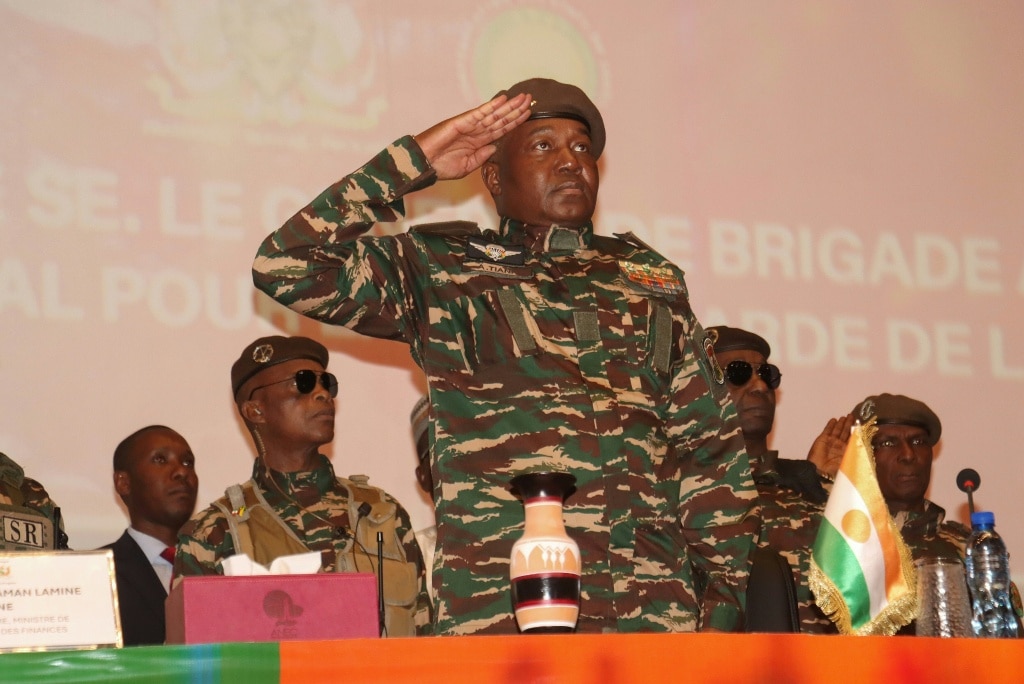
The unrest began shortly after 1:00 a.m. local time, when witnesses reported the first bursts of heavy weapons fire near the city’s core. Mutineers quickly blocked road access to the presidential palace and the headquarters of national broadcaster Tele Sahel, forcing the network off air for more than an hour before service was restored at approximately 10:00 a.m. GMT. A senior anonymous security source confirmed to Agence France-Presse that the mutineers had attempted to force entry into the presidential palace, but were repelled by elite units of the presidential guard, which remains loyal to junta leader General Abdourahamane Tiani, according to an African diplomat based in the capital.
In an official address broadcast on state television, Niger’s Defense Minister General Salifou Mody outlined the details of the uprising. He confirmed that a faction of disgruntled soldiers had taken fellow service members hostage at a Niamey barracks before opening fire on multiple sensitive sites across the capital. “The swift, decisive response of our defense and security forces contained the outbreak of violence and allowed them to gradually retake full control of all occupied sites,” Mody stated, urging civilians to remain calm and resume their normal daily activities. By late Saturday morning, residents in districts close to the presidential palace reported that all shooting had ceased and the situation had stabilized.
Multiple witnesses confirmed that intense exchanges of gunfire and explosions also rocked Air Force Base 101, the military installation integrated into Niamey International Airport. Videos posted to social media by local journalists showed armored military vehicles deployed to reinforce security around the airport perimeter, while residents described heavy weapons fire that continued through the night until dawn. One local resident noted that the caliber of weapons heard during the clashes was far larger than the small arms typically carried by motorcycle-borne jihadist insurgents, distinguishing the uprising from the frequent extremist attacks that have plagued the country for a decade.
This uprising comes against a backdrop of long-running instability in Niger, which has been under military junta rule for three years as it grapples with a sprawling jihadist insurgency that has killed thousands of civilians and displaced hundreds of thousands across the country. Niamey International Airport has already been targeted twice by major extremist attacks in 2024: first in January by the Islamic State in the Sahel (EIS), and again in June by its main rival, al-Qaeda’s Sahel affiliate the Group for the Support of Islam and Muslims (JNIM). Both attacks were repelled by Nigerien forces, but left dozens of soldiers, civilians, and attackers dead. The two extremist groups are locked in a violent struggle for territorial dominance across the Sahel region, where they operate not only in Niger but also in neighboring Burkina Faso and Mali.
Notably, all three Sahel nations are currently ruled by military juntas that came to power via coups, have withdrawn from the regional bloc Economic Community of West African States (ECOWAS), rejected security cooperation with traditional Western partners most notably France, and aligned themselves more closely with Russia. Air Force Base 101 holds particular strategic significance as the location of both the headquarters of Russia’s Africa Corps in Niamey and the command center for the joint military force of the Alliance of Sahel States, the mutual defense pact formed by Niger, Burkina Faso, and Mali. The base has also been holding a large shipment of uranium concentrate since the end of 2023, which has remained stranded in Niamey awaiting export with no new movement reported to date.
As of Saturday afternoon, the junta has confirmed that the situation across Niamey is under control, and has urged citizens to avoid spreading unconfirmed information about the uprising on social media.