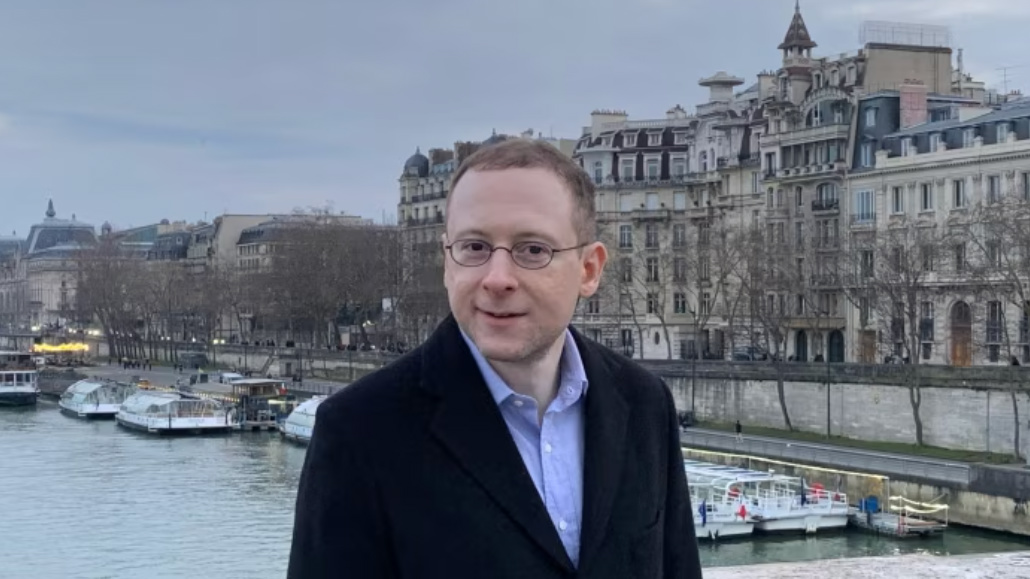
The death of prominent Cambridge University sociologist Jason Arday earlier this month has sparked a cascading controversy that pulls back the curtain on long-simmering tensions over academic hiring, free speech, and the growing influence of U.S.-led anti-diversity culture wars in British higher education. New internal documents obtained by Middle East Eye reveal that senior academic leaders at Cambridge privately conceded as early as 2024 that Nathan Cofnas – the self-identified race realist who first brought plagiarism allegations against Arday last month – should never have been hired by the institution in the first place.
Cofnas, who currently holds a postdoctoral research position at Belgium’s Ghent University, has dominated headlines since his unsubstantiated plagiarism claims against Arday spiraled into a relentless media campaign. Arday, a Black sociologist who rose to academic prominence after a non-traditional educational path, resigned from his Cambridge post earlier this month amid the onslaught of coverage, saying he had reached “the limits of what any person should reasonably be expected to endure.” He died shortly after stepping down.
In the wake of Arday’s death, Cofnas has been placed under formal disciplinary investigation and temporarily suspended by Ghent University over the inflammatory public comments he made about Arday, including describing the sociologist as “retarded,” “mentally disabled,” and “just another DEI hire.” Just days after his suspension, however, Cofnas announced he would be allowed to continue his research on campus while the probe moves forward, a outcome he directly credited to public intervention from U.S. Ambassador to Belgium Bill White. White had openly condemned Cofnas’s suspension, stating the Trump administration would re-evaluate its institutional ties with Ghent University over the move. Beyond diplomatic backing from the U.S. government, Cofnas has also received public amplification from tech billionaire and X owner Elon Musk, as well as consistent coverage across a network of right-wing media outlets and podcasts.
Scrutiny of Cofnas’s academic career has now turned back to his previous appointment at Cambridge, where both he and Arday held positions. In 2022, Cofnas was hired as a Leverhulme Trust early career fellow in Cambridge’s philosophy department and appointed a fellow at Emmanuel College. That tenure ended abruptly in April 2024, after Cofnas published a February 2024 blog post advancing extreme racial pseudoscience: he claimed race was inherently linked to academic ability, argued that Black people would “disappear from almost all high-profile positions outside of sports and entertainment” under a true meritocracy, and called for “some barriers set up between races in order for each one to express its own unique genius.”
Internal minutes from a closed-door February 23, 2024 meeting held to address student protests over Cofnas’s remarks, obtained by MEE, lay bare senior leadership’s private misgivings about his hiring. Bhaskar Vira, Cambridge’s pro vice chancellor for education, told attendees that senior university management was widely “outraged” by Cofnas’s comments. Vira noted that while Cofnas held a fellowship at the constituent college Emmanuel, the central university was exploring formal responses, adding that Cofnas had crossed acceptable lines even within the framework of academic free speech – though he cautioned the university needed to seek legal guidance before acting.
Angela Breitenbach, then-chair of the philosophy faculty, openly acknowledged that hiring Cofnas had been a misstep. She told meeting attendees that a simple Google search would have revealed the full extent of Cofnas’s extremist views before the appointment was finalized, admitting the original hiring process was “not satisfactory ultimately.” Breitenbach explained that the process had only involved one or two reviewers who did not fully vet all application materials, and that the university had since revised its protocols to make all applications accessible to the full faculty for review. Associate professor Sophie Dandelet further raised concerns that Cofnas’s extremist racial views would compromise his ability to teach a diverse student body. A student and faculty petition for Cofnas’s dismissal gathered more than 1,200 signatures that March, and Emmanuel College moved to terminate his fellowship shortly after, prompting Cofnas to file a lawsuit alleging belief discrimination. The college ultimately prevailed in court, with the judge ruling Cofnas’s blog post had caused measurable reputational harm to the institution.
The scandal has also cast new light on longstanding questions about Cofnas’s qualifications at his current institution, Ghent University. The Guardian reported this week that Ghent’s own philosophy department raised formal concerns about Cofnas’s appointment as early as May 2024, sending an official statement to the university’s rector questioning his “limited expertise” for the role. An anonymous senior philosophy of science academic quoted by The Guardian described Cofnas’s work as “abysmal” and “shoddy,” accusing him of presenting unproven racial pseudoscience as legitimate science without any supporting evidence. The department’s statement also questioned the transparency of Cofnas’s hiring, noting that out of 14 qualified candidates, it was “very improbable” Cofnas was the best choice, and a large majority of department members suspected his selection was “an ideological choice … decided in advance.” Cofnas has rejected all criticism, stating his academic qualifications are a matter of public record, and framing the scrutiny as an effort to censor his free speech.
The media frenzy surrounding Arday after Cofnas’s initial plagiarism allegations has also come under widespread condemnation for its extreme disproportion. An analysis by media watchdog NewsCord found that in just 22 days after Cofnas’s claims became public, 229 articles were published about Arday across UK media outlets – 188 of those came in the nine days before Arday’s death, averaging 21 articles a day. To put that volume in context, NewsCord noted that only 166 articles were published about Peter Mandelson in the two weeks after the release of the Jeffrey Epstein files, a far higher-stakes political scandal. As of this week, more than 218,000 complaints have been filed with the UK’s Independent Press Standards Organisation (Ipso) through NewsCord’s campaign – more than double the previous record for complaints over a single media campaign, and nearly 10 times the number filed against Jeremy Clarkson’s controversial 2022 column about the Duchess of Sussex.
Independent analysis published by Middle East Eye has also cast serious doubt on the core claims against Arday: key biographical claims that attackers claimed were fabricated have been verified as accurate, and the framing of Arday as a habitual, unrepentant plagiarist does not hold up to close examination of his work. Des Freedman, a professor of media and communications at Goldsmiths University, told MEE that the coordinated media campaign against Arday amounted to a shameful partisan attack, not legitimate public interest reporting. “Elements of the press boast that they are watchdogs, but they are also attack dogs,” Freedman said. “Instead of punching up … they punch down,” going after vulnerable people under the guise of acting in the “public interest.” He added that the frenzy was deliberately stoked by a “coordinated, international right-wing movement” that uses figures like Arday as scapegoats to advance anti-diversity, DEI rollback policies that originated in U.S. conservative politics.
Investigative reporting has now exposed deeper institutional and financial ties linking Cofnas’s campaign to influential right-wing U.S. donors. Byline Times reported last week that Cofnas’s allegations against Arday were amplified by a network of groups linked to billionaire Peter Thiel, founder of U.S. spy firm Palantir. After Emmanuel College dismissed Cofnas in 2024, the UK-based Free Speech Union (FSU) – a pro-free speech advocacy group that often backs right-wing academics – launched a public fundraiser for Cofnas, framing him as a martyr for academic freedom. Multiple Byline Times investigations have linked the FSU to a broader network of far-right academics supported by Thiel’s chief of staff. One key figure in that network is James Orr, a Cambridge divinity faculty academic and FSU adviser who hosted a series of controversial talks by Thiel at Cambridge in January, and serves as head of policy for the UK’s right-wing Reform Party, where he is widely described as Reform leader Nigel Farage’s “kingmaker.” U.S. Vice President JD Vance has even called Orr “my philosopher king.”
Additional far-right ties have been uncovered in the network promoting Cofnas’s views. Online magazine Aporia, which published a series of pieces amplifying Cofnas’s allegations against Arday and framed the scandal as “the bitter fruit of equalitarianism,” operates as the public arm of the Human Diversity Foundation – recently renamed Polygenic Scores – an organization that has documented links to the German far-right party Alternative für Deutschland.
Cambridge University has declined to comment on the internal meeting details obtained by MEE, and has not yet issued a new public statement on the broader controversy in the wake of Arday’s death. Ghent University has reiterated that its disciplinary investigation into Cofnas remains ongoing despite his return to campus research work.