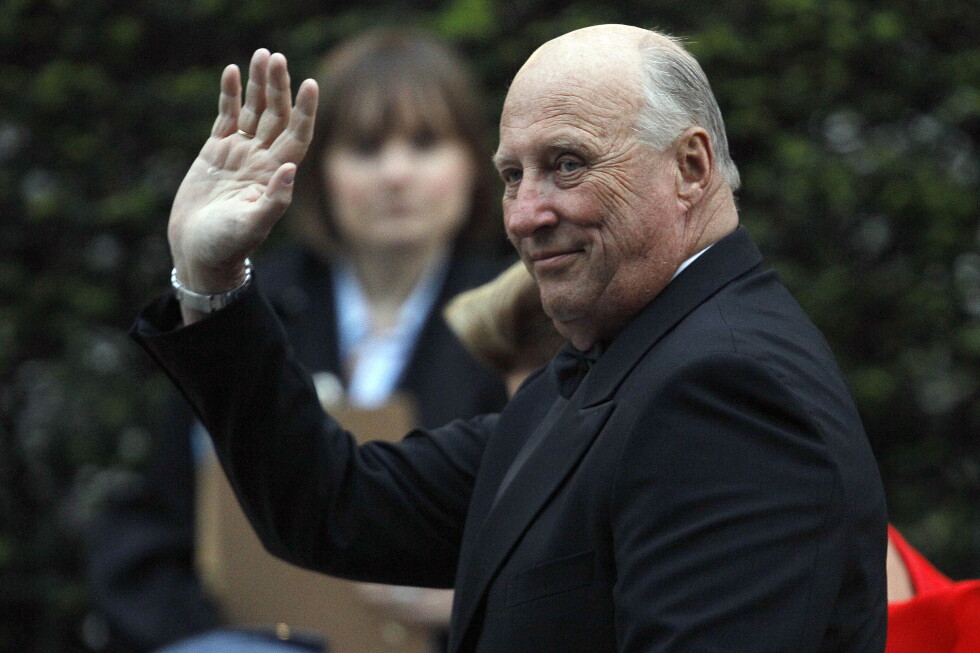
OSLO, Norway — Norway’s King Harald V, a monarch whose life was shaped by World War II exile, a groundbreaking love match, and 35 years of steady, modernizing rule that won the enduring affection of the Norwegian people, passed away Friday at the age of 89. The Norwegian Royal Palace confirmed he died at Oslo’s National Hospital at 6:35 a.m., bringing an end to the reign of Europe’s oldest sitting monarch and clearing the way for his son, Crown Prince Haakon, to immediately ascend to the throne as King Haakon VIII.
Born in 1937 in Asker, just outside Oslo, Harald made history from his birth: he was the first native Norwegian prince born in more than 560 years, following centuries of union with neighboring kingdoms that left Norway without a homegrown monarch. It was not until 1905, when Norway dissolved its union with Sweden, that Harald’s grandfather Haakon VII was elected king, establishing the modern Norwegian monarchy.
Harald’s childhood was upended by the 1940 Nazi invasion of Norway. At just 3 years old, he fled into exile with his mother and sisters, first to neutral Sweden, then by sea to the United States, while his father (the future King Olav V) and grandfather joined the exiled Norwegian government in Britain. During his years in North America, the young prince carried out his first public duty at age 6, christening new warplanes for a Norwegian air base in Canada, and the family was regularly welcomed at the White House by U.S. leaders. The royal family only returned to their homeland in June 1945, weeks after the end of World War II.
Unlike many European royals of his era, Harald pursued a diverse education, attending public schools before graduating from the Norwegian Military Academy and Oxford University. Following in the footsteps of his father — an Olympic gold medalist in sailing — Harald shared a lifelong passion for the sea, representing Norway in sailing at multiple Olympic Games and claiming a world championship gold medal at the helm of his yacht in 1987.
What made one of Harald’s earliest acts as a prince remain one of the most defining moments of his public legacy was his refusal to enter into an arranged political marriage with a European noble. For nearly a decade, he rejected a string of eligible noblewomen, insisting on marrying Sonja Haraldsen, a commoner and his high school sweetheart whose father was a successful Norwegian businessman. Though his father, then-King Olav V, initially feared the match would undermine the still-young institution of the Norwegian monarchy, the 1968 wedding was met with widespread public jubilation, and Sonja quickly became one of Norway’s most beloved public figures as queen. The couple had two children: Haakon and his older sister, Märtha Louise. A 1990 change to Norway’s constitution established equal primogeniture for succession regardless of gender, though the reform was not applied retroactively, leaving Haakon first in line ahead of his sister.
When Harald ascended to the throne in January 1991 following his father’s death, he retained the royal motto that defined his grandfather and father: “All for Norway.” Over his 35-year reign, which coincided with Norway’s massive oil and gas-driven economic boom that transformed the country’s prosperity, Harald prioritized modernizing the monarchy to align with Norway’s egalitarian democratic values. Unlike many other aging European monarchs who abdicated in recent decades — including his second cousin, Denmark’s Queen Margrethe, who stepped down in 2024 — Harald repeatedly reaffirmed his commitment to serve for life, saying his coronation oath bound him until his death.
Beyond his ceremonial duties, Harald earned widespread acclaim for his moral leadership during moments of national crisis. After far-right extremist Anders Behring Breivik carried out the 2011 dual attacks that killed 77 people, Harald delivered an iconic, unifying address at the national memorial service, declaring that “the belief in freedom is stronger than fear” and reaffirming faith in Norway’s open democratic society. In 2016, he made headlines around the world for a surprise impassioned speech in support of LGBTQ+ equality, religious diversity, and refugee inclusion, stating: “Norwegians are girls who love girls, boys who love boys, and girls and boys who love each other,” adding that Norwegians hold a wide range of religious beliefs, from faith in God and Allah to belief in the universe or no higher power at all. The speech was viewed millions of times on social media and cemented his reputation as a progressive, forward-thinking monarch.
Compared to other European royal houses that have been roiled by high-profile scandals in recent years, Harald’s reign saw relatively little controversy, though the later years of his rule brought increased scrutiny. His daughter Märtha Louise stepped back from official royal duties after drawing public criticism for claiming she could communicate with angels and becoming engaged to an American self-identified shaman. In early 2026, Crown Princess Mette-Marit, Haakon’s wife, faced renewed public attention over her past connections to deceased convicted sex offender Jeffrey Epstein. Though she has not been accused of any wrongdoing, she apologized for placing the royal family in a difficult position. Separately, Mette-Marit’s son from a previous relationship, Marius Borg Høiby, who holds no royal title or official duties, was convicted of rape in a high-profile 2026 trial and sentenced to four years in prison.
In the years leading up to his death, Harald’s health declined gradually. He was hospitalized twice during foreign trips after his 2024 statement confirming he would never abdicate: he received a pacemaker during a 2024 vacation in Malaysia, and was treated for a skin infection during a February 2026 holiday on Spain’s Tenerife island.
In the wake of the king’s death, Norwegian Prime Minister Jonas Gahr Støre released a statement reflecting the national mood of mourning and gratitude. “A whole nation is in mourning and the people of Norway are left with a deep sense of gratitude for a long life in the service of Norway,” Støre said. “For more than three decades as monarch, Harald V demonstrated an unwavering faith in the Norwegian people. He helped us to see the best in ourselves — and in one another.”