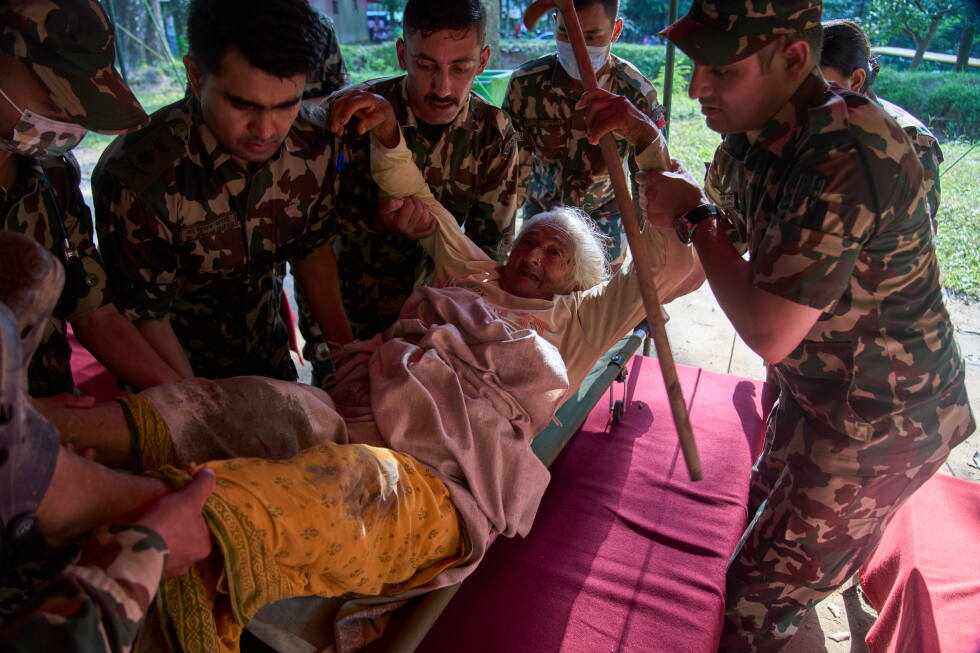
KATHMANDU, Nepal – Authorities confirmed Friday that the death toll from catastrophic flash floods striking the Nepal-China border region has climbed to 469, as rescue teams race against time to locate hundreds of unaccounted-for people still missing in the disaster zone. Just two days prior, officials had reported a combined death toll of 393 across Nepal and China’s Tibet Autonomous Region, with more than 1,400 people listed as missing across both areas in the wake of the Wednesday disaster.
Nepalese government officials report that hundreds of trapped people have already been pulled from flood and debris wreckage by rescue teams. Dozens of injured survivors are currently receiving inpatient medical care in Nepal’s capital city of Kathmandu. Among those still unaccounted for are foreign nationals from multiple countries, including numerous long-distance trekkers and religious pilgrims who were visiting the sacred Himalayan region when the floods hit.
Graphic photographs and footage from the hardest-hit areas paint a devastating picture of the destruction. In Nepal’s Nuwakot district, one of the worst-impacted regions, entire buildings and public streets are coated in thick layers of mud, tangled debris is caught in tree branches, and dazed survivors covered in silt wait for aid. On the Chinese side of the border, in Tibet’s Shigatse prefecture, a major two-lane riverside highway was completely buried by rushing mud and rock. Aerial surveys have also documented a newly formed, expanding natural lake trapped behind debris at the border, with officials issuing urgent warnings that the debris dam could fail and trigger a second catastrophic flood.
For families connected to the region living thousands of miles away, the disaster has brought unbearable grief. Rajan Tamang, a restaurant owner based in New York City, shared that he received word from relatives in Kathmandu that his mother and sister were among the confirmed fatalities, while dozens more family members and friends remain unaccounted for. “My family was just waking up, and they didn’t even get any warning, and suddenly this flood came. Some of them are missing, some lost their lives, only a few survived,” Tamang told the Associated Press after a memorial vigil held for victims in New York.
As of the latest update, around 90 U.S. citizens are still unaccounted for in the aftermath of the floods, according to related U.S. official reports. The disaster has also drawn renewed international attention to the growing risks of glacial outburst events in the warming Himalayan mountain range, a threat that scientists have warned about for decades.
U.S. President Donald Trump commented on the scale of the destruction during a press meeting at the White House, noting that the flood damage was “terrible to see,” adding that even “strong, well-built buildings were wiped out like they were toothpicks.” Speaking from the Oval Office, Trump confirmed that U.S. officials had spoken with Nepalese government leadership and that the U.S. has extended an open offer to provide “anything they want” in terms of disaster relief and recovery support.
Researchers who have analyzed recent satellite imagery of the region have pinpointed the root cause of the disaster: the collapse of bedrock beneath a high-altitude Himalayan glacier. The collapse pulled a large portion of the glacial ice down with it, sending a surge of rock, debris and melted glacial water into the river valleys below. The resulting torrent, which at points reached several stories in height, swept away buildings, bridges, and entire swathes of riverbank as it rushed downstream into populated border areas.