Three years into Sudan’s devastating civil conflict between the Sudanese Armed Forces (SAF) and the breakaway Rapid Support Forces (RSF), the war has spilled across international borders, drawing formal condemnation from Washington and exposing deep rifts in international diplomatic efforts to end the crisis.
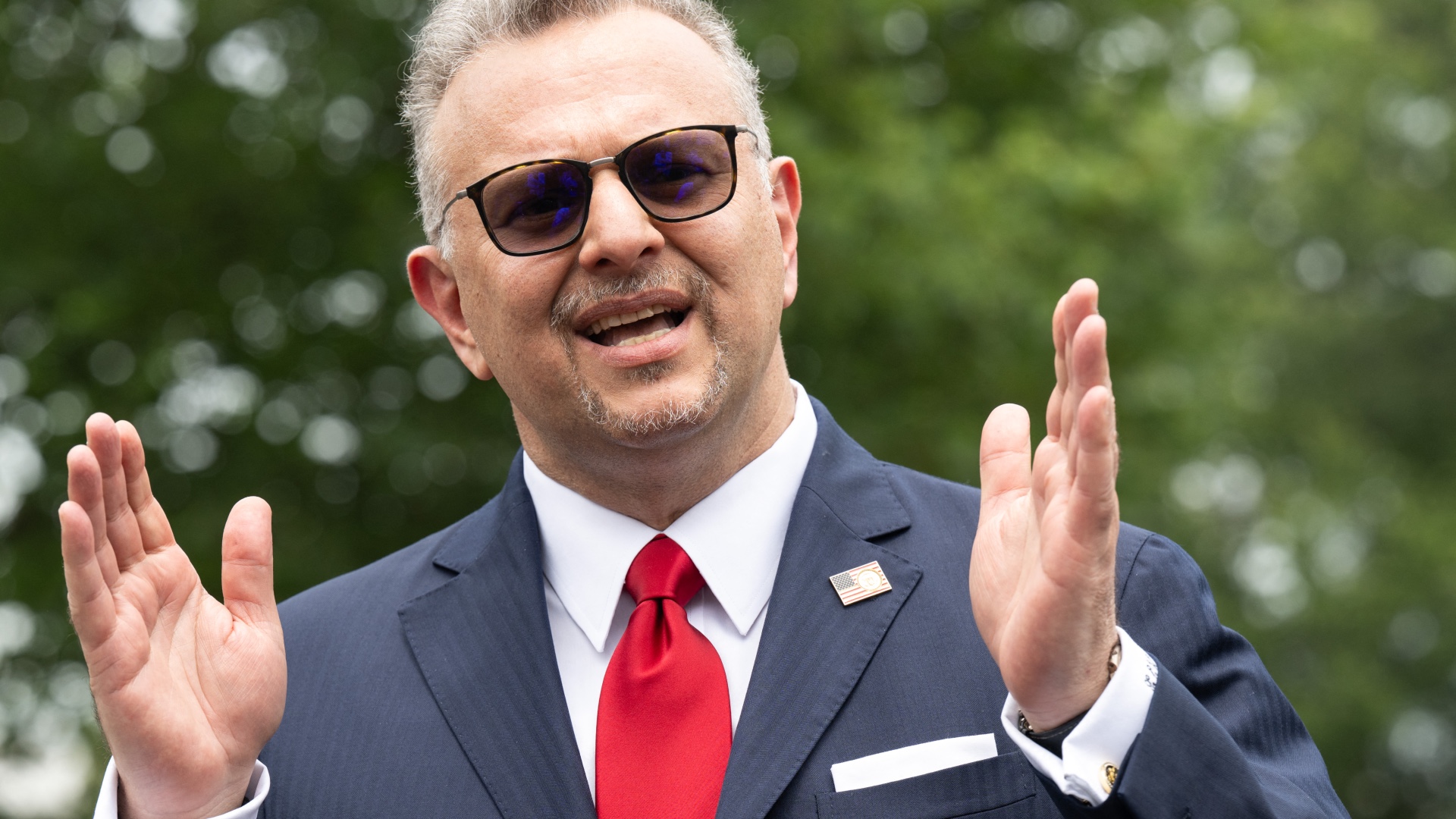
On Thursday, Massad Boulos, U.S. President Donald Trump’s special envoy for African affairs, issued a public rebuke of the SAF via the social platform X, after Chadian government officials reported bombings in the country’s eastern Ennedi region carried out by Sudan’s military last week.
“The United States condemns the SAF’s recent air strikes inside Chad,” Boulos wrote. “The violence must stop in Sudan and beyond. There is no military solution to this conflict—and absolutely no justification for expanding the violence beyond Sudan’s borders.”
Boulos called on both warring factions to immediately implement a humanitarian truce, step up protections for civilian populations, and grant full, unobstructed access for humanitarian aid groups delivering life-saving support to millions of people displaced by the conflict. He also urged the United Nations Security Council, where the U.S. holds veto power, to tighten existing arms embargoes and expand sanctions against parties fueling the fighting. In a key demand, he called for an immediate end to all external financial and military backing for the SAF and RSF, though he notably did not name the United Arab Emirates (UAE) – a major power accused of arming the RSF – nor provide any explanation for why the SAF launched the cross-border strikes.
Multiple reports have already linked the UAE to the RSF’s war effort: the United Nations has confirmed the Gulf state routes weapons shipments to the paramilitary group via Chadian territory, and reporting from Middle East Eye has documented how Chad forms the core of the UAE’s logistics network supplying the RSF. The UAE’s overt role in the conflict has been so consequential that Mohamed Abdulla Idris, Sudan’s ambassador to the U.S., said last year that Khartoum would reject any peace negotiation that includes Abu Dhabi as a mediator.
“It’s unacceptable to us,” Idris told reporters. “The United Arab Emirates is a party to the conflict, so it cannot play both roles – become a party, and then become a mediator, no.”
For its part, the SAF has defended its cross-border strike, saying it acted to protect Sudan’s “sovereignty, security, and safety” when it targeted a military convoy inside Chadian territory last week. In response to the incursion, Chadian security officials raised the country’s threat alert to the maximum level and deployed 100 armored vehicles along with drone-jamming technology to the eastern border shared with Sudan, according to a Chadian security source who spoke to Reuters.
Boulos’s condemnation quickly drew pushback from regional experts, who criticized the statement for being one-sided and ignoring longstanding accusations that Chad has allowed its territory to be used to supply the RSF. Cameron Hudson, an Africa specialist and former U.S. State Department official, responded directly to Boulos’s post on X, asking: “Why hasn’t he condemned Chad allowing its territory to be used to arm the RSF for the last several years? Statements like this do absolutely nothing to advance a diplomatic solution.”
The rebuke also comes amid growing scrutiny of the failure of U.S.-led diplomatic efforts to resolve the Sudan conflict. Back in February, Boulos announced that the U.S. had finalized a comprehensive peace plan for Sudan’s civil war, drafted with the approval of the so-called Quad – a quartet of regional and global powers including the U.S., Saudi Arabia, the UAE, and Egypt formed to coordinate peace efforts. The Quad first unveiled a framework roadmap to end fighting between the SAF and RSF last September, and Boulos said at the time the full, detailed peace plan had been three months in the making and would be publicly unveiled in mid-February, claiming it would be acceptable to both warring parties.
To date, the plan has never been released. When pressed by reporters, Boulos declined to name the specific obstacles or parties blocking the plan’s release, only describing it as “quite comprehensive.” The five-pillar plan was structured to address the immediate humanitarian crisis, protect civilians and coordinate their safe return to displaced areas, establish a permanent ceasefire, launch a political transition to a civilian-led government, and set up a dedicated reconstruction fund, Boulos previously said, naming the UK, Norway, and Egypt as key partners working on the transition framework.
The U.S. has long been careful to avoid straining bilateral relations with the UAE over its role in the Sudan conflict, a dynamic that has undermined Washington’s credibility as a neutral broker, analysts say.