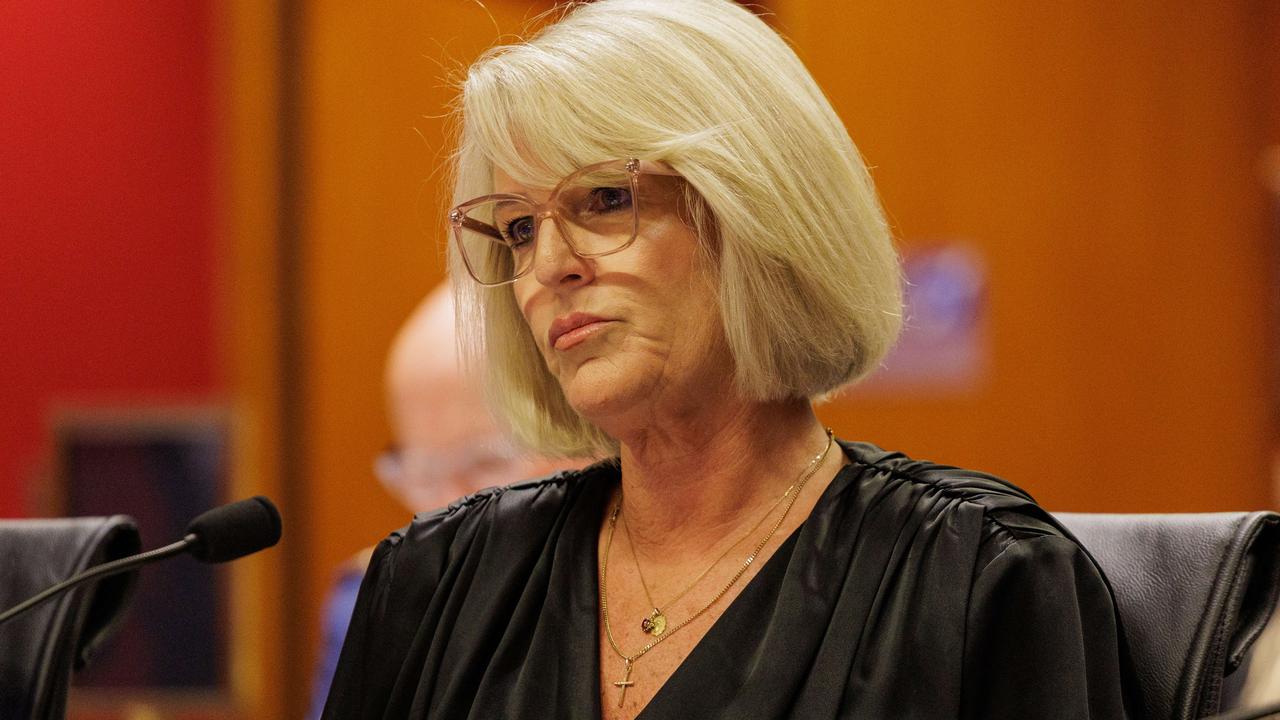
Three hours after the latest developments in the wake of December’s deadly Bondi Beach terror attack, New South Wales Police Minister Yasmin Catley has repeatedly declined to answer critical questions about how alleged attacker Sajid Akram secured his firearms licence, pointing to the ongoing royal commission as her reason for remaining silent.
The Royal Commission into Social Cohesion and anti-Semitism, led by former High Court justice Virginia Bell, wrapped up public evidence hearings on Wednesday and is scheduled to deliver its final findings to the government in mid-December. Appearing before a state budget estimates hearing on Friday, Catley stood by her earlier public explanation that years-long processing backlogs at the NSW Firearms Registry were to blame for the timeline of Akram’s licence approval, which came ahead of the December 14, 2025 attack that left 15 innocent people dead.
The hearing was presented with official data showing that in 2020, the year Akram submitted his firearms licence application, the average processing time for Category A and B firearms sat at 96 days overall, dropping to 76 days in the second half of that year. When Liberal MLC Susan Carter asked Catley if her earlier public explanation of the delay was factually incorrect, the minister acknowledged it was only the information she had been given at the time of her initial statement.
Catley repeatedly emphasized that all stakeholders should wait for the royal commission’s final report before drawing conclusions, noting that public discussion of unresolved details could risk prejudicing both the ongoing criminal case against Akram’s son, Naveed, and the commission’s independent inquiry. Naveed Akram remains in jail on remand, facing 78 criminal charges including terrorism and murder over the antisemitic attack targeting a Chanukah gathering at Bondi Beach.
During questioning, Catley was shown minutes from a March 2022 meeting of the Firearms Registry Consultative Council, which recorded four outstanding internal application reviews at that time. Mark Banasiak, MLC for the Shooters, Fishers, and Farmers Party, put to Catley that Sajid Akram’s application was one of those four reviews, contradicting the official advice she had received previously. Catley responded that she could not confirm that detail, but had been advised that there were between 100 and nearly 150 outstanding applications overall at that point.
Pressed to explain how Akram’s licence application went from an initial rejection to final approval, Catley again said any concrete answer would have to come from the royal commission. Banasiak pushed back, stating that evidence now confirms Akram’s application was first rejected before being approved at a later stage, and that key unanswered questions remain over whether the reversal came during the internal review process or after an appeal to the NSW Civil and Administrative Tribunal. Catley told the hearing she had not received official advice on that detail, adding that police have informed her there is no record of Akram requesting an internal review.
Earlier in the hearing, Catley issued an angry rebuttal to what she called a “dangerous suggestion” that the issuing of a firearms licence could be a political decision. She told Carter that if she as minister ever intervened to approve a licence, the public would be rightly alarmed, noting that firearm licensing is an independent administrative process, not a political one.
The hearing also heard that 18 of 22 new positions allocated to the Firearms Registry to help implement new legislative reforms have already been filled. In the immediate aftermath of the Bondi attack, the NSW government rushed through sweeping new firearms regulations, including cuts to the maximum duration of licences and caps on the number of firearms most individual owners can hold.
Catley also declined to take a clear public position on a proposal to arm the Jewish community security group CSG for street patrols following the attack. Questioned by independent MLC Mark Latham – who has been accused of, but denies, anti-Semitism – Catley noted that CSG already has authorization to carry firearms when guarding static sites. She highlighted expanded police capabilities, including the deployment of officers armed with long-range firearms across the state, and said the proposal remains under government consideration as the premier has previously stated. “I do support the police’s approach … which is right across metropolitan Sydney as well, which is important that we protect all of the community,” she said. Greens MLC Sue Higginson pressed Catley on whether arming CSG for patrols would align with the government’s public goal of removing unneeded guns from streets to improve public safety, but Catley only reiterated that static armed security is already permitted for the group.
Discussion also turned to the state’s upcoming gun buyback scheme, a core part of the new reforms. Catley confirmed that the cap on personal firearms ownership for existing licence holders will not enter into force until regulations are finalized, which is expected to happen by the end of 2026. The buyback scheme will launch before that cap takes effect, she confirmed.
Catley clarified that gun components such as sights that become unused due to reclassification or ownership limits will not be included in the buyback, as the components themselves are not being classified as illegal. The same rule applies to gun safes that may become redundant after owners reduce their firearms holdings, as private ownership of gun safes remains legal. Ammunition will be included in the buyback, but the details are still being finalized: ammunition held for firearms that an owner no longer retains will be eligible for buyback, as it is illegal to hold ammunition for unregistered firearms.
On the $10,000 value cap for individual high-value firearms in phase two of the joint NSW-federal buyback scheme, Catley said the limit was developed after extensive consultation with stakeholder groups. She also confirmed that the $250 million total funding allocated for the buyback will not be drawn from the NSW Police operating budget.