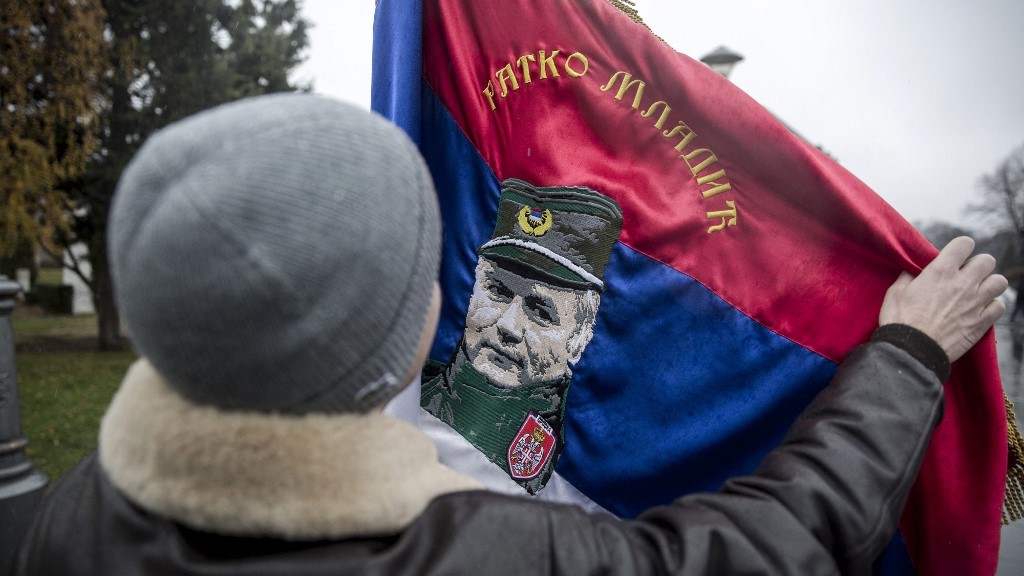
Ratko Mladic, the former Bosnian Serb military commander infamously known as the ‘Butcher of Bosnia’ for orchestrating Europe’s worst act of mass genocide since World War II, has passed away at the age of 84. His death was first reported by Serbia’s state-owned public broadcaster RTS, and later independently confirmed by Mladic’s legal representative to Reuters news agency.
Mladic rose to prominence in the 1990s, amid the violent collapse of the Socialist Federal Republic of Yugoslavia. Then-Serbian president Slobodan Milosevic pursued an aggressive nationalist agenda to forge a ethnically pure ‘Greater Serbia’ from the fragments of the disintegrating federation, a project that inflamed long-simmering ethnic and religious tensions and sparked a series of brutal wars across the Balkans. As the top commander of Bosnian Serb separatist forces, Mladic became the primary military architect of this campaign, which targeted non-Serb populations across Bosnia and Herzegovina.
The most horrific chapter of Mladic’s campaign came in July 1995, when his forces overran the UN-designated safe zone of Srebrenica. In the weeks leading up to the massacre, Mladic invoked a 14th-century Serbian military defeat by the Ottoman Empire to frame his campaign as a act of revenge against Bosniak Muslims, six centuries after the original conflict. Over the following days, Mladic’s troops systematically captured more than 8,000 Bosniak men and boys, before executing them in cold blood. Widespread sexual violence was perpetrated against Bosniak women and girls, while perpetrators covered up the atrocity by burying victims in mass graves, later exhuming remains and scattering them across remote secondary burial sites to destroy evidence of the crime.
Mladic was also directly responsible for the 44-month siege of Sarajevo, a brutal blockade that subjected the capital’s civilian population to systematic terror, starvation, and constant attack.
In total, the Bosnian war claimed the lives of roughly 100,000 people and displaced more than 2.2 million from their homes, making it one of the deadliest conflicts in post-WWII European history.
For nearly 16 years after the end of the war, Mladic evaded international justice, with covert support from factions within the Serbian state that helped him hide from authorities. His years on the run became one of the longest and most high-profile manhunts in modern history, coming to an end only in May 2011, when Serbian security forces arrested him in a small village north of Belgrade.
In 2017, the International Criminal Tribunal for the former Yugoslavia (ICTY), based in The Hague, found Mladic guilty on 10 counts of genocide, crimes against humanity, and war crimes. Presiding judge Alphons Orie described Mladic’s offenses as ranking among ‘the most heinous known to humankind,’ and sentenced him to life imprisonment.
Despite his well-documented atrocities and international conviction, Mladic remains a glorified figure among Serbian ultranationalists, and many senior Serbian political leaders have continued to deny or downplay the severity of crimes committed by Bosnian Serb forces during the conflict. The ICTY ultimately prosecuted nearly 100 individuals for war crimes and atrocities committed during the Yugoslav wars, with Mladic’s trial standing as one of the tribunal’s final and most high-profile cases.