A damaging police scandal centered on falsified case documents has rocked South Korea’s law enforcement community, exposing critical gaps in internal oversight and sending public trust in national police to historic lows. The controversy unfolded after four missing people were found dead in recent days on Jeju Island, the country’s top tourist resort, with two of the deaths tied to alleged misconduct by a serving police officer identified only by his family name, Bu.
The timing of the scandal is particularly sensitive, as South Korea prepares to implement a major restructuring of its criminal justice system that will transfer full investigative authority from prosecutors to police. Amid mounting public outcry, President Lee Jae Myung issued a direct directive at a weekly Cabinet meeting Tuesday, ordering the prime minister to develop comprehensive proposals for sweeping police reform.
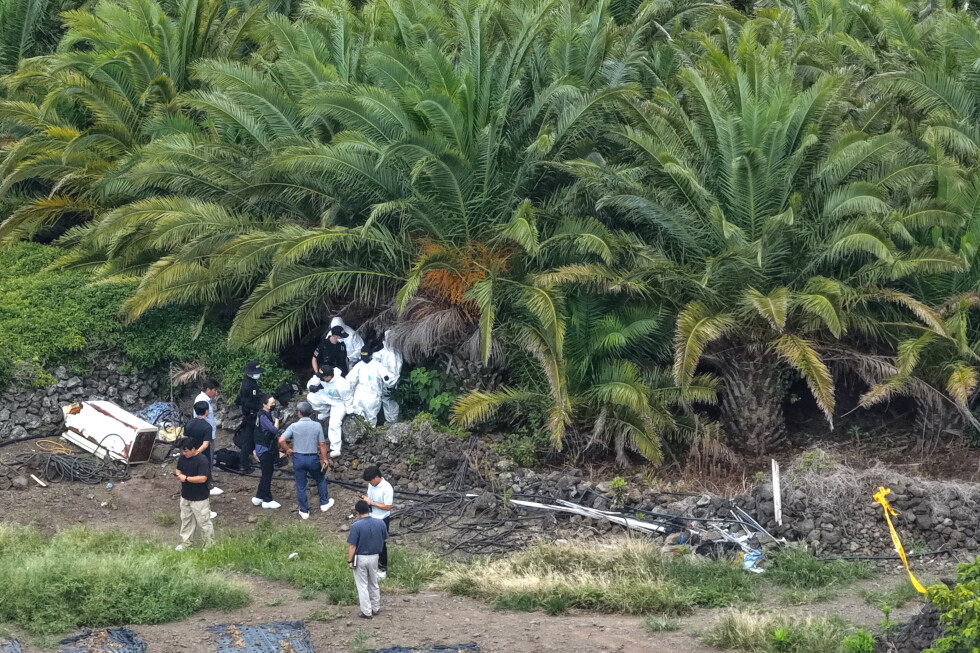
Investigations into Bu’s conduct reveal two clear instances of alleged document fraud in missing person cases. In the first, Bu closed the case of 37-year-old Jang Mi-ran, who disappeared more than three months ago, without ever confirming her safety. He allegedly lied to Jang’s boyfriend, claiming he had spoken to her by phone and that she had explicitly requested her location remain private. It was only after Jang’s family discovered the falsification earlier this month, shared her photograph online, and issued a public appeal for information that the case gained widespread national media attention. Jang’s body was recovered Monday from a local palm tree farm on Jeju.
Bu is also accused of using the same deceptive tactic to close a second missing person case from last month involving a 60-year-old man. The man’s body was found Saturday, also on Jeju Island. Police took Bu into custody on Monday and launched a full review of all 298 missing person cases he has managed since 2023, as investigators work to uncover the motive behind his alleged mishandling of the two high-profile cases.
In testimony before a parliamentary committee Monday, acting National Police Agency Commissioner Yoo Jae-seong issued a formal public apology for the incident. “We feel deeply sorry for causing concerns to the public over the handling of missing person cases in Jeju,” Yoo stated. He acknowledged the fiasco stems from both individual error and deep-rooted systemic failure: a now-suspended policy that allowed frontline officers to close missing person reports independently without any mandatory review or approval from supervisory staff. Both Interior and Safety Minister Yun Hojung and Jeju Provincial Police Chief Ko Pyeong-ki have issued separate public apologies for the institutional failures that allowed the misconduct to occur.
This scandal is not the first blow to South Korean police’s reputation in 2024. Earlier this year, the force faced fierce public condemnation over the brutal killing of a high school girl, after it was revealed that the suspect’s father, a serving police officer, and other colleagues were accused of tampering with evidence to reduce the suspect’s potential charges and sentencing.
In a Tuesday editorial, major South Korean newspaper JoongAng Ilbo summed up widespread public frustration, writing: “Public anxiety has grown as flaws in the policing system have emerged, while confidence in the police has plummeted. People are entitled to wonder where they can turn when even reporting a disappearance does not ensure an investigation.”
Beyond the damage to national law enforcement’s reputation, the four deaths have sparked fears for Jeju’s multibillion-dollar tourism industry. The island, located off the southern coast of the Korean Peninsula and nicknamed the “Hawaii of Korea” for its dramatic volcanic coastlines and lush tropical scenery, draws millions of domestic and international visitors annually. Two additional bodies were found on the island in recent days — one Sunday and one Monday — both of whom had been reported missing, though Bu was not involved in handling their cases. Social media platforms across South Korea have been flooded with warnings about Jeju’s safety, alongside unsubstantiated rumors and criticism of local authorities.
Jeju provincial officials have moved quickly to mitigate damage to the island’s brand, noting that as of yet there has been no significant drop in tourist arrivals. On Thursday, Jeju Governor Wi Seong-gon unveiled a package of new public safety measures to restore public confidence, including the development of a standardized integrated emergency response protocol for missing person cases, installation of additional security cameras across high-traffic and remote areas of the island, and expanded joint patrols pairing police with civilian volunteer groups.
“ We will concentrate all our efforts on protecting the everyday lives of Jeju residents and visitors and upholding public confidence in Jeju as a safe destination,” Wi told reporters at a Thursday press conference.