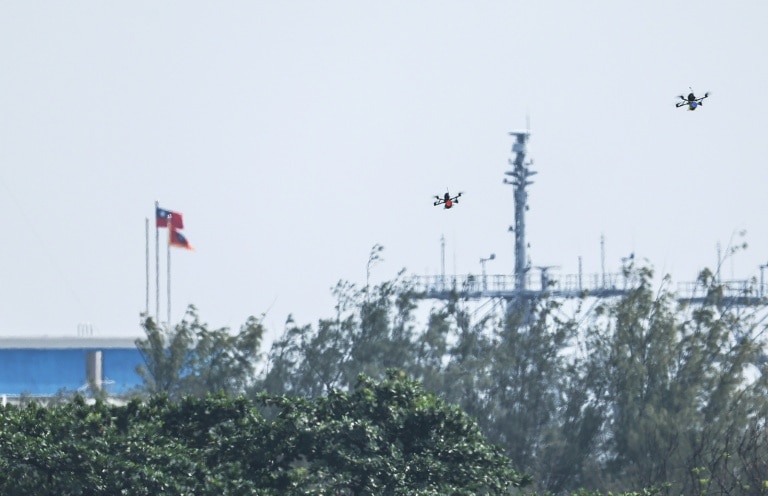
Against a backdrop of rising cross-strait tensions and growing international pressure to bolster asymmetric defense capabilities, Taiwan’s legislative body has greenlit a $7.6 billion budget to develop and manufacture domestically produced drones, a move central to the island’s efforts to counter mounting military threats from mainland China.
For years, Taiwan has steadily expanded its military investment, prioritizing the growth of a domestic defense industry that can produce critical equipment and ammunition locally rather than relying exclusively on foreign imports. This push comes as China continues to claim the self-governing island as an inalienable part of its territory and has repeatedly threatened to take control of it by force if necessary.
The approved budget proposal, backed by the opposition Kuomintang (KMT) and Taiwan People’s Party (TPP), advanced through parliament after the administration of President Lai Ching-te saw its original drone spending plan rejected. President Lai’s administration had sought to allocate NT$210 billion ($6.6 billion) in a special five-year budget overseen by Taiwan’s Ministry of National Defense, aiming to build a domestic drone output capacity sufficient to repel a potential Chinese incursion. The original plan covered development of multiple drone variants, including coastal surveillance models, attack drones, and surface drones.
Negotiations over drone spending have been marked by repeated clashes between Lai’s ruling government and opposition blocs, which hold a legislative majority. Disagreements centered on total funding amounts, budget structuring, and allocation timelines. The KMT, which advocates for closer economic and political ties with mainland China, joined the TPP to put forward an alternative plan totaling NT$240 billion ($7.6 billion) spread over six years integrated into the regular annual budget process. After initially holding firm to an annual spending cap of NT$40 billion, the KMT compromised to introduce flexible spending allowances and agreed to let the defense ministry lead the drone procurement and development process.
When pressed by reporters on whether he would sign the opposition-drafted legislation, Premier Cho Jung-tai, head of Taiwan’s executive Cabinet, emphasized that national security remained his top priority. “What I care about is whether the legislation meets the nation’s needs — whether it aligns with our indigenous defense strategy and the various requirements for developing our drone and unmanned vehicle industries,” Cho stated, adding that officials would conduct a careful review based on national security and broader national interests.
KMT lawmaker Hsu Chiao-hsin framed the budget as a critical step to growing Taiwan’s domestic defense industrial base ahead of the vote, noting that Taiwan “must genuinely encourage localisation and domestic production” to mature the sector. She added that the policy prioritized supporting established local manufacturers that operate outside of Chinese supply chains, guarantee robust cybersecurity standards, and sustain consistent long-term growth.
The approval of the drone budget comes amid growing pressure from the United States, which has repeatedly called on Taiwan to ramp up its defense spending and domestic arms production to deter Chinese aggression. In recent weeks, U.S. calls for swift passage of the drone legislation grew increasingly urgent: during a visit to Taipei last month, U.S. Republican Representative Young Kim stressed that “time is short” for Taiwan to build up its drone capabilities. Pointing to ongoing combat in Ukraine and the Middle East, Kim noted that “the wars over Ukraine and Iran show that Taiwan needs to buy and build drones at a huge scale.”
Taiwan currently relies heavily on U.S. arms sales to maintain its defense deterrent, and Washington has repeatedly pushed the island to take greater financial and industrial ownership of its own security. Lessons from the war in Ukraine have reshaped Taiwan’s defense planning, with military leaders concluding that small, agile systems such as drones are a critical asymmetric advantage against a far larger and better-resourced Chinese People’s Liberation Army.
The approval caps a period of extended legislative wrangling over national budgets: Taiwan’s 2026 general annual budget passed earlier this month after a record-setting delay, while the 2027 general budget has already been finalized. President Lai’s administration has proposed a record NT$1.1 trillion defense budget for 2027, which would push defense spending above 3% of Taiwan’s total GDP, marking the highest share of output allocated to national defense in decades.