Monaco is set to host one of European soccer’s most anticipated annual events Thursday: the group stage draw for the UEFA Champions League, the continent’s premier club soccer competition. But beyond the glamour of assembling the season’s matchups, off-field governance tensions are taking center stage at the gathering of top European soccer decision-makers.
Two hours before the draw ceremony kicks off at 6 p.m. local time (1600 GMT), 55 UEFA member federations will hold their first face-to-face meeting since a month-long global soccer governance crisis erupted. The conflict was triggered by FIFA President Gianni Infantino’s unsuccessful push to sell minority stakes in World Cup commercial profits to private investors. Chaired by UEFA president Aleksander Ceferin, the gathering comes as UEFA has already publicly declared it has no confidence in Infantino’s leadership, who is standing for re-election as FIFA president in March. Infantino is not expected to attend the Monaco event, a role he once hosted regularly during his tenure as UEFA general secretary before his 2016 election to the top FIFA post.
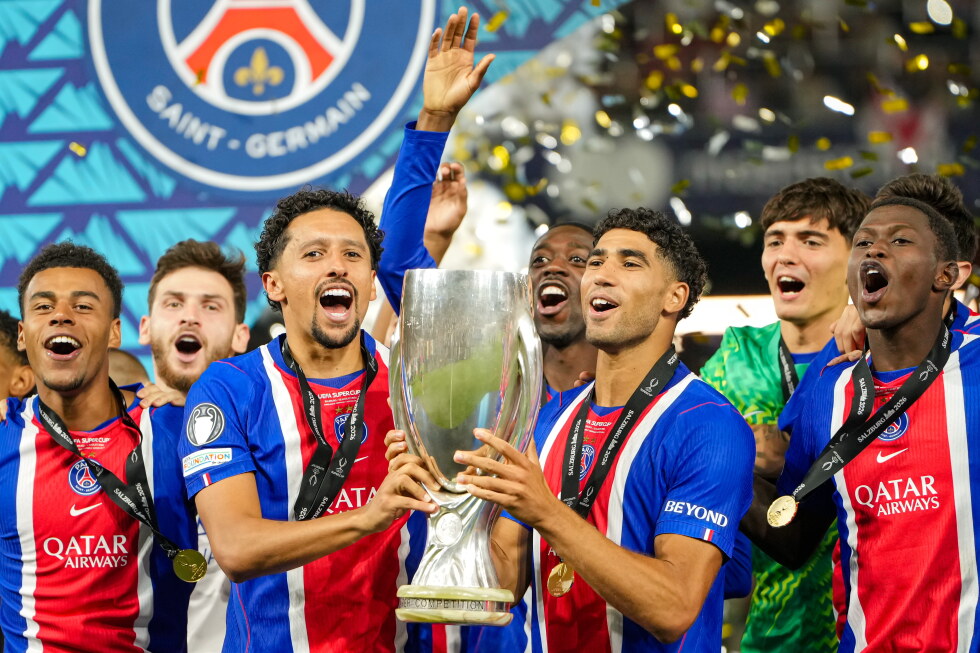
Speculation over potential successors to Infantino has increasingly centered on Nasser al-Khelaïfi, president of defending Champions League title holder Paris Saint-Germain, who will be in attendance at the draw. Al-Khelaïfi has not yet publicly confirmed whether he intends to run for the FIFA presidency.
This year’s Champions League iteration brings several notable firsts to the competition alongside the off-field political friction. Four clubs will make their debut in the main 36-team league phase: Italy’s Como, coached by former Spanish international star Cesc Fàbregas; Austrian side LASK; Norwegian club Viking; and Azerbaijani champion Sabah, which was only founded in 2017. Sabah’s head coach Valdas Dambrauskas has already drawn media attention for his unique origin story: as a young aspiring coach in his native Lithuania, he funded a study trip to England to learn coaching tactics with prize money he won competing on the television quiz show *Who Wants to be a Millionaire*. Another historic milestone for this season sees Yaya Touré, the former Manchester City and Barcelona midfield star, become the first African coach to lead a team into the Champions League main phase after guiding Slovakian champion Slovan Bratislava through qualifying this week.
Off the pitch, the Monaco agenda also includes meetings for the influential European Football Clubs association, UEFA’s club competition oversight committee, and a special caucus of UEFA member federations. Delegates are set to formally formalize the withdrawal of their earlier threat to boycott FIFA competitions, a threat issued in response to Infantino’s secretive plan to sell stakes in a new FIFA commercial subsidiary to a group of investors led by Joshua Kushner.
For the draw itself, UEFA uses a specialized seeding and pairing system to set up the new expanded league phase. Seeding is determined by each club’s competitive performance in UEFA competitions over the past five seasons, with 36 teams divided across four seeding pots. Each team will be drawn to play eight total matches — four at home and four away — with two opponents drawn from each pot, and no club will face a team from its own national federation. The first round of matches kicks off September 8-10, with the first six matchdays wrapping up by December. The league phase resumes in January, with the final round of matches scheduled for January 27.
Under the new competition format, the top eight teams in the final league phase standings automatically advance to the round of 16 in March. Teams finishing between 9th and 24th place will compete in knockout playoffs in February to claim the remaining eight spots in the round of 16, while clubs finishing 25th to 36th are eliminated from the competition. The 36 qualified teams will split a total prize pool of roughly 2.5 billion euros ($2.9 billion), one of the largest prize pools in global club soccer.
The 36-team field is headlined by defending champion PSG, alongside perennial contenders including 15-time European champion Real Madrid, German giant Bayern Munich, Spanish side Barcelona, and last season’s runner-up Arsenal. The full seeding breakdown for Thursday’s draw divides teams as follows:
Pot 1: Paris Saint-Germain (France), Bayern Munich (Germany), Real Madrid (Spain), Liverpool (England), Inter Milan (Italy), Manchester City (England), Arsenal (England), Barcelona (Spain), Atletico Madrid (Spain)
Pot 2: Borussia Dortmund (Germany), Roma (Italy), Sporting Lisbon (Portugal), Aston Villa (England), Porto (Portugal), Manchester United (England), Club Brugge (Belgium), Real Betis (Spain), PSV Eindhoven (Netherlands)
Pot 3: Feyenoord (Netherlands), Lille (France), Napoli (Italy), Leipzig (Germany), Villarreal (Spain), Fenerbahce (Turkey), Shakhtar Donetsk (Ukraine), Galatasaray (Turkey)
Pot 4: Slavia Prague (Czech Republic), Slovan Bratislava (Slovakia), Stuttgart (Germany), AEK Athens (Greece), LASK (Austria), Como (Italy), Lens (France), Viking (Norway), Sabah (Azerbaijan)