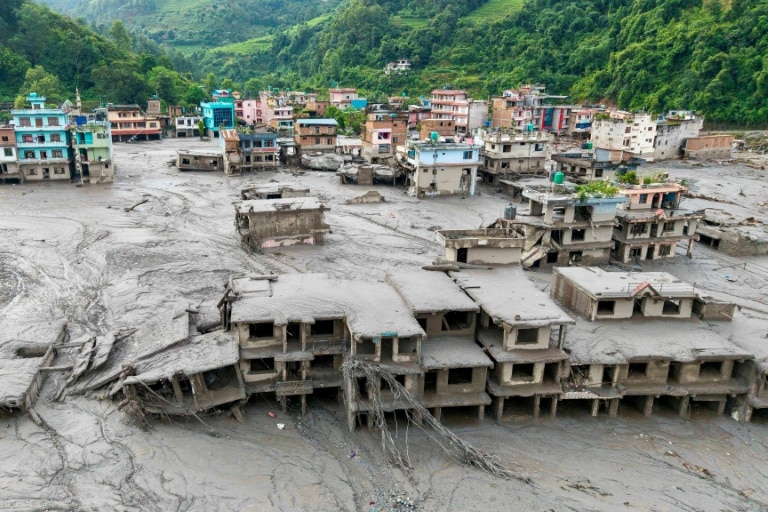
In the wake of a devastating tsunami-scale flood of water and mud that tore through river valleys along the Nepal-Tibet border, grieving and anxious families are crowding hospital corridors and police stations across Nepal, clinging to faint hope of finding loved ones still unaccounted for days after the disaster. As of Thursday, official counts put the confirmed death toll at 165, with hundreds more still missing across both Nepali and Tibetan affected areas.
One of those waiting for answers is Subash Khatani, who has been poring over victim lists and questioning officials at Kathmandu’s government-run Bir Hospital, searching for any trace of his older brother Ram Sharan Rasaili, who was in the hard-hit northern district of Rasuwa when the flood struck. “My elder brother Ram Sharan Rasaili is among those missing in Rasuwa. That’s why we are out searching for him,” Khatani told Agence France-Presse at the hospital.
The disaster unfolded on Wednesday, when a massive, fast-moving wall of water and debris surged through communities along Nepal’s Bhote Koshi and Trishuli Rivers. Nepali police confirmed they had recovered 162 bodies as of Thursday, with three additional fatalities recorded in southern Tibet per Chinese state media. The flood cut a destructive path more than 160 kilometers south from its origin near the border, reaching Chitwan, a district just north of the Indian border, with fatalities reported across seven Nepali districts. Rasuwa, the first area hit, remains the worst affected.
While the exact cause was not confirmed in the immediate aftermath of the event, the U.S. Geological Survey linked the catastrophic flood to a glacial collapse that triggered seismic activity, sending massive volumes of water downstream to devastate populated areas in both Nepal and the Tibet Autonomous Region of China.
Chitra Bahadur Nepali, 52, is another family member searching for answers. His nephew Yubraj Sewak, a professional driver, was traveling toward Rasuwa when contact was lost as the flood hit. “My nephew was on his way to Rasuwa and was in contact with my sister until about 8:00 am yesterday,” Nepali explained, displaying a photograph of his nephew on his mobile phone. “We have not heard from him since the flood. His name is not on any of the lists we have seen, and another member of our family is also missing.”
Across the flood-ravaged region, specialized rescue teams are conducting widespread search operations to locate any surviving victims trapped in debris or cut off by flood damage. Meanwhile, distraught family members have been moving between hospital morgues, official victim lists and police help desks, desperate for any update on the whereabouts of their missing loved ones.
Local media in Nepal reports that Bir Hospital, the main public receiving facility for disaster victims in Kathmandu, has announced it will provide free medical care to all flood survivors and says it is “fully prepared” to accommodate a potential surge of patients seeking treatment.
Nepal’s national disaster management agency reports that 823 people – including 579 tourists, both Nepali citizens and international visitors – still remain out of contact with authorities. In Tibet, Chinese state media confirms that 558 people, among them 260 foreign nationals, are currently listed as missing following the mudslide and flood disaster.