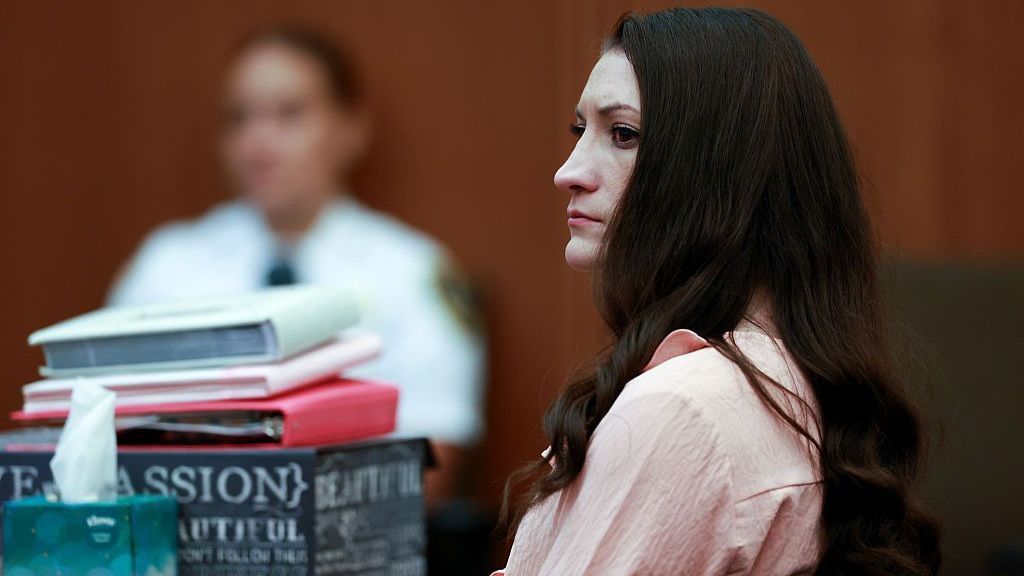
As the five-week high-profile murder trial of Lindsay Clancy draws to its conclusion, closing arguments are scheduled to begin Thursday in a Massachusetts court, bringing a case that has gripped the American public and reignited urgent conversations about maternal mental illness one step closer to a jury verdict. Clancy, a 36-year-old mother from Duxbury, a suburban community outside Boston, is charged with three counts of first-degree murder for the January 2023 deaths of her three young children: 5-year-old Cora, 3-year-old Dawson, and 8-month-old Callan. While Clancy and her legal team have never disputed that she killed her children, her defense rests entirely on an insanity claim that has thrust postpartum psychosis, a little-understood and controversial severe maternal mental health condition, into the center of national discourse. If convicted on all charges, Clancy faces a mandatory sentence of life in prison without the possibility of parole.
Prosecutors lay out a narrative of premeditated violence, alleging that Clancy deliberately planned the killings. According to their account, Clancy sent her husband Patrick out on errands to run an errand and pick up medication on January 24, 2023, before strangling all three children with fitness bands in the family home. After the killings, she jumped from a second-floor window of the house; the fall left her permanently paralyzed, and she has participated in the entire trial from a wheelchair. The defense, by contrast, argues that Clancy was completely incapacitated by untreated severe postpartum psychosis after giving birth to her youngest child, rendering her unable to understand the gravity or morality of her actions. Her legal team has documented a clear pattern of declining mental health in the weeks leading up to the tragedy: Clancy had already voluntarily admitted herself to a psychiatric facility just days before the deaths, had been prescribed more than a dozen different psychiatric medications, had reached out to suicide hotlines and emergency departments for care, and reported persistent suicidal and intrusive thoughts to her family and medical providers.
Witness testimony over the five-week trial has laid bare deep divides among medical experts over the status and diagnosis of postpartum psychosis. Family members, including Patrick Clancy, have delivered emotional testimony describing Clancy’s rapid mental deterioration starting roughly a month before the killings. Patrick Clancy told jurors that his ex-wife began losing dramatic amounts of weight, withdrew into severe depression, experienced persistent insomnia, and openly shared that she was having suicidal thoughts. He recounted leaving the house to pick up food and medication, returning to find his three children dead, and his 911 call — played for the court — found him screaming “She killed the kids,” a moment that left Clancy sobbing in the courtroom. Even as false conspiracy theories about Patrick Clancy’s involvement have circulated widely on social media, investigators have never named him as a suspect, a fact confirmed by Clancy’s own admission of responsibility for the killings.
Expert witnesses for both the prosecution and defense have clashed repeatedly over whether Clancy met clinical criteria for postpartum psychosis, a condition that the American Psychiatric Association does not yet formally recognize as a stand-alone diagnosis. Jennifer Tufts, a psychiatrist called by the prosecution who treated Clancy for five months over 12 sessions, testified that Clancy showed no clear signs of psychosis that would have put herself or others at risk. But defense attorneys pushed back on Tufts’ testimony, pointing to her own medical notes that referenced Clancy not having “hyper, pressured speech” — a key symptom of mania associated with postpartum psychosis — arguing the wording indicated Tufts had observed pressured speech. A second prosecution expert, psychiatrist Avram Mack, refused to classify postpartum psychosis as an officially recognized diagnosis, leading to tense exchanges with lead defense attorney Kevin Reddington.
In the final days before closing arguments, Clancy’s defense team made a last-ditch motion for a mistrial after prosecutors questioned witnesses about Clancy’s Catholic faith, asking about the classification of murder and suicide as mortal sins. Judge William Sullivan denied the mistrial motion but called the line of questioning “absolutely inappropriate” and instructed jurors to completely disregard the testimony.
The trial has sparked widespread public engagement and grassroots support for Clancy. Court proceedings have drawn huge attention on social media, with thousands following live updates, and hundreds of women have gathered outside the courthouse throughout the trial to demonstrate in support of Clancy, wearing pink shirts printed with slogans including “She Needed Help” and “Peace For Lindsay”.
For anyone experiencing mental health crisis or suicidal thoughts, support is available through global organizations including Befrienders Worldwide at www.befrienders.org, with additional resources listed for UK audiences at bbc.co.uk/actionline.